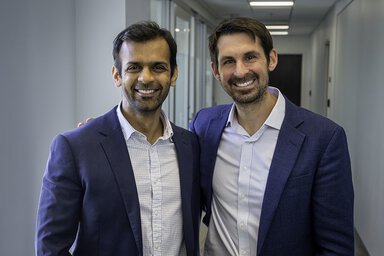
A pair of papers from MUSC Hollings Cancer Center researchers delves into questions about a growing but understudied group of cancer survivors: people living with likely incurable cancer.
This group occupies a middle ground between two more well-established groups. The first is people with cancer who are being treated with the expectation of getting rid of the cancer and living cancer-free for many years, and the second is people with cancer who cannot be treated anymore and can be offered comfort care only.
Because of improvements in cancer treatments, more people are now living in an emotional limbo – medicine can’t cure their cancer right now, but it can keep the disease contained, sometimes for years. The National Cancer Institute (NCI) has described this group as “individuals living with likely incurable cancer,” though even that name is in flux.
Evan Graboyes, M.D., a head and neck cancer surgeon and director of the Survivorship and Cancer Outcomes Research initiative at Hollings, noted that there’s no universally agreed-upon name or definition of this group. And it could be that one term will be used among researchers and another with patients.
One of his collaborators, Hollings researcher Jennifer Dahne, Ph.D., a licensed clinical psychologist, noted that the term isn’t particularly patient-friendly.
“I would hate it if my physician said to me, ‘You have likely incurable cancer,’” she said. “Diabetes is a chronic disease, and someone doesn't say, ‘You have incurable diabetes,’ even though you're going to live with it as a chronic disease forever.”
Diabetes has been treated as a chronic condition for many years, but likely incurable cancer isn’t quite viewed in the same category right now. Yet researchers and clinicians have come to realize that this group of cancer survivors deserves more focused attention in order to meet their needs.
Hollings researcher Michelle Mollica, Ph.D., R.N., led a national initiative when she served as deputy director of the Office of Cancer Survivorship at the NCI. The goal was to begin looking at how to define this group and to understand how to support them.
In answer to that call, Graboyes and Dahne teamed up with researchers at the NCI and Massachusetts General Hospital as well as survivors and advocates from the National Coalition of Cancer Survivorship to tackle the question.
Their paper, “Characterizing survivors living with likely incurable cancer: A closer look at an emerging population,” published Dec. 5 in JCO Oncology Practice, seeks to define this group and gives reasons why an accurate definition is so important to advance clinical care and research for them.
Historically, clinicians and researchers have focused on defining cancer survivors by how far advanced their cancer is. In their article, Graboyes and Dahne argue that rather than grouping people by whether they have advanced or metastatic cancer, they should instead be grouped by treatment intent. People with likely incurable cancer would be considered people who are being treated with the intention of prolonging their lives and maximizing their quality of life, rather than curing their cancer.
After all, Graboyes said, his patients with advanced head and neck cancer are often treated with the intent to cure. Brain cancer doesn’t metastasize, and yet some types of brain cancer cannot be cured. And blood cancers are already circulating throughout the system but aren’t measured in the same way that solid tumors are. So the terms “advanced” and “metastatic” don’t quite capture this growing group.
Researchers can’t say exactly how many people are living with likely incurable cancer – it's not a checkbox in the medical record that they can easily track – but the sense is that more people will fall into this category as cancer treatments continue to improve. People living with likely incurable cancer also have unique needs, different from those of other cancer survivors, Graboyes and Dahne said.
They live with the psychological weight of cancer; they may deal with an accumulation of side effects from being on treatment for long periods of time; and they will likely have more financial stress.
“Because they're still on treatment, they're accumulating new treatment toxicities that may impact their ability to do their activities of daily living or other things, which constrains happiness in their lives,” Graboyes said. “And in addition, there's prognostic uncertainty. People who are living with cancer as a chronic disease – they don't ever know what their next scan will show. Maybe they thought the drug was working, but now their cancer is bigger and has spread, and now they have to start a new therapy. Or maybe there are no therapies left at all.”
There's prognostic uncertainty. People who are living with cancer as a chronic disease – they don't ever know what their next scan will show.
The psychological effects of living with this uncertainty led to another ongoing project, which looks at how, proactively, to identify people with likely incurable cancer who are depressed and to connect them with on-demand treatment.
In October, the research team published the results of a Hollings-funded pilot study in Psycho-Oncology, which examined the feasibility and preliminary effectiveness of their novel care delivery approach. Building on the success of this Hollings pilot award, Dahne and Graboyes subsequently received a $3.1 million grant from the NCI to study this promising approach further.
The team started with Moodivate, an app developed by Dahne to offer a form of therapy called behavioral activation, and then she tailored it based on feedback from cancer survivors. But the purpose of the study went beyond offering an app.
“It's not just about the app. It's the whole process of identifying these patients and then connecting them to the intervention – which is what I do in all of my research,” said Dahne, whose research has focused on connecting people to telehealth smoking cessation programs and to digital treatment for depression. “But as I've collaborated with Dr. Graboyes over the last four years, I've learned that that isn't typical within oncology trials.”
During the pilot, staff members pored through patient records to identify people with likely incurable cancer. That was time-consuming but doable in a small pilot. It’s not practical on a large scale, however, so the team is now working with Hollings researcher Jihad Obeid, M.D., to develop an artificial intelligence solution.
Once patients were identified, they were offered the opportunity to participate in the trial. Providing depression treatment digitally means that people can access it whenever they need it, from anywhere in the state, regardless of the number of qualified providers in their community.
“This is a way to do research and, potentially, clinical care that can reach the whole state. Screening happens remotely. The delivery of the intervention happens remotely, and all the study assessments happen remotely. So no one ever actually physically sets foot in Hollings,” Graboyes explained.
The pilot study focused on whether the idea was doable and whether patients would be open to it. Results indicated that it was both feasible and acceptable to patients. What’s more, although this was not the focus, it also showed an improvement in depression symptoms for people who participated in the program compared with people who received usual depression care. The larger trial, now underway, will examine improvements in depression symptoms, and researchers are optimistic about the results, given what they observed in the pilot.
“This is the first trial to show the effectiveness of digital mental health interventions for treating this type of cancer survivor population,” Graboyes said.
Characterizing Survivors Living With Likely Incurable Cancer: A Closer Look at an Emerging Population
Shivani Sharma, Jennifer Dahne, Lisa Gallicchio, Michelle A. Mollica, Emily Tonorezos, Laura A. Petrillo, Shelley Fuld Nasso, Bethany Ross, Evan M. Graboyes
JCO Oncology Practice OP-25-00872, DOI:10.1200/OP-25-00872
Supported by the National Cancer Institute of the National Institutes of Health (R01CA281740 to J.D. and E.M.G.) and the Hollings Cancer Center Pilot Grant to J.D. and E.M.G.
Proactive Identification and Digital Mental Health Intervention for the Treatment of Depression Among Individuals With Likely Incurable Cancer: A Pilot Randomized Clinical Trial.
Graboyes EM, Levins O, DeMass R, Baskar N, Natale N, Sterba KR, Obeid JS, Sharma S, Hill EG, Dahne J. Psychooncology. 2025 Oct;34(10):e70309. doi: 10.1002/pon.70309. PMID: 41125447; PMCID: PMC12544733.
Leslie Cantu
Senior Communications Manager
Leslie Cantu is the senior communications manager at MUSC Hollings Cancer Center, where she works with researchers, clinicians and patients to tell the people of South Carolina about the innovative work being done to improve cancer care for everyone in the state. She joined the MUSC Office of Communications and Marketing in 2018 after a career as an award-winning writer, editor and producer at community newspapers and local TV news. She transferred to the communications office at Hollings in 2022, where she happily finds something new and interesting to write about every day. Her favorite stories to cover at MUSC have included Match Day, the Angel Tree Parade, a clinical trial of CAR-T cell therapy and the many patients who have agreed to share their very personal struggles and triumphs.
Contact Leslie at cantul@musc.edu.
Recent Cancer Survivorship Research stories