Lung cancer is the leading cause of cancer death in the U.S. But its burden is not shared equally. Black men face the highest lung cancer mortality of any racial or ethnic group – a disparity fueled by social, economic and structural barriers that limit access to preventive care. These inequities are especially pronounced in Southeastern states like North Carolina, South Carolina and Virginia, where lung cancer rates exceed national averages.
A new multi-state study tests an ambitious approach to expand lung cancer screening for Black patients. It aims to increase screening uptake and reduce barriers that keep many high-risk adults from being screened – a critical step for detecting cancer early, when treatment is more effective.
Led in part by researchers at MUSC Hollings Cancer Center, the project – known as the Southeastern Consortium for Lung Cancer Screening, or SC3 – is funded by a Stand Up To Cancer (SU2C) grant and built on partnerships with federally qualified health centers (FQHCs). The effort brings together researchers at Hollings, the University of North Carolina Lineberger Comprehensive Cancer Center and Virginia Commonwealth University Massey Comprehensive Cancer Center.
In the new paper published in Cancers, the researchers outline the study’s design and describe its early results. The paper highlights a patient navigation model designed to help people in underserved communities to overcome barriers to cancer screening.
Lowering the screening age has meant far more people are eligible, but many of them can’t actually access screening. The group at the highest lung cancer risk also faces the highest barriers to care.
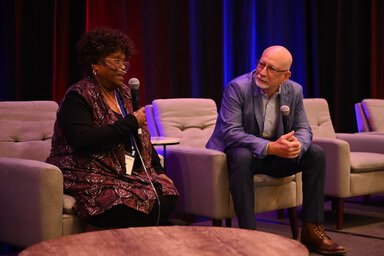
“We created this model because expanding access isn’t enough,” said lead researcher Marvella Ford, Ph.D., associate director for Community Outreach and Engagement at Hollings. “When the screening age was lowered, we celebrated – but we also knew it could unintentionally increase health disparities. Because eligibility without affordability means some people advance while others fall farther behind.”
Community partnerships help to drive change
When the U.S. Preventive Services Task Force expanded its lung cancer screening recommendations to include adults as young as 50, it marked an important step toward earlier detection. Lung cancer screening uses a quick, low-dose CT scan to look for early signs of cancer before symptoms appear. The scan itself is simple, but getting screened often requires insurance coverage, transportation, time off work and access to a facility that offers the test. Those barriers can put screening out of reach for many.
“Lowering the screening age has meant far more people are eligible, but many of them can’t actually access screening,” Ford said. “The group at the highest lung cancer risk also faces the highest barriers to care.”
Ford and collaborators first raised concerns about this unintended consequence in a 2020 American Thoracic Society statement. That work laid the foundation for the SC3 model, designed not only to increase screening availability but also to remove the practical and structural obstacles that keep people from being screened.
A hallmark of SC3 is its strong partnership with FQHCs – community-based clinics that provide comprehensive primary care, regardless of insurance status or ability to pay. They serve many of the populations that face the highest lung cancer burden, making them essential partners in increasing screening uptake among Black adults.

In South Carolina, Hollings works closely with Fetter Health Care Network in Charleston and Cooperative Health in Columbia. These FQHCs serve communities with high smoking rates, low screening rates and major barriers to care.
“Working with FQHCs is an essential component,” Ford said. “They serve the people most at risk, and they know their communities best.”
Patient navigation helps to remove screening barriers
Unlike traditional referral models, SC3 provides direct support to patients. At each FQHC site, staff members use electronic health records to identify patients who meet the lung cancer screening criteria based on age and smoking history. Once enrolled, participants are paired with a navigator who guides them through each step of the screening process.
Navigators are trained extensively in communication, lung cancer screening and health literacy and reach out by phone or text, building relationships in accessible ways over time. They are also trained to address the spectrum of barriers to screening, which can include fear of a cancer diagnosis, concerns about cost or insurance or having a medical condition that complicates screening. When some people reported difficulties completing the electronic consent form, navigators began meeting participants in community settings such as libraries, restaurants and workplaces to do the consent in person.
This tailored approach and personalized support help patients to move from eligibility to completed screening.
“That’s part of our philosophy: to meet people where they are. We wanted a model that recognizes the whole person,” Ford said. “Navigators help patients feel supported at every step.”
To date, 170 Black adults have been enrolled, with a goal of 675 participants across the three states. Early results show that SC3 is successfully reaching people disproportionately affected by lung cancer and historically underrepresented in national screening trials.
This is about ensuring that advances in medicine reach the people who need them most. If we can do that, then we can save lives.
Compared with participants in an earlier national lung cancer screening trial, the SC3 cohort differs in important ways. Whereas fewer than 5% of participants in that earlier trial were Black, all SC3 participants identify as Black. They are also more likely to be current smokers, less likely to have more than a high school education or to be married or living with a partner. They are also younger overall, as the earlier trial enrolled more older adults.
A model with national implications
Although patient navigation requires dedicated time and resources, Ford noted that the cost is minimal compared with treating late-stage lung cancer – and the many lives that could be saved through early detection.
“Early on, we’re already seeing this navigation model bring screening to people who wouldn’t have received it otherwise,” she said. “For many of our participants, this is the first time they’ve ever been screened for lung cancer. That’s powerful. That’s impact.”
The SC3 team believes their community-engaged, barrier-focused approach could serve as a national blueprint for improving lung cancer screening as well as strengthening screening efforts for other cancers.
“This is about ensuring that advances in medicine reach the people who need them most,” Ford said. “If we can do that, then we can save lives.”
References:
Marvella E. Ford, Louise Henderson, Alison Brenner, Vanessa B. Sheppard, Stephanie B. Wheeler, Tiffani Collins, Monique Williams, Rosuany Vélez Acevedo, Christopher Lyu, Chyanne Summers, Courtenay Scott, Aretha R. Polite-Powers, Sharvette J. Slaughter, Dana LaForte, Darin King, Amber S. McCoy, Jessica Zserai, Sherrick S. Hill, Melanie Slan, Steve Bradley-Bull, Neusolia Valmond, Angela M. Malek, Ellen Gomez, Megan R. Ellison and Robert A. Winn. Design and Interim Recruitment Outcomes of a Multi-Modal, Multi-Level Patient Navigation Intervention for Lung Cancer Screening in the Southeast U.S. Cancers [12 November 2025]. doi: 10.3390/cancers17223633.
Grants from Stand Up To Cancer (#6228) and the National Cancer Institute (P30CA138313; U54CA210962; U54CA210963) supported this research.

Hayley Kamin
Communications Manager
Hayley Kamin is the communications manager for the Hollings Cancer Center Communications and Marketing team, having joined the team in 2025 after three years as a communications specialist at the National Institutes of Health (NIH). As a science communicator with a Ph.D. from the University of Florida, she has extensive experience translating complex research into clear, engaging content. Her career has included roles at the NIH’s National Institute of Mental Health and the American Psychological Association, where she led content development and editorial strategy, developed science and health communications and worked with researchers and clinicians to strengthen public understanding of research.
Contact Hayley at kamin@musc.edu.