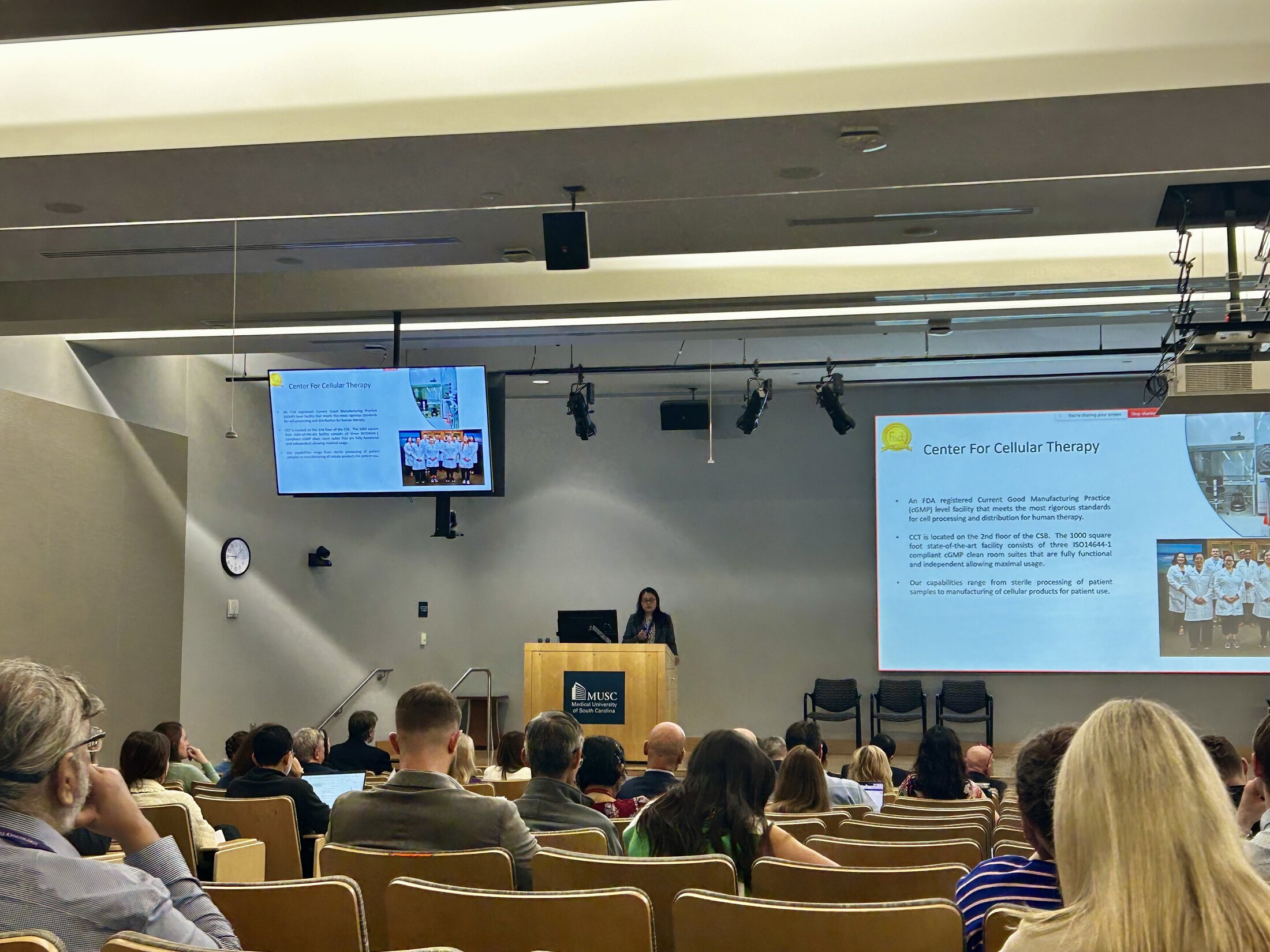
Researchers, clinicians, trainees and industry partners gathered at the Medical University of South Carolina (MUSC) for the 2026 South Carolina Clinical & Translational Research (SCTR) Institute Scientific Retreat, a daylong event focused on the rapidly evolving fields of cellular therapies and regenerative medicine and the promise they hold for treating patients with cancer, autoimmune disorders and transplant rejection. The retreat, co-sponsored by MUSC’s Hollings Cancer Center (HCC), brought together experts from across disciplines to explore how discoveries in these areas can move from laboratory concepts to real treatments for patients.
The event, organized by a team led by Hongjun Wang, Ph.D., co-director of the SCTR Pilot Program and co-scientific director for the Center for Cellular Therapy, and Shikhar Mehrotra, Ph.D., an MUSC researcher newly named chairman of the Department of Pharmacology and Immunology in the College of Medicine (COM), cultivated an atmosphere throughout the day that was energetic and collaborative. Investigators exchanged ideas over posters, discussed emerging technologies and heard from leaders in the field about the future of regenerative medicine during morning and afternoon keynote speeches.
Setting the stage for translational innovation
The retreat opened with welcoming remarks from Jennifer Dahne, Ph.D., director of the SCTR Pilot and SCTR Research Innovations Promoting Translation (SCRIPT) programs, and Wang, who emphasized the institute’s role in accelerating collaborative, translational science. “I hope people leave more aware of all the services MUSC offers and take advantage of our unique resources,” Wang said, leading off a program featuring two keynote speakers, two oral presentation sessions and two patient testimonials.
In opening remarks, Timothy Stemmler, Ph.D., vice president for Research at MUSC, underscored the importance of bringing together researchers across disciplines to highlight the breadth of scientific innovation occurring across the institution.
“First and foremost, today is about visibility,” said Stemmler. “We have all these amazing things being done at MUSC. This brings all the outstanding research front and center. They’re changing lives, and it’s powerful.”
First and foremost, today is about visibility. We have all these amazing things being done at MUSC. This brings all the outstanding research front and center. They’re changing lives, and it’s powerful.
The rise of “living drugs”
The morning keynote address was delivered by Jacques Galipeau, M.D., associate dean for therapeutics development at the University of Wisconsin-Madison. Galipeau is leading research using mesenchymal stromal cells (MSCs) as possible treatments for a range of diseases.
MSCs are a type of stem cell that can turn into several different kinds of cells, such as bone, cartilage and fat cells, positioning them as potential therapies to encourage tissue regeneration. They also help to control the immune system and reduce inflammation, which could lead to new therapeutic approaches to cancer and autoimmune diseases.
Successful therapies, he explained, must ultimately follow a clear path: “Discover. Develop. Deploy.” Throughout the talk, Galipeau praised the collaborative culture he observed at MUSC.
Exploring new frontiers in cellular therapy
The first oral presentation session highlighted MUSC scientists working to translate cell-based therapies into clinical applications.
Gary Gilkeson, M.D., a leading lupus researcher, presented work on a new treatment that uses special repair cells to help patients with severe lupus who do not improve with standard therapies. This approach may offer new hope to people with very few treatment options.
Charlie B. Strange, M.D., discussed the medical potential of tiny particles released by cells that carry important biological signals. These particles may help doctors to control more effectively how the immune system responds to disease.
Another presentation by Leonardo Ramos Ferreira, Ph.D., focused on research into specially engineered immune cells, called CAR Treg cells, designed to help the body to accept transplanted tissues or lab-grown organs without rejecting them.
Together, the talks illustrated how researchers are increasingly treating cells as programmable therapies, capable of targeting disease in ways that traditional drugs cannot.
When research meets real life
The scientific discussions took on added meaning during a patient session featuring Barbie Manchester, who shared her personal experience living with lupus and participating in clinical research. After receiving MSC therapy twice, she reported a great response, according to Gilkeson, her doctor. Her story reminded researchers of the real-world impact of the therapies they are developing. The room grew quiet as she described how experimental treatments and clinical trials have offered a new hope after years of living with a debilitating autoimmune disease. “These patient sessions really drove home why MUSC’s cutting-edge clinical trials are so important,” said Dahne. “They show the potential they have to create cures and improve quality of life and longevity for patients.”
Working toward universal cancer immunotherapy
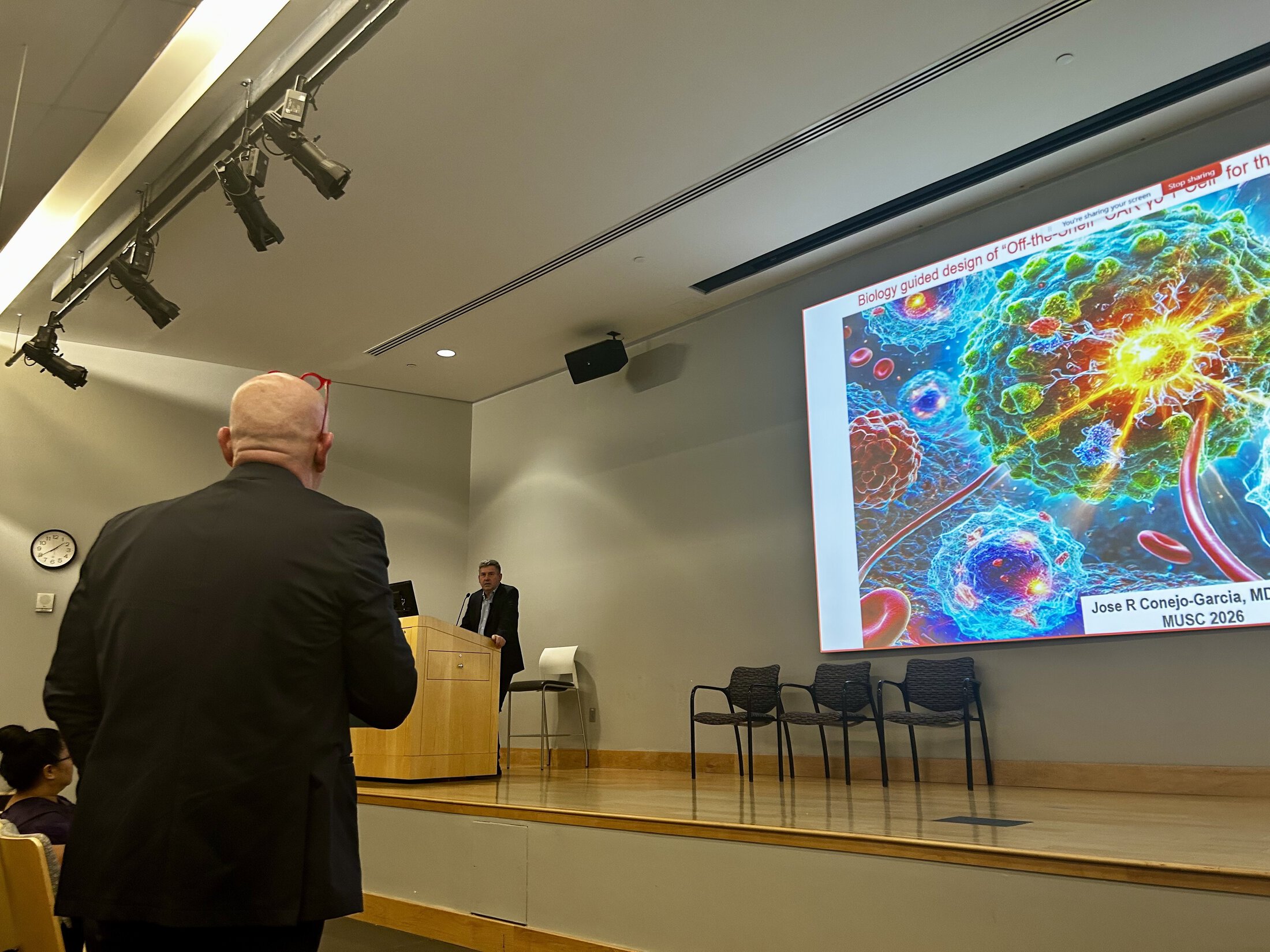
The afternoon keynote address was delivered by Jose Ramon Conejo-Garcia, M.D., Ph.D., of Duke University, who shared new research on “off-the-shelf” CAR-T cell therapies. CAR-T cells are immune cells that have been specially engineered to find and destroy cancer cells. Therapy with CAR-Ts is a type of personalized immunotherapy, meaning it uses the patient’s own immune system to fight disease.
Most CAR-T treatments today require doctors to collect immune cells from each patient and genetically modify them to fight cancer. This process can be expensive and time-consuming.
Conejo-Garcia described a different approach using gamma/delta T-cells, a type of immune cell that may be used to create universal CAR-T therapies that are ready to use without customizing them for each patient. If successful, this strategy could make powerful immunotherapies available to more patients, including those with solid tumors.
Building the next generation of therapies
The final research session highlighted additional innovations spanning regenerative medicine and biomedical analytics.
Ying Mei, Ph.D., of Clemson University, presented work on engineered cardiac organoids that could one day help to regenerate damaged heart tissues.
Richard Drake, Ph.D., of MUSC, described a new single-cell analysis platform that allows scientists to study several types of biological data at the same time, including how cells process energy, fats and sugars.
By examining these details in individual cells, researchers can better understand how therapeutic cells behave inside the body, which may improve the design of future cell therapies.
Brian Hess, M.D., of Hollings Cancer Center, discussed ongoing efforts to refine CAR-T therapy for lymphoma and other cancers, highlighting encouraging early clinical results.
At MUSC, we have the talent to really be leaders in this domain.
Keeping patients at the center
The retreat closed with a second patient testimonial from Sarah Hastings, an elementary school teacher in Charleston who was diagnosed with Type 1 diabetes at the age of 25 and later participated in clinical trials to treat her disease. Her statement reinforced the importance of keeping patient experiences at the forefront of scientific innovation.
For many in the room, the stories shared by patients served as powerful reminders of why translational research matters.
“CAR-T, and immunotherapy in general, has gotten to the level where it’s actually having a real impact on patient care,” said MUSC President David Cole, M.D., FACS. “At MUSC, we have the talent to really be leaders in this domain.”
Sophia Barry Gordon
Sophia Barry Gordon is the science writing and communications program coordinator at the South Carolina Clinical & Translational Research (SCTR) Institute. She holds a Master of Science degree from New York University and is currently a Ph.D. candidate at the University of Birmingham (UK).