Precision Medicine Molecular Testing

This page provides information about somatic molecular tests offered at MUSC. You will find information regarding tumor boards, test requests, reflexive tests including pathology protocols, and molecular data requests for clinical trials and research. For additional precision medicine and molecular testing information or questions, contact Samantha Green, MHA, MSHI, CG(ASCP), CM, at greensam@musc.edu.

Clinical Trials at Hollings

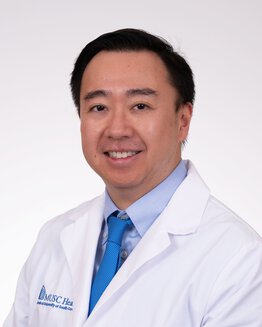
Thai Ho, M.D., Ph.D.

Precision Medicine Director, Hollings Cancer Center Blatt-Ness Distinguished Endowed Chair in Cancer Research Professor, Hematology/Oncology

Precision Medicine Director

Thai Ho, M.D., Ph.D., is the director of precision medicine at MUSC Hollings Cancer Center. He treats patients with kidney, bladder, upper tract urothelial, and prostate cancers, as well as patients affected by hereditary cancer syndromes. Dr. Ho's research on kidney and bladder cancer is funded by the National Institutes of Health and Department of Defense and explores matching cancer patients with targeted therapies by using precision medicine approaches to identify a cancer's unique vulnerabilities.

Dr. Ho completed the Baylor College of Medicine Physician Scientist Program in 2006, internal medicine residency at Washington University in St. Louis in 2009, and Medical Oncology Fellowship at MD Anderson Cancer Center in 2012. 

Tumor Boards

Contact tumor board coordinator Antonia Rupert (anr231@musc.edu) to submit a patient for review by the molecular tumor board. The patient's stage, diagnosis, recommendation and performance status will be documented.

Tumor Board Schedule

Day Time   Group
Monday

7:15 a.m. - 9 a.m.

Gynecologic Oncology
Monday 3:30 p.m. - 5 p.m.
Head & Neck
Tuesday 7:30 a.m. - 9 a.m. Genitourinary
Wednesday 7:30 a.m. - 9 a.m.
Gastrointestinal
Wednesday 7:30 a.m. - 9 a.m. 
Melanoma (2nd and 4th Wednesdays only)
Wednesday 12 p.m. - 1 p.m. Thoracic
Wednesday 4 p.m. - 5 p.m. Pediatrics
Thursday 7 a.m. - 8 a.m. 
Sarcoma (2nd and 4th Thursdays only)
Thursday 7:30 a.m. - 9 a.m.
Breast
Thursday 8 a.m. - 9 a.m. 
Hematology
Thursday 1 p.m. - 2 p.m. 
Neuro-oncology
Friday  8 a.m. - 9 a.m. Endocrine (1st and 3rd Fridays only) 

Tumor Board request & Epic ordering names

Antonia Rupert
Tumor Board Coordinator
anr231@musc.edu

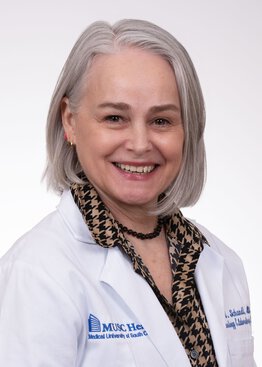
Cynthia Schandl, M.D., Ph.D.

Professor, Pathology and Laboratory Medicine

Molecular Pathology

MUSC offers somatic molecular testing for hematologic and solid tumor cancers. Dr. Cynthia Schandl serves MUSC as Professor, Division Director, and Medical Director of Clinical Pathology laboratories within the MUSC Department of Pathology and Laboratory Medicine. In addition, she developed and directs the MGP Fellowship program and continues to serve as the Medical Director for the MUSC Cytogenetics, Genomics, and Molecular Pathology sections. Her clinical focus is on precision pathology practices, primarily for precision oncology applications. Her interests also include clinical research ethics and equity in care. 

Specimen or test requests

Enter the following test codes in Epic for tests at MUSC's main Charleston campus. If you are a provider without access to MUSC’s main campus EMR, send tests or material requests by email to Anatomic Pathology Telepathology Information Solutions (telepathology@musc.edu).

Epic Test Code  Epic Orderable
 LAB8695 MUSC Solid Genomics Tumor Request (In-House Testing)
 LAB12967  Pharmacogenomics Tacrolimus CYP3A5
 LAB4022

 Cancer Cytogenetics


Somatic Molecular Testing

There are reflexive molecular testing protocols for thoracic, gastrointestinal, melanoma and endometrioid cancer. The results are submitted in the patient’s Epic Chart Review in the LAB tab under Pathology/Cytology. Use code LAB8695 when making the request.

Thoracic Tumors

Tumor Type FISH IHC Molecular 
Lung Tumor
  • ALK Lung
  • ROS1
  • RET
  • MET
  • PD-L1 22c3 NSCLC
  • Her2 IHC w/FISH reflex if equivocal
  • Pan-TRK IHC w/reflex to NGS Fusion
  • cMet

Gastrointestinal Tumors

(All GI cancers receive MUSC MMR testing)

Tumor Type FISH IHC Molecular 

  • Esophageal Adenocarcinoma
  • Gastric Adenocarcinoma (not T1 endoscopic resection)
  • RET
  • PD-L1 LDT
  • Her2 IHC w/FISH reflex if equivocal
  • Pan-TRK IHC w/reflex to NGS Fusion
  • CLDN18.2
  • Pancreatic Adenocarcinoma
  • Small Intestine Adenocarcinoma
  • Colorectal Adenocarcinoma
  • Hepatocellular Carcinoma
  • RET
  • PD-L1 LDT
  • Her2 IHC w/FISH reflex if equivocal
  • Pan-TRK IHC w/reflex to NGS Fusion 

Cholangiocarcinoma

  • RET
  • FGFR2
  • PD-L1 LDT
  • Her2 IHC w/FISH reflex if equivocal
  • Pan-TRK IHC w/reflex to NGS Fusion 

Dermatology

Tumor Type FISH IHC Molecular
Melanoma N/A N/A 

Gynecologic Tumors

Tumor Type FISH IHC Molecular
Endometrioid N/A N/A 
  • Focused NGS Solid Tumor Panel
    • Low Grade/Stage
      • POLE->TP53
  • Expanded Solid Tumor DNA Panel (>500 gene) with MSI, TMB, selected amplifications and translocations
    • High grade/stage
 Focus NGS Solid Tumor Panel (SOLID)
AKT1 ALK APC BRAF CDKN2A
CTNNB1 CYSLTR2 DDR2 EGFR EIF1AX
ERBB2 ERBB4 ESR1 FBXW7 FGFR1
FGFR2 FGFR3 GNA11 GNAQ GNAS
H3F3A  HIST1
H3B HRAS
IDH1
IDH2  KEAP1
KIT
PDGFRA
PIK3CA
PLCB4
POLD1 POLE PTEN RAC1 
RAF1 RET RNF43 ROS1 SMAD4 
TERT TERT TP53     

Test Specimen Requirements

Testing Lab Test-TNA Volume Specimen Requirements
MUSC SNP Microarray (amplifications and homozygous deletions)>10ng of high-quality DNA; additional DNA required if low DNA quality
2 mL of K2EDTA peripheral blood or bone marrow aspirateBlock with H &E
USS (unstained slides) pending quality/quantity
MUSC NGS Myeloid Molecular Panel 2 mL of K2EDTA peripheral blood or bone marrow aspirateBlock with H &E
USS pending quality/quantity
MUSC NGS Focused Solid Tumor Panel
5.75 ul range at 5-20 ng TNA
Block with H &E
10 unstained slides (USS)
Diff Quick Stained Smear
MUSC Expanded Solid Tumor DNA Panel (>500 gene) with MSI, TMB, selected amplifications and translocations
50ng-100 ng TNA
Block with H &E
USS pending quality/quantity
NeoGenomics Universal Solid Tumor NGS Fusion Panel 10ng/ul Block or 10 USS

Pathology Review Algorithm

  1. Pathologists identify which cases are likely sufficient for expanded.
  2. Review of case by molecular pathologist for confirmation once sections are taken for IHC / FISH.
  3. Prep sample / extract DNA / measure DNA quantity and quality.
  4. If quality/quantity are good for expanded panel, case goes on that. If not, it goes to focused panel the same week (would not lose a week). 

Somatic Molecular Testing Turnaround Times

Test and Level of Service Turnaround Time
PD-L122c3 or LDT Global 1-2 days
cMET CDx for NSCLC Global
2 days
Claudin 18 FDA (VYLOY®) for Gastric/GEJ Adenocarcinoma Global
2 days
FISH Tech only
3-5 days
Pan-TRK w/reflex NTRK Fusion Panel Global
2 days
Her2 IHC +2 Breast Scoring w/ reflex Her2 FISH Global IHC Tech only FISH
1-2 days
SNP Microarray (amplifications and homozygous deletions)
7-14 days
NGS 50-Gene Solid Tumor Panel
3-8 days
Expanded Solid Tumor DNA (>500 gene) w/MSI, TMB, selected amplification & translocations
7-12 days
NGS Comprehensive Fusion Panels -Neogenomics-Global
Sarcoma, Comprehensive, Targeted & Universal
21 days

Molecular Data Request

Requests for genomic data needed for research or clinical trials require completion of the CIDER REDCap form followed by a SPARC request form. For additional information or assistance with molecular data, contact Samantha Green (greensam@musc.edu).

  1. CIDER request form. Complete a CIDER data request within REDCap.
  2. SPARC request form. Next, complete a SPARC request.
    • The path to follow is:
      Medical University of South Carolina > Biomedical Informatics Center (BMIC) > Data Delivery Services > Clinical Data Services > Research Data Request

Frameshift

Frameshift is a vendor neutral software that is a central repository for genomic information (DNA, RNA, protein) from existing vendors (such as Caris, Tempus, Guardant, Natera, Foundation, MUSC sequencing) for the purposes of clinical research.

Examples of Frameshift Use Cases

  1. Identify patients for Hollings clinical trials (across Charleston, Orangeburg, Florence, Tidelands) based on genomic alterations.
  2. Identify the prevalence of mutations by tumor type for feasibility questionnaires.
  3. Integrate with Hollings Investigator Initiated Trials to define the real-world population of patients that would be eligible for a proposed study.
  4. Support tumor boards, clinical research teams, and healthcare providers with integrated genomic information from molecular testing.
  5. Serve as a central repository for germline and somatic alterations to link genotype and outcomes.
  6. Promote translational research and bridge the gaps between basic and clinical investigators.
  7. Accelerate implementation of AI-driven modeling based on multi-omics data integration while maintaining confidentiality for protected health information.

For more information about Frameshift, please contact:
Samantha Green, MHA, MSHI, CG(ASCP), CM
Precision Medicine Project Manager
greensam@musc.edu