Abdominal cancer doesn’t wait. Neither should you. That’s why Hollings is implementing a next-day access program for patients newly diagnosed with non-metastatic stomach cancer, small intestine cancer and hepato-pancreato-biliary (HPB) cancers, like liver cancer and pancreatic cancer.

There are no standard screening tests for these cancers. Symptoms may be minor at first or they may appear to be caused by other, more common conditions. Because of this, these cancers are often diagnosed after they have spread beyond the original site – making quick medical action all the more important.

How to get next-day access to an abdominal cancer surgeon

Under our Next-Day Access program, people with a new diagnosis of non-metastatic liver cancer, pancreatic cancer, bile duct cancer, gallbladder cancer, stomach cancer or small intestine cancer can call 843-985-PANC (7262).

A nurse coordinator will review your information to ensure that your case is appropriate for the next-day program and schedule an appointment. Most patients can be seen the next business day.

Next-Day Access Scheduling

If you have received a new diagnosis of non-metastatic stomach cancer, small intestine cancer, liver cancer, pancreatic cancer, gallbladder cancer, or bile duct cancer, contact our nurse coordinator between 8 a.m. and 4:30 p.m. Monday through Friday (except holidays) to schedule an appointment.

Schedule: 843-985-PANC

What to expect at your appointment

At your initial appointment, you’ll be seen by an advanced practice provider who will perform an initial physical exam and discuss your medical history. You will also meet with a board-certified surgeon who specializes in treating these cancers. The surgeon will answer any questions that you have and outline a plan of action. Learn more about our team of surgeons.

Our mission is to begin treatment as soon as possible. A follow-up appointment will be set within about a week of your first appointment. In between these appointments, our physicians will be reviewing your case at the Gastrointestinal Cancer Tumor Board, a group that includes medical oncologists, surgical oncologists, radiation oncologists, radiologists, pathologists and members of the Clinical Trials Office. Together, these specialists pool their expertise to ensure that you have a care plan tailored to your needs and the option to participate in clinical trials, when appropriate.

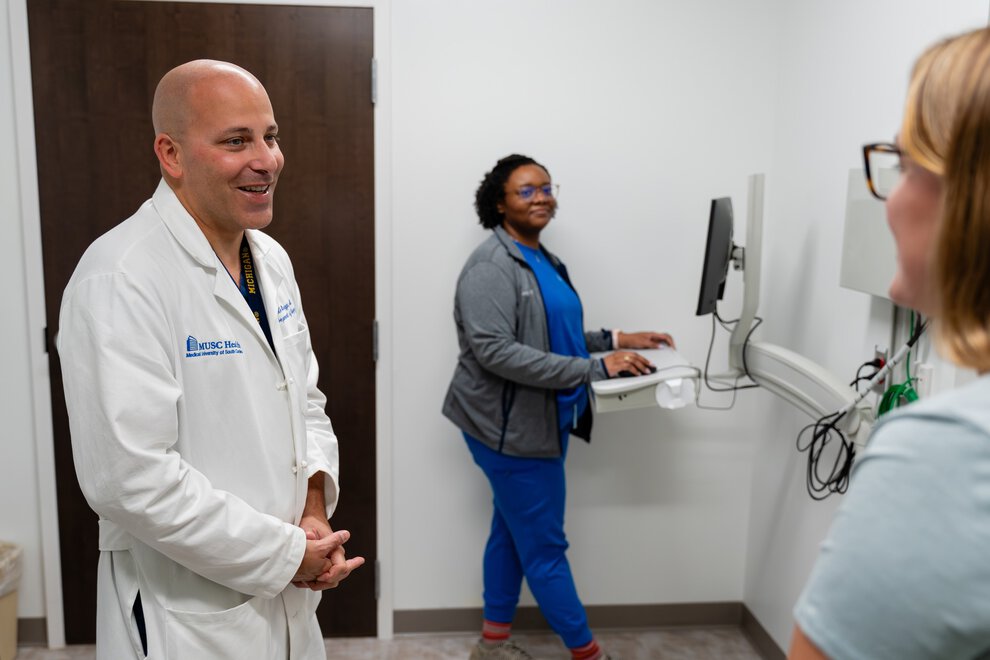
A doctor in a white coat listens intently to a nurse in clinic.

Walk through an appointment with the Next-Day Access team

[MUSC Hollings Cancer Center logo appears over music. A man in a white doctor’s coat in a conference room speaks, identified as Kevin King Roggin, M.D., clinical director for surgical oncology.]

Roggin: People who’ve just learned they have cancer want to see the best doctor they can – but they also want to see one immediately. Cancer patients shouldn’t have to choose between top-notch care and quick care.

At MUSC Hollings Cancer Center, patients don’t have to make this choice, thanks to our Next Day Access program. This program is for patients who have been diagnosed with non-metastatic upper GI or hepato-pancreato-biliary cancers, like stomach, liver or pancreatic cancer.

[Words on screen: The Next-Day Access program is for people with non-metastatic upper GI cancers, hepato-pancreato-biliary cancers, stomach cancer, liver cancer, pancreatic cancer.]

Timely treatment by specialists is especially important for these cancers.

[A team of clinicians gathers in a circle in a provider workspace to talk. A doctor and nurses talk to a patient in an exam room. A nurse walks a woman down a hallway and guides her into an exam room.]

So, if someone in South Carolina has just been diagnosed with one of these, they can call our nurse coordinator and, if they qualify, can get an in-person or video intake appointment for the next business day.

[A woman in dressy business speaks to the camera in a conference room. She is identified as Laurrie D. Rumpp, R.N., surgical oncology nurse practitioner.]

Rumpp: At the first appointment, we’ll perform a physical, review any test results that you already have, and see if you might be a good fit for a clinical trial.

[A nurse examines a patient; clinicians talk in the work area; a genetic counselor sits at a table with a patient; a nurse sits in the exam room across from the patient and talks]

And we’ll talk to you and answer your questions. You’ll have a chance to meet with one of our surgeons who specializes in your type of cancer, and at the conclusion of the visit, we’ll set you up for a treatment plan that is specific for you.

Roggin: Hollings is South Carolina’s only National Cancer Institute-designated cancer center. We offer very high-level care that is informed by the latest research, and we offer access to clinical trials that aren’t available elsewhere in the state. And we think that all South Carolinians should have access to this level of care. That’s why we started the Next Day Access clinic.

Getting diagnosed with one of these cancers is scary. We get that. We’re here to see you through it.

Narrator: The Next-Day Access clinic is available for people with a diagnosis of non-metastatic stomach cancer, small intestine cancer, pancreas cancer, liver cancer, bile duct or gallbladder cancer and rare cancers like sarcomas and GI stromal tumors.

To speak to the Next-Day Access nurse coordinator, call 843-985-7262.


What cancers are included in the Next-Day Access program?

The Next-Day Access program includes stomach (gastric) cancer, small intestine (small bowel) cancer and hepato-pancreato-biliary (HPB) cancers. HPB cancers include liver cancer, pancreatic cancer, gallbladder cancer, bile duct cancer, retroperitoneal sarcomas and rare tumors like neuroendocrine tumors and gastrointestinal stromal tumors (GIST).

Stomach Cancer

Stomach cancer is relatively rare in the U.S. Risk factors include smoking, certain inherited conditions, obesity and gastroesophageal reflux disease (GERD). Early signs of stomach cancer can include indigestion, bloating, nausea or heartburn. Signs of more advanced stomach cancer can include stomach pain, dark red stool from bleeding, unexplained weight loss, difficulty with swallowing or jaundice (when the whites of your eyes and skin turn yellowish).

Small Intestine Cancer

The small intestine is divided into three parts – the duodenum, jejunum and ileum. Cancer can start in any of these areas, but most commonly starts in the duodenum, the part that connects to your stomach. Overall, though, small intestine cancer is rare. Symptoms can include pain in the abdomen, dark red stool from bleeding, unexplained weight loss or nausea.

Liver Cancer and Bile Duct Cancer (cholangiocarcinoma)

Liver cancer is uncommon in the U.S., although worldwide it is the third most common cause of cancer death. Risk factors include chronic infections with either Hepatitis B virus or Hepatitis C virus, cirrhosis, non-alcoholic fatty liver disease and heavy alcohol use.

Bile duct cancer is rare. Risk factors include several conditions that cause chronic inflammation, such as primary sclerosing cholangitis or chronic ulcerative colitis. Other risk factors include cirrhosis and non-alcoholic fatty liver disease.

Symptoms of these cancers can include jaundice (when your skin and the whites of your eyes turn yellowish), unexplained weight loss, a lump or full feeling on the right side of the abdomen under the ribs, pain on the right side of the belly or by the right shoulder, light-colored stool or itchy skin.

Gallbladder Cancer

Gallbladder cancer is rare. One of the biggest risk factors for developing gallbladder cancer is gallstones. However, most people with gallstones do not go on to develop cancer. Symptoms can include belly pain, lumps in the belly, jaundice (yellowing of the skin and whites of the eyes), nausea and vomiting.

Pancreatic Cancer

Pancreatic cancer is the 10th most common cancer in the U.S. Risk factors include smoking, obesity, type 2 diabetes, chronic pancreatitis and certain inherited family cancer syndromes. Symptoms can include jaundice (yellowing of the skin and whites of the eyes), fatigue, oily stools, unexplained weight loss, pain in the belly or back and blood clots.