LOWVELO

A one-of-a-kind cycling event for riders of all ages and levels that funds lifesaving cancer research at Hollings. 

Register Now
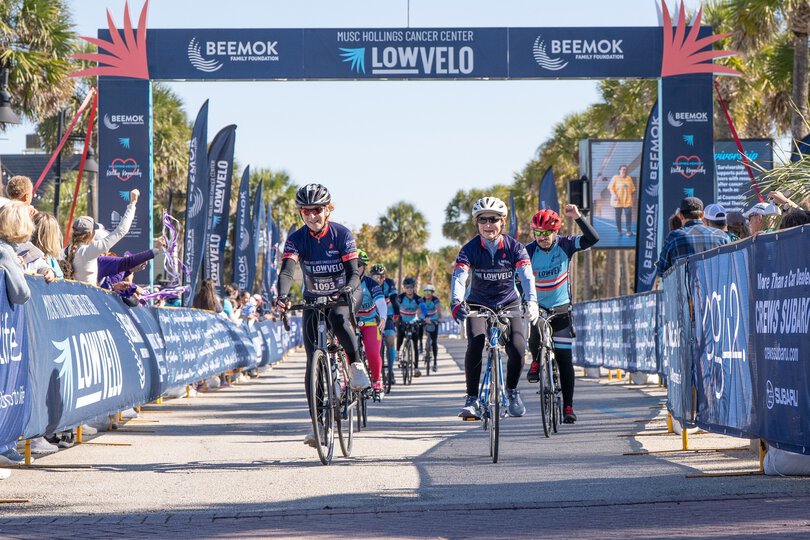
a group of riders pass under the finish line truss at Lowvelo25 with people on either side cheering them on

LOWVELO / [ low·vel·oh ] / Noun.

A combination of the words Lowcountry and velo, the French word for “bike.” A cycling event that brings a dedicated group of riders, volunteers, virtual participants, sponsors and staff members together to raise funds for innovative and lifesaving cancer research at the state’s only National Cancer Institute-designated cancer center: MUSC Hollings Cancer Center in Charleston.


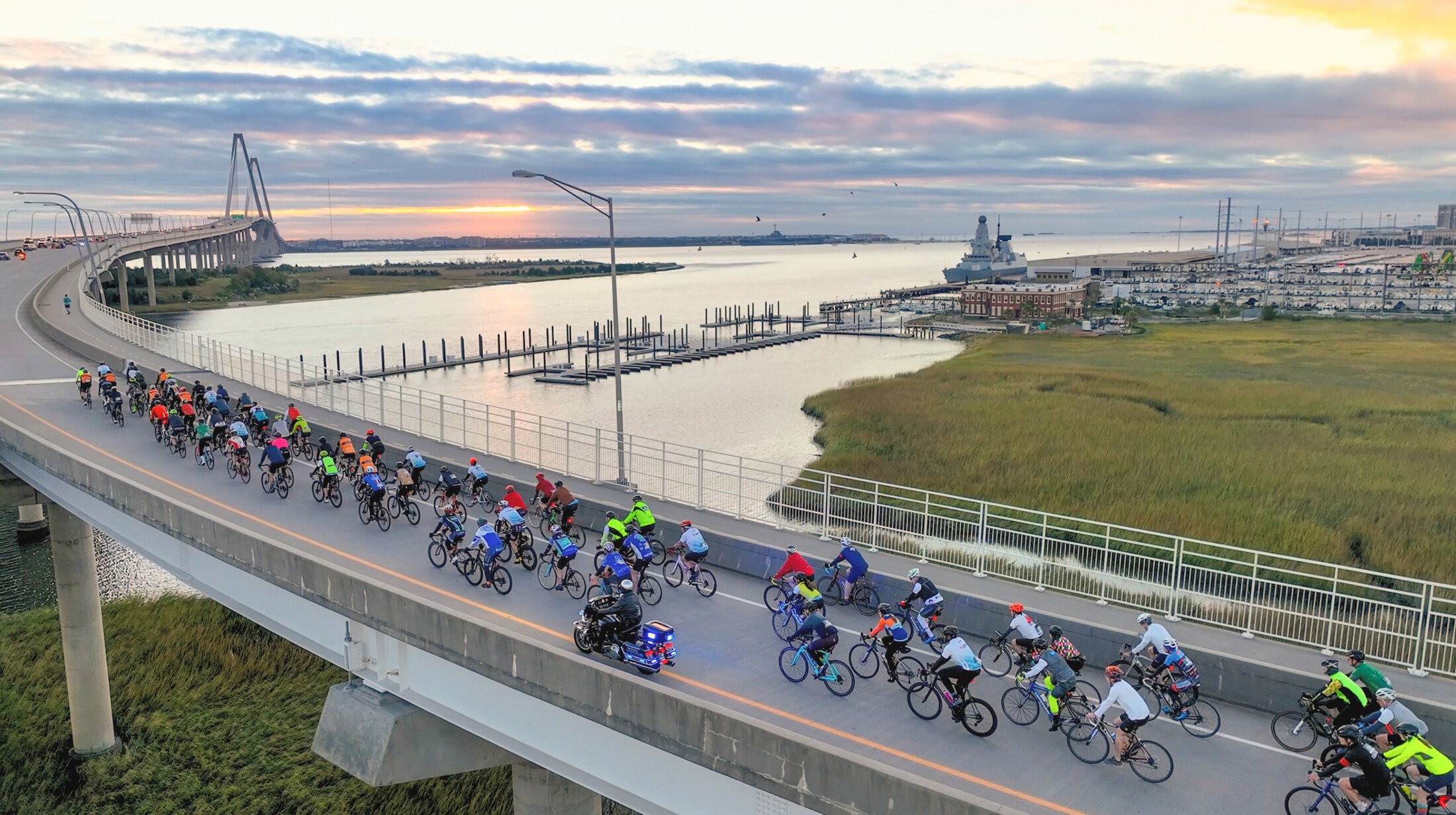
Overhead view of a group of bicyclists heading up the Ravenel Bridge on-ramp as the sun rises in front of them.

Join us for LOWVELO

There’s room for everyone at LOWVELO, our annual fundraising bike ride on November 7. Whether you’re interested in biking, volunteering or donating, your efforts help to advance cancer research at MUSC Hollings Cancer Center.

Ride
Donate
Volunteer
The Research
A route for everyone

Ride

Are you looking for a family-friendly ride around the islands? A vigorous ride through the beauty of Francis Marion National Forest? Or what about a music-thumping, arm-pumping stationary cycling class?

LOWVELO offers all this and more.

LOWVELO is about raising money for cancer research. But it’s also about living a healthy lifestyle and moving our bodies.

Our annual bike ride offers five routes, ranging from seven to 80 miles, and stationary rides at the finish line. There’s also a virtual Home Team option!

Let’s Ride!
A pair of smiling riders approach the Lowvelo finish line in a celebratory mood.
Funding Cancer Research

Donate

Show your support for your favorite rider or donate in honor of a loved one. When you donate to LOWVELO, rest assured that your money will stay right here in South Carolina, funding lifesaving cancer research at MUSC Hollings Cancer Center. And thanks to the generosity of our sponsors, 100% of rider-raised dollars go directly to research.

Donate Now
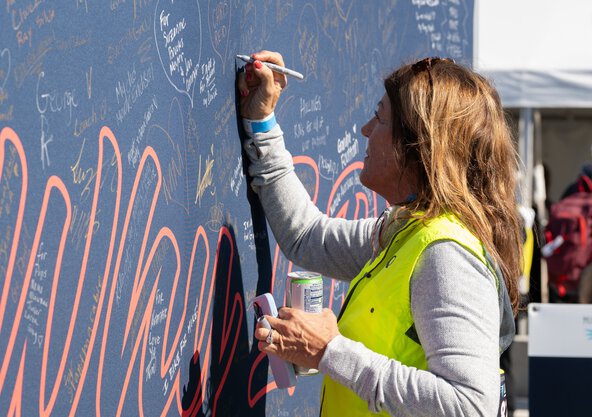
A large banner at the Lowvelo finish line block party filled with handwritten messages about why people ride in Lowvelo.
Your Support Makes It Happen

Volunteer

Pulling off an event like LOWVELO doesn’t happen without help! We need between 300 and 500 volunteers to ensure a smooth and successful day. Whether you’re willing to assemble packets, staff a rest station, direct parking or make sure that every rider gets a big cheer at the finish line, we appreciate your time and talent! 

Volunteer
A smiling group of volunteers cheer and wave pom poms.
Changing What’s Possible

The Research

Since the first ride in 2019, riders have raised $4.6 million for cancer research. This money has funded projects for researchers using CAR-Tregs against cancer, looking for better ways to address depression in cancer survivors, exploring more effective treatment options for triple negative breast cancer, and much more. 

Impact
a graduate student wearing headphones works in a research lab

 Extraordinary Impact

LOWVELO rallies everyone together for one great cause — raising money for innovative and lifesaving cancer research at MUSC Hollings Cancer Center. And thanks to the generosity of our sponsors, 100% of rider-raised dollars go directly to research.

1,640 people participated in 2025.
$1.1M raised in 2025, a new milestone.
$4.6M raised since LOWVELO began in 2019.
$24M in full-scale NIH grants secured from LOWVELO seed funding.
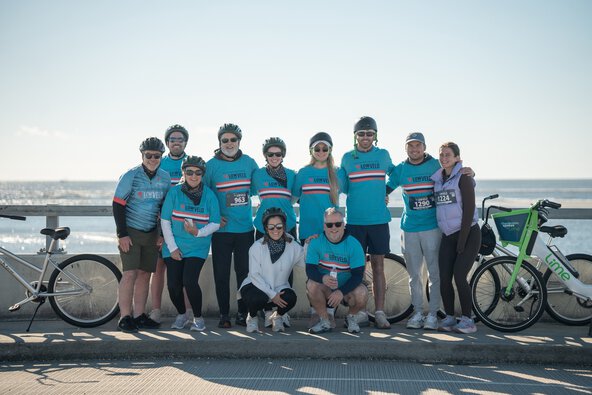
a large group stands together on the bridge over Breach Inlet with their bikes off to the side during a break in their Lowvelo ride
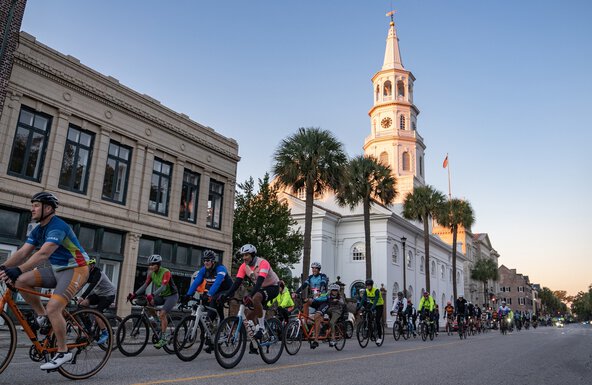
a large group of cyclists rides past a historic church with a tall white steeple in downtown Charleston during the Lowvelo bike ride
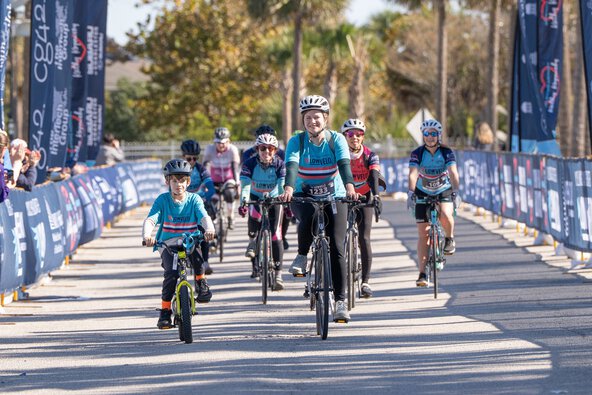
a woman and small boy ride down the Lowvelo finish line chute with another group of riders behind them
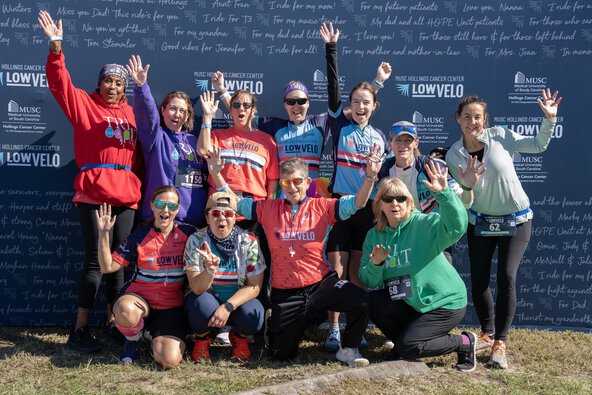
a large group of riders stand in front of a Lowvelo backdrop cheering and raising their arms in the air
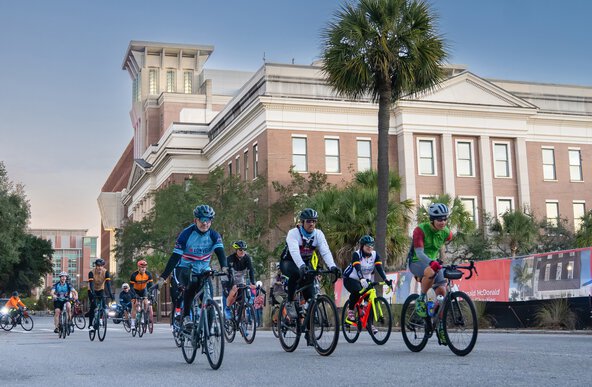
a group of Lowvelo25 cyclists rides past the MUSC Hollings Cancer Center building, which uses the money raised during the event for research
a woman writes a message on a large fabric sign intended for people to share why they ride in the Lowvelo fundraising bike ride
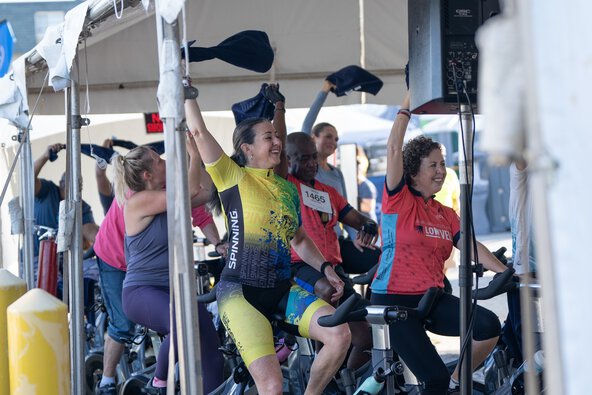
Stationary cyclists under a tent wave towels overhead.
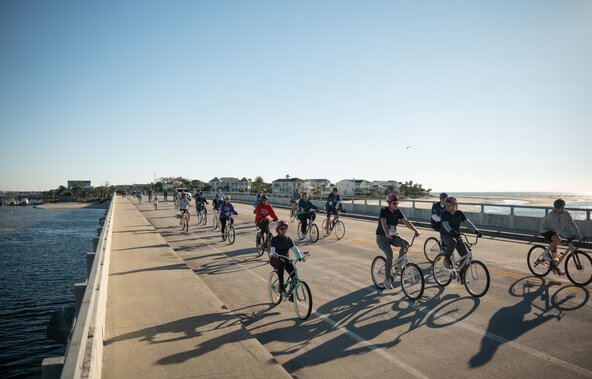
a large group of cyclists ride over a bridge with beach houses behind them
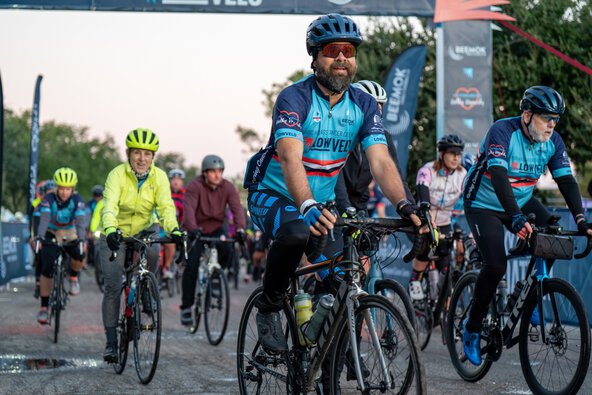
a large group of cyclists ride under the Lowvelo25 starting line truss

LOWVELO Stories

See More Stories
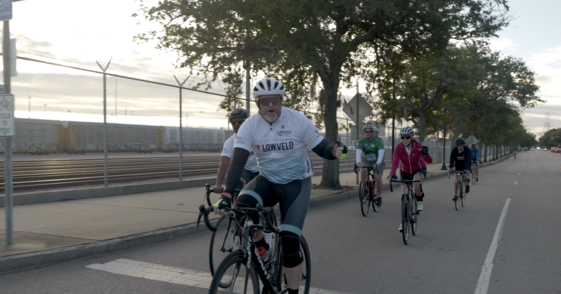
A group of cyclists wave as they ride on a city street.
What is LOWVELO?
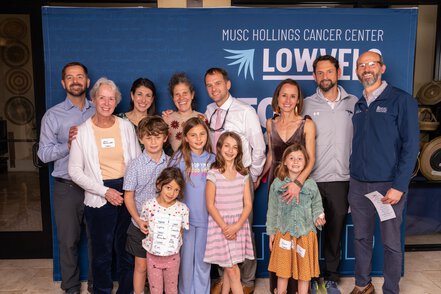
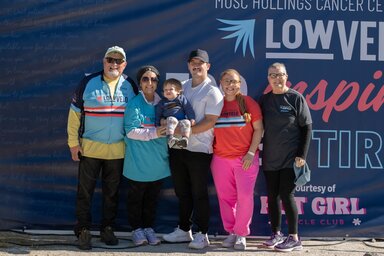
A large happy family of multiple generations.
Riding for a beloved father and grandfather
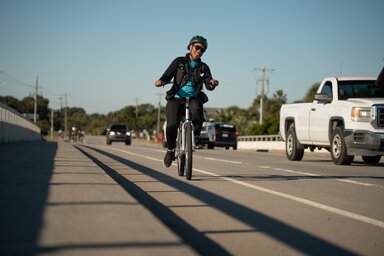
A woman in a bike helmet stands holding her bike.
A second chance for Sylvie Baele
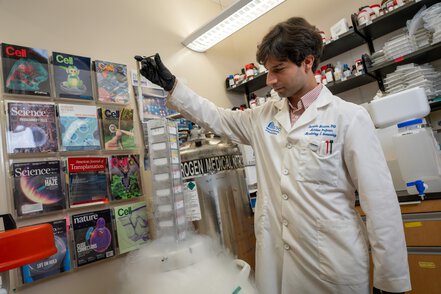
Freezing fog wafts as a researcher lifts samples out of a container of liquid nitrogen in a research lab.
How LOWVELO is funding big ideas by Dr. Leo Ferreira

[music over MUSC Hollings Cancer Center LOWVELO logo]

[Words on screen: In 2022, we sat down with Martin “Marty” Perlmultter ... one of the first patients to receive CAR-T cell therapy at Hollings. Hollings’ first CAR-T cell clinical trial was funded, in part, by LOWVELO riders.]

[Marty Perlmutter sitting in an MUSC Hollings Cancer Center conference room]

Marty: One of the nice things about Car-T and really it's very, very different from chemotherapy that way, is you, you return to ordinary life.

And, one of the things about having been sick with cancer for so many years is I appreciate the every day.

[Marty picking fruit from a tree, standing on a stool to lift a full birdfeeder onto a pole, watering plants and walking with his wife]

I love getting up and making coffee, and feeding the birds, and taking care of my worm bin, and taking care of my plants, and tending the garden.

The quality of life is being able to enjoy the every day.

I've been blessed with a very good family.

Our children all live here, so I've had plenty of quality time with my wife and our four kids and 11 grandchildren.

So, life is good.

[Words on screen: After courageously living with cancer for more than a decade, Marty passed away in 2023. His children now carry on his legacy ...]

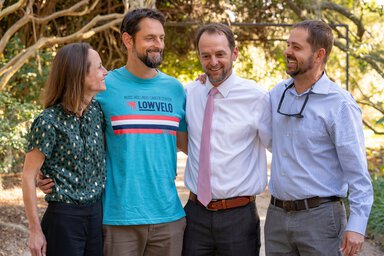
[Three men and one woman walk along a path in a park]

Jacob Perlmutter, Team MAR-T Therapy: Yeah, he was a dedicated family man his whole life. Our family was everything to him. He he was involved in a million different things.

We found out, you know, even at his funeral that he had hundreds of friends...of best friends that we didn't even know about.

A lot of people felt very close to him, but we always felt he was a dedicated husband and family man first.

[photograph of a large extended family consisting of Marty and his wife, four children, their spouses and 11 grandchildren]

Estee Perlmutter, Team MAR-T Therapy: It's pretty hard to capture him with a couple of words, but he was a smallish man [all 4 laugh].


But larger than life, big personality, charming, just incredibly sincere, offered advice to everyone.

Daniel Perlmutter, Team MAR-T Therapy: He really would love that we're doing this. and being out here in the park and outside. He loved being outdoors and loved building community.

Aaron Perlmutter, Team MAR-T Therapy: We're all proud to have come from him. We would joke because he would talk to us all, like, pretty regularly, every couple days. And we all felt really kind of special and important. And then we found out later that he did that with, you know, half the town.

Yeah, people just loved him. He was full of personality and had a great sense of humor and just very fortunate.

[Words on screen: Though he was not one for traditional medicine, Marty was intrigued to be part of this new treatment – CAR-T cell therapy.]

Jacob: He used to say he was genetically modified. He would go around and he was proud of that. I think that he, I think he was proud to do this treatment, though it was cutting edge. I mean, he was also a philosopher and also a professor of biomedical ethics. And I think that he thought a lot about these things and he was proud to do it.

And I think he was also actually, because he was so community minded, he was proud to be able to do it here, with MUSC.

[Exterior of MUSC Hollings Cancer Center building]

Daniel: He really didn't want the treatments to define him. He was much more focused on what he did during his life, I think. I think that goes back to that community mindset we keep coming around to.

[Words on screen: Marty’s kids now ride in LOWVELO to honor him.]

Estee: The money that was raised by LOWVELO allowed for CAR-T treatment to happen. And that research was so important. So, there's a little bit of a loyalty. And we were up for a challenge. It was perfect.

Jacob: Just the fact that it's local, I think would have meant a lot to my dad. Again, I think that that's a really important thing. He felt like this was something he was a part of, right here in Charleston. And it was happening, and available, you know, right here in his backyard. So, it was a community that he was proud to be a part of.


You know, I imagine if he had his choice, he might have been a part of it in a different way.

[laughter]

But he was proud that MUSC was here in Charleston doing this work.

[Researchers in white lab coats work in the lab]

Daniel: I think also everyone knows someone that's been impacted by cancer and you oftentimes find yourself wondering what to do.

[Dozens of bicyclists cross the Ravenel bridge and pedal past historic structures in downtown Charleston]

And this is just an easy, fun way to show support, to go out and bike with a bunch of friends and community. And that's what you can do.

Aaron: He'd be super proud. And, even if he couldn't hop on a bike, he would have been there for the celebration at the end, so...

[People mingling at an outdoor celebration, barbeque, a band playing on an outdoor stage, and drone footage of bicyclists coming to the finish line with the beach visible one block away]

Jacob: The party at the end of the race was awesome. Food was delicious. The music was great. The the camaraderie...everything is so positive. And again, it was a beautiful day out on, Front Beach on Isle of Palms. Again, that's sort of our home court, right? We grew up right there. And so it's a place that’s real familiar to us too. So to be there as a family was sort of special at the end of the race, too.

[Photo of the siblings in LOWVELO jerseys and bike helmets]

Daniel: It's also a celebration of the people doing the work. You know, the doctors are out there. It's nice to celebrate the boots on the ground, doing the hard work, and seeing how much support the community is trying to offer them, as well as they, they struggle to find these breakthroughs.

Estee: They see so much loss. But then at an event like this they can see all the wins. And the families still engaged and so grateful for all of their work each and every day, which is pretty tough.

Jacob: I ride for Marty Perlmutter and I'm proud of what MUSC is doing here in Charleston. Aaron: I mean, there's just a crucial need for cancer research and raising funds. And so, I was happy to be a part of that.


Daniel: I’d say I ride for the future, really. I mean, these future improvements that are going to change other people’s families so they're sitting here giving a different interview 20 years down the road. That's sort of what we're all hoping for.

Estee: I ride for hope – that other people live 20 years, not 10 years. That researchers continue having their scientific breakthroughs and feel supported and have the resources they need. So, just hope that other people have different outcomes.

[Words on screen in handwriting script: We ride for our dad, Marty Perlmutter, for CAR-T cell therapy and to bring hope to other families.]

[The Perlmutter message takes its place in a wall of other, similar messages as the MUSC Hollings Cancer Center LOWVELO logo appears along with the words Why I Ride.]


Sylvie Baele: You really don’t know, when you have cancer, if it’s going to come back. And so, you want to kind of live life to the fullest. And for me that means riding my bike in every place that I can.

[Music over MUSC Hollings Cancer Center LOWVELO logo]

[Sylvie Baele, cancer survivor, 50-mile rider, talks to the camera seated in a meeting room at Hollings]

I'm Sylvie Baele. I've been a patient at Hollings since January 2023. I am a leukemia survivor, although I still do treatment a little bit sometimes. And I'm also the executive director of Second Chance Bikes. It's Charleston's only non-profit bike shop.

[Words on screen: In January 2023, Sylvie, an avid cyclist, took her bike out for an easy 20-mile out-and-back ride.]

And at the turnaround point, I just felt terrible. I was just exhausted. A lot of people had been telling me, like, I looked pale or I looked green. And the next day I went to the doctor, got some bloodwork done, and they called me that night. It was like 9:30 and they're like, you need to go to the ER right now.

[Words on screen: Before leaving the ER, Sylvie was diagnosed with acute lymphoblastic leukemia, a cancer that affects the blood and bone marrow.]

I'm really glad that I listened to myself because we caught it early. But my numbers were pretty high at that point. And so, I started treatment like the next day.

[Words on screen: After a short round of chemo, Sylvie’s doctor put her on Ponatinib, a targeted cancer therapy, and Blincyto, an immunotherapy that works by engaging T-cells to target and destroy cancer cells.]

My doctor, Dr. Baratam here is excellent. I really trust that he's up on all anything that's been published, any study that's been done, any research, like he is on top of it. And that makes me feel really good. Feel really safe. Like, as safe as I could be.

[Words on screen: By November of 2023, her doctors considered her cancer ‘managed’, which means it is being controlled and kept from growing or spreading.]

[Snapshots of Sylvie in clinic]

Going through treatment it's kind of inevitable that there's going to be things you can't do for whatever reason. So find something that you like, if you don't already have something, and do it because it'll give you that like feeling of control over something which is really important, and it'll bring you joy.

[Selfie of Sylvie on her bike, snapshot of Sylvie with a bike in front of a small brick storefront, snapshot of Sylvie in treatment chair]

And for me, like, I'm lucky it's bikes. And I was able to do my job while going through treatment for the most part. And I'm like, really grateful for that because it was a really necessary distraction.

[Words on screen: Bikes aren’t just something Sylvie likes. They’re part of who she is and what she does.]

I run Second Chance Bikes. So I'm the executive director. Second Chance Bikes is a nonprofit bike shop. We're located in the neck area in the Chicora neighborhood, and we get people on bikes. So we take donated bikes – we fix them, we sell them...a lot of them are like sliding scale price, but they're all generally pretty affordable.

[Words on screen: She has her brother to thank for her passion. At a low point in her life, he gifted her with a bike.]

[Selfies of Sylvie on a bike]

The bike was this tool that I could rely on, that I could use. Then, I just really fell in love with it. Like, I fell in love with learning how to fix bikes. I felt like that was really empowering. I felt safe because I was getting around on a bike. So I'd like to do whatever I can to help other people kind of use bikes to improve their life.

[Words on screen: When her passion for bikes collided with LOWVELO, Sylvie knew she had to ride...]

I felt like it was kind of not even a choice. Like, why not raise funds for the institution that saved my life?

[Snapshot of Sylvie ringing the bell at Hollings]

If I had had ALL ten years ago, I would have 100% be dead right now, without a doubt. Like there weren't treatments for people with my Philadelphia chromosome and ALL. And it's because of cancer research that I am here. And so that really motivates me to ride.

[A large group of cyclists heads up a bridge with marsh below and the sun rising ahead.]

Being in a crowd of that many people on bikes, I had never done that before, and it's exciting. Like, you see, a lot of people, you know, if you're in the bike community and then you make new friends as you're riding.

[Cyclists of varying proficiency levels ride past on a quiet street shadowed by oaks.]

You listen to each other's stories.

[Drone shot of long, low bridge crossing water, people eating at tables at an outdoor festival, people serving barbeque under a tent, a band playing on an outdoor stage]

And then you get to eat and party and hang out and catch up with people at the finish line. There's a lot of times during cancer treatment that you feel really alone, really lonely, like, especially when you can't go do what your friends are doing or what your partner's doing. But when you're in a group like that, you're like, wow, all these people really care and they sacrifice their Saturday and they woke up really early to be here and to do this because they care. And it's a really nice reminder that no matter what you've been through, like you, you do have that community.

[Words on screen in handwriting script: I ride because cancer research has given me a second chance at life.]

[Sylvie’s message takes its place in a wall of other, similar messages as the MUSC Hollings Cancer Center LOWVELO logo appears along with the words Why I Ride.]


I love the fact that we are able to cycle and pedal to raise dollars for cancer research and really make a difference in cancer care.

Dr. Denis Guttridge Hollings researcher

Latest LOWVELO news