Patients in MUSC Hollings Cancer Center’s head and neck cancer program often need far more than routine scans and follow-up care after completing active treatment. Many continue to face physical, emotional and social challenges that standard post-treatment care does not always address. To support patients more fully through that next chapter, Hollings created its Head and Neck Cancer Survivorship Clinic – a program dedicated to helping people to navigate life after cancer.
“Cancer doesn’t end when treatment ends,” said physician assistant Ashton Getchell, who leads the clinic. “For many patients, the end of treatment is the start of a new journey.”
Open to anyone with a history of head and neck cancer, the clinic has become a lifeline for survivors dealing with the long-term effects of cancer and its treatment. Beyond monitoring for recurrence, the focus is on restoring function, easing side effects and improving quality of life.
Some people arrive years after their diagnosis, unsure whether new symptoms stem from past treatments. Others, such as laryngectomy patients who rely on a neck opening to breathe, need specialized support right away.
“Patients may experience late effects that show up five, 10, even 20 years later,” Getchell said. “The clinic is meant to catch those issues and connect them with the right specialists.”
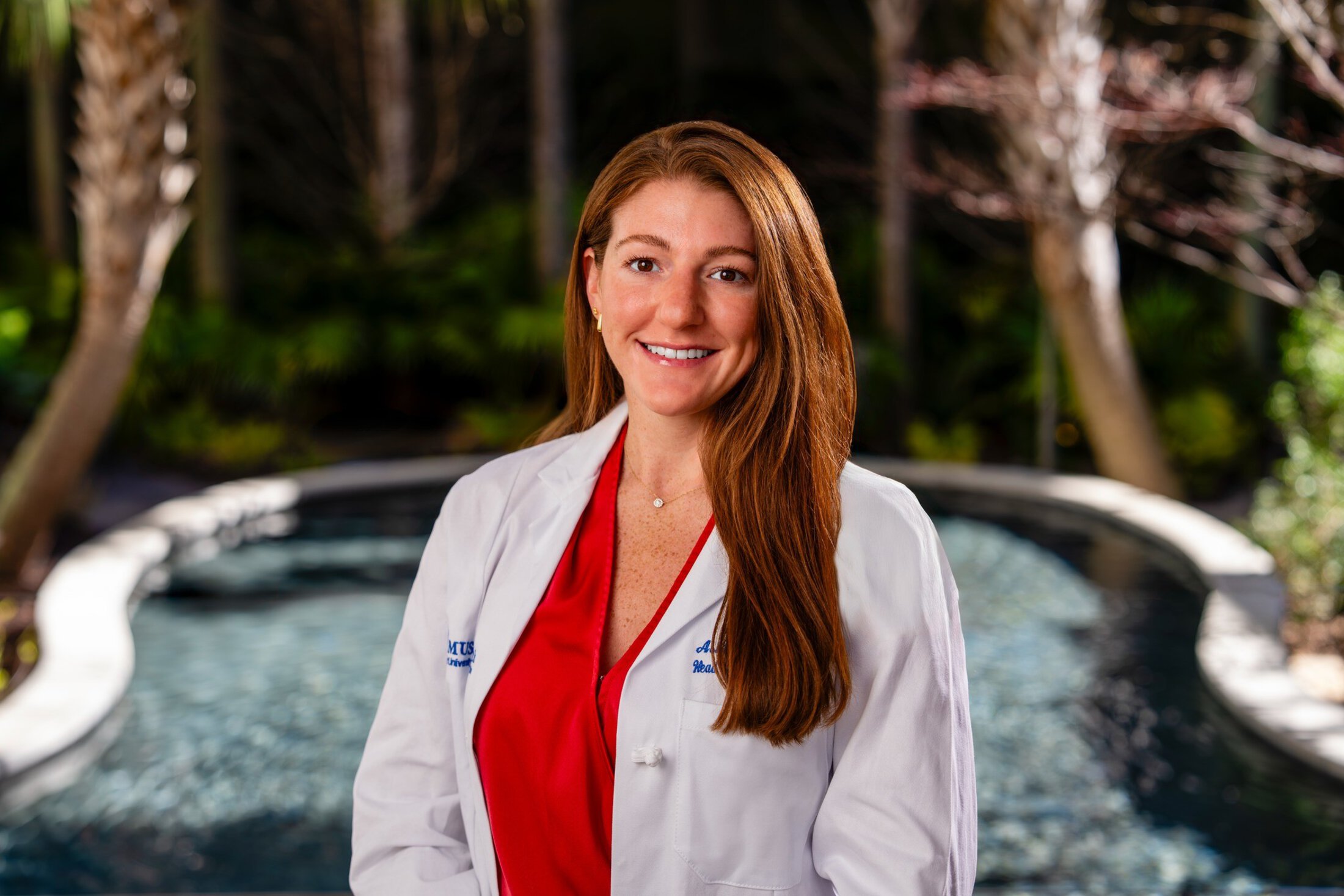
Her vigilance has uncovered issues that might otherwise go unnoticed. For example, Getchell has seen several patients whose chronic fatigue was caused by undiagnosed thyroid dysfunction, a late effect of radiation that can be missed in primary care. She also routinely screens for carotid artery stenosis in patients who received radiation to the neck – another problem not included in standard guidelines.
“I’ve already found three patients who needed carotid artery stents,” she said. “Without that screening, those blockages could have led to a stroke.”
The head and neck clinic is part of a growing network of survivorship programs at Hollings, designed with patients in mind. Through its Survivorship and Cancer Outcomes Research (SCOR) Initiative, Hollings offers dedicated clinics for multiple cancer types, each tailored to the unique long-term needs and quality-of-life challenges of different survivor groups.
The power of integrated, compassionate care
Survivors like John Purcell and Steve Olson exemplify what it means to live fully after cancer – and how Hollings’ model of comprehensive care helps to make that possible.
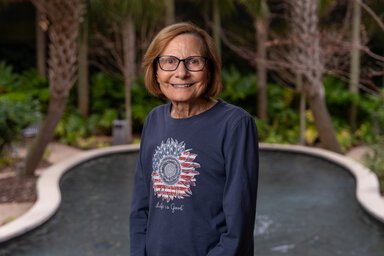
Purcell has faced four separate cancers since his initial head and neck cancer diagnosis in 2010. His treatment – a 14-hour surgery followed by months of chemotherapy and radiation – left him with lifelong side effects, including swallowing difficulties, muscle damage and radiation tightness. At the clinic, he found staff who understood these ongoing challenges.
“I finally felt seen and heard,” he said. “Ashton is wonderful; she always has advice or little tips to make things easier.”
Patients may experience late effects that show up five, 10, even 20 years later. The clinic is meant to catch those issues and connect them with the right specialists.
Olson, an HPV-related throat cancer survivor, echoed that gratitude, emphasizing Hollings’ “umbrella approach.” Six weeks of radiation and chemotherapy left his throat blistered and made eating painful. Thanks to Hollings’ coordinated care team, he felt surrounded by experts who knew what he needed at every stage.
“My speech therapist taught me how to swallow before it was a problem. The nutritionist showed me how to keep my calories up,” he recalled. “Everyone at Hollings knew what I needed before I did. I couldn’t have made it through without them.”
Treating the whole person
Their experiences reflect a truth that Hollings has built its clinic around: Surviving cancer is just the beginning. The multidisciplinary team includes physical and occupational therapists, speech-language pathologists, registered dietitians, dentists, behavioral health experts, social workers and more. At the center is Getchell, who acts as both a provider and coordinator, helping patients to navigate across specialties.
“A single visit can uncover problems that may have gone unnoticed in routine follow-up,” she said. “My goal in connecting patients to specialists is to look at the whole person and make sure no symptom or need is overlooked.”
For Purcell and Olson, the clinic’s impact extends beyond medical needs.
When Purcell lost his job and insurance due to ongoing health issues, Hollings’ financial counselors stepped in to offer guidance and resources that he described as “literally saving him” financially. Later, palliative care helped him to manage his chronic pain, and counselors guided him through survivor’s guilt after losing a friend to cancer.
“They helped me realize that living fully honors the people who didn’t make it.”
My quality of life isn’t worse; it’s just different. I can’t eat like I used to or have a cocktail, but I can still drive, mow the lawn and enjoy every day.
Olson and his wife, Pamela, used humor to cope. Pamela created a “cancer dance” to let off steam, a ritual that kept them laughing through their darkest moments. Olson carried that energy into treatment, rallying patients and staff for “jersey days,” which transformed routine appointments into joyful celebrations as patients and staff proudly wore their favorite team jerseys.
Radiation may be “the gift that keeps on giving,” he joked, but he has learned to live with its lingering effects and now mentors patients in Hollings’ Head and Neck Cancer Support Group.
Olson praised Hollings’ model of care and its dedicated head and neck oncology team, pointing to Getchell as well as nurse navigator Savannah Zimmerman, R.N., among many others.
“Every doctor reads your chart before they walk in,” he said. “They know you. You feel seen. You feel cared for. They answer every question. That’s the MUSC umbrella, and it works.”
Redefining what it means to thrive
For Getchell, helping survivors to regain confidence and control in their lives is at the heart of the work. Surveillance remains important, but the emphasis shifts toward living well.
“There will always be some anxiety about recurrence,” she acknowledged. “But my goal is to help patients live their lives to the fullest.”
Purcell and Olson embody what that can look like. Both men still return for regular check-ins and agree that, while their lives look different today, they are meaningful in new and unexpected ways.
Purcell has embraced his new normal. “My quality of life isn’t worse; it’s just different. I can’t eat like I used to or have a cocktail, but I can still drive, mow the lawn and enjoy every day.”
Olson expressed a similar sentiment, “Life is precious – hang on and live it. Doctors say, ‘You’re in remission.’ But I say, ‘No, you’re cancer-free.’ That word matters. It truly changes how you see yourself.”

Hayley Kamin
Communications Manager
Hayley Kamin is the communications manager for the Hollings Cancer Center Communications and Marketing team, having joined the team in 2025 after three years as a communications specialist at the National Institutes of Health (NIH). As a science communicator with a Ph.D. from the University of Florida, she has extensive experience translating complex research into clear, engaging content. Her career has included roles at the NIH’s National Institute of Mental Health and the American Psychological Association, where she led content development and editorial strategy, developed science and health communications and worked with researchers and clinicians to strengthen public understanding of research.
Contact Hayley at kamin@musc.edu.
Recent Cancer Survivorship stories