As the COVID pandemic intensified in 2020, health care researchers worried that delays in care would lead to worse outcomes for many types of diseases and health conditions.
Now, new research examines the one-year survival rate for people who were diagnosed with cancer in 2020 and 2021. The study, published in JAMA Oncology, looked at how many of this group died because of the cancer, not because of COVID or another cause. The researchers found that more than 17,000 people died who would otherwise have been expected to survive past one year, given their diagnoses and the normally available treatments.
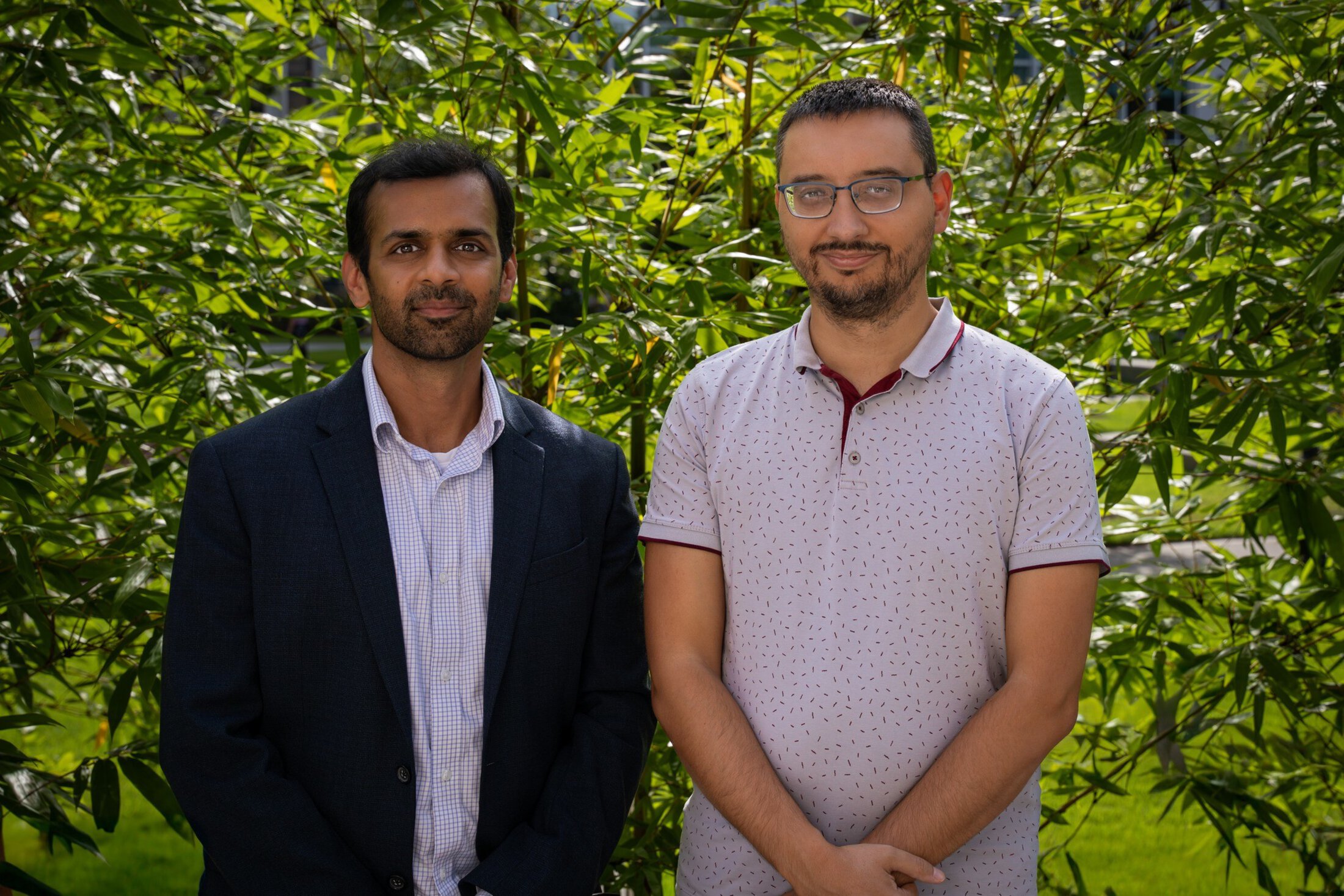
MUSC Hollings Cancer Center researchers Ashish Deshmukh, Ph.D., co-leader of Hollings’ Cancer Prevention and Control Research Program, and Haluk Damgacioglu, Ph.D., contributed to the study, which was led by researchers at UK Markey Cancer Center in Kentucky.
The study’s findings are particularly striking because survival rates for late-stage cancers had shown strong improvement between 2015 and 2019, right before the pandemic, Deshmukh said. But the one-year survival rate for people who were diagnosed with a late-stage cancer in 2020 or 2021 was 1.34 percentage points lower than it had been before the pandemic.
“Typically, when we measure cancer-specific survival, we present outcomes over five years,” Deshmukh explained. However, the data for five-year survival rates won’t be available for a few more years. “This is still early, so continued monitoring is critical to see if the impact that we observed early on, whether that would persist, or there would be some recovery in improving survival for cases that were diagnosed in more recent years.”
This study is observational, he said, so it doesn’t come to any conclusions about why survival was lower. But the researchers strongly suspect that issues with prompt diagnosis and timely treatment during the pandemic were behind their results.
Damgacioglu pointed out that the study divides the cancer patients into two groups – those diagnosed with an early-stage cancer, which usually means better outcomes, and those diagnosed with a late-stage cancer.
“This was quite important, and the most important thing is that even for early-stage cancer diagnosis, we are seeing a statistically significant difference between people diagnosed with cancer during the pandemic and not in the pandemic,” he said.
The paper calls for the examination of the health care system to understand more fully the interaction between pandemic precautions and cancer diagnosis and treatment.
“Identifying policy missteps and failures in health system preparedness that may have contributed to underdetection of cancer – as well as the previously mentioned delays in time to treatment initiation and treatment disruptions – are fundamental issues remaining to be addressed in the wake of the COVID-19 pandemic,” the paper stated. “It is important to investigate these questions further and determine whether other explanations exist as to why high-survival cancer sites were vulnerable to poorer outcomes during the COVID-19 pandemic.”
In the meantime, the researchers added, it’s critical to rebuild system capacity and to ensure that people are now getting screenings that may have been missed.
Burus T, Damgacioglu H, Huang B, Tucker TC, Deshmukh AA, Lang Kuhs KA. Survival of Patients Diagnosed With Cancer During the COVID-19 Pandemic. JAMA Oncol. Published online February 05, 2026. doi:10.1001/jamaoncol.2025.6332
This research was supported by the National Cancer Institute (grant No. P30CA177558 to Dr Burus and grant No. P30CA138313 to Drs Damgacioglu and Deshmukh) and the Biostatistics and Bioinformatics Shared Resource of the University of Kentucky Markey Cancer Center (grant No. P30CA177558).
Leslie Cantu
Senior Communications Manager
Leslie Cantu is the senior communications manager at MUSC Hollings Cancer Center, where she works with researchers, clinicians and patients to tell the people of South Carolina about the innovative work being done to improve cancer care for everyone in the state. She joined the MUSC Office of Communications and Marketing in 2018 after a career as an award-winning writer, editor and producer at community newspapers and local TV news. She transferred to the communications office at Hollings in 2022, where she happily finds something new and interesting to write about every day. Her favorite stories to cover at MUSC have included Match Day, the Angel Tree Parade, a clinical trial of CAR-T cell therapy and the many patients who have agreed to share their very personal struggles and triumphs.
Contact Leslie at cantul@musc.edu.
Recent Cancer Research stories