Clinical trials are often described as the pipeline to new cancer treatments. For physicians on the front lines, they are more than that: They shape how care is delivered every day. Behind nearly every therapy now considered standard care was once a clinical trial, tested by patients and refined by clinicians.
To mark Clinical Trials Day, physicians at MUSC Hollings Cancer Center reflect on how clinical trials have changed not only what they can offer patients but how they think about care. From expanding access to treatment to transforming conversations about hope and risk, their perspectives reveal how deeply clinical trials are woven into modern oncology.
The radiation oncologist
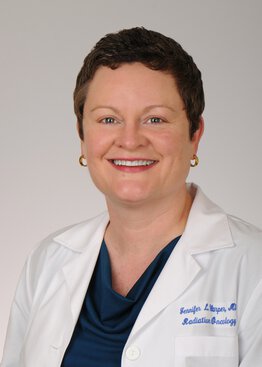
Jennifer Harper, M.D.
Dr. Jennifer Harper is a radiation oncologist, certified by the American Board of Radiology. Her primary focus is in the treatment of breast cancer, sarcoma, and head and neck cancer. She also is credentialed in the use of Gamma Knife radiosurgery, with interests in its application for the treatment of brain metastasis. In the field of breast cancer, Dr. Harper has published extensively on the topic of accelerated partial breast irradiation.
In 2016, she developed a group wellness program, in collaboration with the MUSC Wellness Center, for breast cancer survivors. This ongoing program, known as the Survivors' Fit Club, seeks to facilitate the healing of mind body and spirit following breast cancer treatment.
Dr. Harper is also a passionate medical educator. Her teaching efforts have been recognized with an award by the Association of Residents in Radiation Oncology. She has also received an MUSC Faculty Excellence in Teaching Award following nomination by medical students. She is also the Physician Representative for the Medical Physic Residency Program. She serves as the Department of Radiation Oncology's Quality Assurance (QA) Medical Director and has incorporated QA and medical education instruction into the residency curriculum.
Making care more patient-centered
For radiation oncologist Jennifer Harper, M.D., clinical trials are not just about testing new therapies; they are a way to rethink how care is delivered.
Historically, cancer treatment has often required long, intensive regimens that can be difficult for patients to complete, especially those who must travel far distances or balance care with work and family responsibilities. Clinical trials offer a pathway to challenge those norms.
“I’m convinced that cancer treatment should be more patient-centered and accessible. Clinical trials are the only means by which treatment options that decrease the intensity or duration of therapy can be validated and ultimately become standard of care.”
Her research centers on rethinking traditional radiation schedules, exploring whether less intensive approaches can maintain outcomes without compromising effectiveness while also easing the burden on patients and making care more accessible.
“I have written clinical trials investigating shorter durations of radiation therapy to decrease barriers to care. In practice, that means testing whether radiation can be delivered in fewer, more manageable sessions, helping reduce the strain of treatment while preserving its impact.”
These kinds of studies reflect a broader shift in oncology: not just asking what works but what works best for patients’ lives. By testing more convenient, less burdensome approaches, clinical trials are helping to ensure that advances in care are also advances in access.
The surgical oncologist
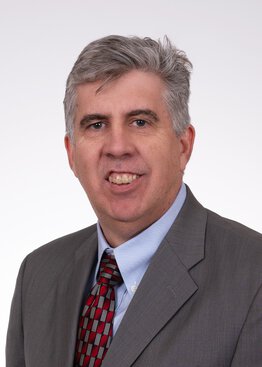
William Gabriel Hawkins, M.D., FACS
As deputy director of MUSC Hollings Cancer Center, William Hawkins, M.D., focuses on strengthening translational research and increasing clinical trials across South Carolina.
With a longstanding commitment to leadership, patient care, education and research, Hawkins has expertise in investigating pancreatic cancer. He is also a professor in the Department of Surgery at MUSC and in the Division of Surgical Oncology.
Reframing trials as an early option
For surgical oncologist William Hawkins, M.D., clinical trials have transformed one of the most important aspects of care: how physicians talk with patients facing serious diagnoses.
In the past, clinical trials were often presented as a last resort – something to consider only after standard treatments failed. Today, that mindset is changing.
“Clinical trials have fundamentally shifted how I approach conversations with my patients about difficult-to-treat cancers like pancreatic cancer. Rather than viewing a trial as a last resort, I introduce trials early as a legitimate – often preferred – treatment option.”
That shift reflects the growing recognition that some of the most promising therapies are available through trials, not after them. It also acknowledges the role patients play in moving care forward.
“The advances we take for granted today, from targeted therapies to immunotherapy combinations, did not appear out of thin air. In my career, the survival of pancreatic cancer patients has tripled. That’s a direct result of clinical trials.”
For Hawkins, participation in a trial is both a personal decision and a contribution to future care.
“Being on a clinical trial is a gift a patient offers to the cancer community. The reward they receive can be hope when there might otherwise be only bad news. The advances we see today came from patients who had the courage to say ‘yes’ to clinical trials in the past. That knowledge shapes every treatment discussion I have.”
That perspective – viewing trials as an integral part of care rather than an alternative to it – continues to reshape how physicians guide patients through complex treatment decisions.
The medical oncologist
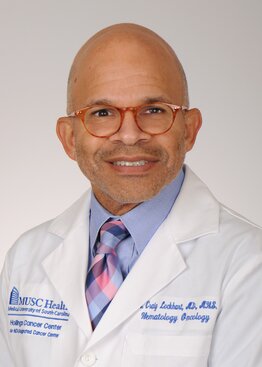
A. Craig Lockhart, M.D., MHS, FASCO
Dr. Craig Lockhart is the Director of the Division of Hematology & Oncology at MUSC and Associate Director for Clinical Science at MUSC Hollings Cancer Center. His research specialty is gastrointestinal cancers, and he has been a principal investigator on more than 100 Phase I/II and III trials.
Prior to joining MUSC, Dr. Lockhart was on the faculty and in leadership roles at the University of Miami, Miller School of Medicine, Washington University in St. Louis/Siteman Cancer Center, and at Vanderbilt University/Vanderbilt-Ingram Cancer Center.
Dr. Lockhart has been conducting early-phase clinical trials for over 20 years. His specific research interests are developing and conducting Phase I/II clinical trials of novel therapeutics applied to gastrointestinal cancers. In treating these cancers, he aims to incorporate novel agents or molecular/genetic-based treatments into therapeutic trials in the pursuit of personalized cancer care. He has developed and led multi-institutional clinical trials involving the treatment of GI tumors through national cooperative groups as well as investigator-initiated studies. He has been an investigator and co-investigator on individual grants, on successful SPORE grant applications and on successful multi-institutional UM1 grant applications.
Dr. Lockhart has also served on several committees for the American Society of Clinical Oncology (ASCO), including the scientific and career development committees. He has been a member of the National Comprehensive Cancer Network (NCCN) guidelines committee for gastric and esophageal cancers. He also serves as faculty at the ASCO/American Association for Cancer Research (AACR) Methods in Clinical Cancer Research Workshop, mentoring fellows and junior faculty on the development of gastrointestinal cancer therapeutic protocols.
Dr. Lockhart graduated from the University of Texas Southwestern Medical School at Dallas in 1993. He completed residency training at Barnes Hospital at Washington University, fellowship training in hematology/oncology at Duke University and a fellowship in drug development at GlaxoSmithKline in the North Carolina Research Triangle Park. He also earned a Master of Health Science degree in clinical trials at Duke University. He completed his undergraduate degree, a bachelor’s in biology, at Rice University.
Building the foundation of modern oncology
Medical oncologist Craig Lockhart, M.D., sees clinical trials not as a separate part of cancer care but as its foundation.
“There is no treatment that we give today that has not been informed by clinical trials. Even when patients do not fit the ‘mold,’ the treatment decisions made are still based on data from previous trials.”
Over the course of his career, Lockhart has witnessed how quickly the field can evolve. When he began practicing in 2001, immunotherapy – now a cornerstone of treatment for many cancers – did not yet exist in routine care.
“Clinical trials with immunotherapies started in about 2007. The impact of these therapies on current cancer treatment outcomes is almost immeasurable.”
Today, that evolution continues through precision medicine. Many patients now undergo genomic testing to identify mutations that can be targeted with specific therapies – an approach made possible by years of clinical trial research.
“We aim to do cancer genomics on every patient now so that we can provide personalized treatment. This approach would not exist without clinical trials showing that therapies targeted toward cancer-specific genomic changes improve outcomes.”
His perspective highlights the cumulative impact of clinical research. Each trial builds on the last, steadily expanding what is possible for patients.
A continuous cycle of progress
Collectively, these reflections illustrate how clinical trials have moved from the margins of care to its center. They are no longer seen as separate from treatment but as a driving force behind it – shaping everything from therapy design to patient experience.
For patients, that means more options, more personalized approaches and, increasingly, more reasons for hope. For clinicians, it means practicing in a field that is constantly evolving and grounded in evidence generated by real patients. And for the future of cancer care, it means that every trial – every patient who says “yes” – helps to define what comes next.
Learn more about clinical trials on the Hollings website.
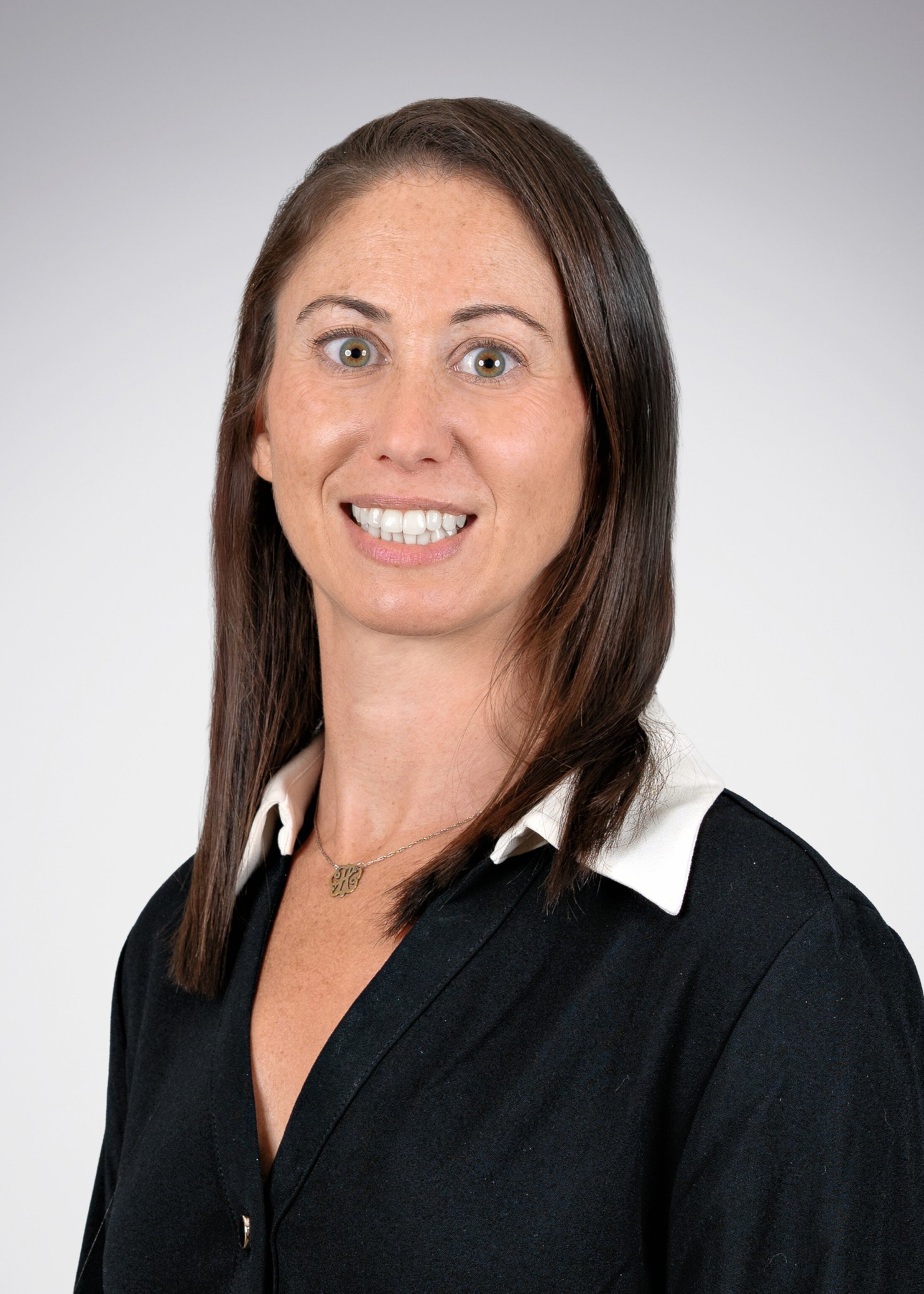
Hayley Kamin
Communications Manager
Hayley Kamin is the communications manager for the Hollings Cancer Center Communications and Marketing team, having joined the team in 2025 after three years as a communications specialist at the National Institutes of Health (NIH). As a science communicator with a Ph.D. from the University of Florida, she has extensive experience translating complex research into clear, engaging content. Her career has included roles at the NIH’s National Institute of Mental Health and the American Psychological Association, where she led content development and editorial strategy, developed science and health communications and worked with researchers and clinicians to strengthen public understanding of research.
Contact Hayley at kamin@musc.edu.
Recent Cancer Clinical Trials stories