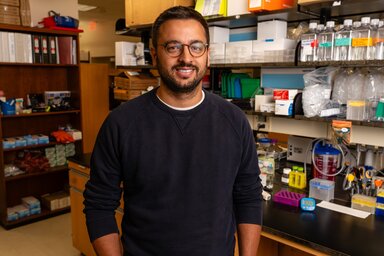
A new study led by an MUSC Hollings Cancer Center researcher identifies where anal cancer cases among people with HIV are concentrated across the United States, providing a roadmap for communities seeking to expand access to anal cancer screening and prevention.
The study was published Aug. 22 in the Journal of the National Cancer Institute. It found substantial geographic variation in the burden of anal squamous cell carcinoma (SCC) among people with HIV, with some metropolitan areas accounting for a disproportionately large share of cases. The findings could help health systems and public health agencies to determine where screening infrastructure and specialized care are most urgently needed.
“It’s a population-based study, and the objective is to quantify the burden, both at the state and metropolitan statistical area levels,” said first author Ashish Deshmukh, Ph.D., co-leader of the Cancer Prevention and Control research program at Hollings. “Our goal is to provide information that can help communities plan for the screening needs of people who are at increased risk.”
People with HIV face a substantially higher risk of anal cancer than the general population. Yet, until recently, there were no formal national recommendations for when and how to screen people with HIV for anal cancer.
That changed with the introduction of screening guidelines in 2024. The recommendations consider a person’s age, HIV status and whether high-resolution anoscopy, or HRA, a specialized procedure used to identify precancerous lesions in the anal canal, is available.
Screening typically begins with an anal Pap test, similar to the Pap smear used to screen for cervical cancer. Both anal and cervical cancers are primarily caused by the human papillomavirus (HPV). If abnormal cells are found after an anal Pap, then an HRA can be used to examine the anal canal under magnification and identify precancerous lesions that can be treated before they become cancer.
The importance of detecting and treating these lesions was demonstrated by the landmark ANCHOR trial, published in 2022, which showed that treating anal precancer in people living with HIV substantially reduced the risk of developing anal cancer. But access to HRA remains uneven. The procedure requires specialized equipment, training and expertise, and many communities do not have a provider who can perform it. A 2024 study found that about one-third of people with HIV lacked access to HRA, while another 45% would need to be referred to another facility for the procedure.
The study also found that about 20% of anal SCC diagnoses among men in the U.S. occur in men with HIV. In some areas, however, the proportion is substantially higher. For example, people with HIV accounted for about 59% of anal cancer diagnoses among men in the District of Columbia, 30% in Maryland, 29% in California and New York, 27% in Texas and 25% in Georgia.
“These findings have important cancer prevention and public health implications, as the geographic concentration of anal SCC diagnoses among people with HIV highlights the need for coordinated approaches that address both HIV and anal cancer prevention,” the study authors noted.
The study looked at larger metropolitan areas and did not have data for South Carolina – although Deshmukh and colleagues are working on another study that will.
Notably, though, MUSC Health offers both anal Pap tests and HRA testing through its Ryan White HIV Clinic.
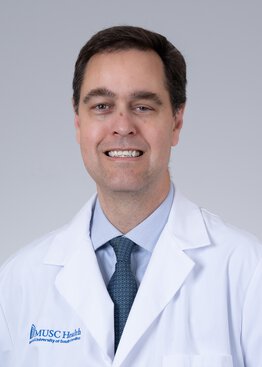
“The big change in recent years is we have formal guidelines – which Dr. Deshmukh participated in developing – which we didn’t have historically,” said infectious diseases doctor Eric Meissner, M.D., Ph.D. “So we have formal guidelines for who, when and how to screen for anal cancer, and so it is a routine part of our discussions with our patients, in the same vein as we talk about colon cancer screening, lung cancer screening and cervical cancer screening – anal cancer screening is on that list.”
Meissner said patients agree to anal cancer screening at about the same rate that they agree to other preventive measures, whether it be vaccination, hypertension management or other cancer screenings. But he has noticed that patients are more likely to get screened now that there is an official screening guideline.
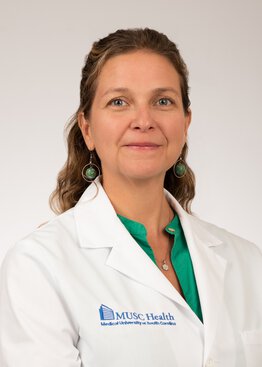
Gweneth Lazenby, M.D., performs the HRA procedure at the MUSC Ryan White HIV Clinic and has done so for almost 15 years. In that time, she has never diagnosed a case of anal cancer and has seen only a few patients with precancer.
That experience also underscores an important point: Although people living with HIV face an elevated risk, anal cancer remains relatively uncommon. Still, it is currently one of the fastest-growing cancers in terms of both new cases and mortality. More than 11,000 people in the United States are expected to be diagnosed with anal cancer this year.
While anal cancer diagnoses and deaths are continuing to rise among the general population, HPV vaccination can prevent many HPV infections that lead to cancer. At the same time, screening can identify precancerous lesions in people at higher risk and allow them to be treated before cancer develops. Emerging evidence also suggests that anal cancer rates may decline in communities where screening programs have been implemented.
By pairing this data with information on at-risk groups approaching the screening age, health agencies can plan for screening and tailor infrastructure to meet community needs.
Featured in this story

Ashish A. Deshmukh, Ph.D.
Dr. Deshmukh is a cancer population scientist whose research focuses on human papillomavirus infection (HPV) and associated cancers that lie at the intersection of cancer epidemiology, health economics, and decision science. He primarily focuses on studying HPV infection and related cancer risk, evolving epidemiology, and guiding the development, evaluation, and implementation of risk-targeted, effective, and optimal (cost-effective) primary and secondary preventive interventions and policies.
Gweneth Lazenby, M.D., MSCR
Gweneth B. Lazenby, M.D., MSCR is a graduate of the Medical University of South Carolina (MUSC). She obtained her obstetrics and gynecology residency training from the University of Hawaii. She returned to MUSC and was the first fellow to complete the RID fellowship. She is currently obtaining a certificate in Global Health.
Dr. Lazenby's clinical work and research are focused in maternal HIV and sexually transmitted infections, especially Trichomonas vaginalis. Dr. Lazenby is the director of the gynecology and maternal HIV clinics at MUSC and she is dually appointed in the departments of Medicine and Obstetrics and Gynecology. She serves on the NIH HIV Perinatal Guidelines committee and is an active member of the Infectious Diseases Society of Obstetrics and Gynecology.
Eric Meissner, M.D., Ph.D.
Reference
Ashish A Deshmukh, Haluk Damgacioglu, Kalyani Sonawane, Cameron Haas, Qianlai Luo, Anna Satcher Johnson, Eric A Engels, Meredith S Shiels, Anal cancer burden among people with HIV across US states, DC, and major metro areas, JNCI: Journal of the National Cancer Institute, 2026;, djag285, https://doi.org/10.1093/jnci/djag285
This work was supported by National Institutes of Health grant R01CA232888 and the Intramural Research Program of the National Cancer Institute. As part of the HIV/AIDS Cancer Match Study, the following cancer registries were supported by the cooperative agreement funded by the Centers for Disease Control and Prevention, National Program of Cancer Registries: Colorado (NU58DP006347-01), Georgia (5U58DP003875-01), Florida (NU58DP007161), Louisiana (NU58DP006332-03-00), Maryland (NU58DP007114), Massachusetts (NU58DP006271-04-00), Michigan (17NU58DP006334), New Jersey (NU58DP007117), New York (6NU58/DP006309), North Carolina (1NU58DP006281), Texas (NU58DP006308). District of Columbia is supported by the Centers for Disease Control and Prevention cooperative agreement DP006302. The following cancer registries were supported by the SEER Program of the National Cancer Institute: Connecticut (HHSN261201300019I), Louisiana (HHSN261201800007I/ HHSN26100002), Massachusetts (HHSN261201800008l), New Jersey (75N91021D00009), and New York (HHSN261201800009I). The New Jersey State Cancer Registry was also supported by the state of New Jersey and the Rutgers Cancer Institute, the Maryland Cancer Registry was also supported by the State of Maryland and the Maryland Cigarette Restitution Fund, the Louisiana Tumor Registry was also supported by the state of Louisiana (0587200015), the Texas Cancer Registry was also supported by the State of Texas, and the New York State Cancer Registry was also supported by the state of New York. The following HIV registries were supported by HIV Incidence and Case Surveillance Branch of the Centers for Disease Control and Prevention, National HIV Surveillance Systems: Colorado (NU62PS003960), Connecticut (5U62PS001005-05), Florida (NU62PS924532), Louisiana (NU62PS924522-02-00), Michigan (U62PS004011-02), New Jersey (U62PS004001-2), New York (NU62PS924546-02-00; PS18-1802: Integrated HIV Surveillance and Prevention Programs for Health Departments, National Center for HIV, Viral Hepatitis, STD, and TB Prevention (NCHHSTP).

Leslie Cantu
Senior Communications Manager
Leslie Cantu is the senior communications manager at MUSC Hollings Cancer Center, where she works with researchers, clinicians and patients to tell the people of South Carolina about the innovative work being done to improve cancer care for everyone in the state. She joined the MUSC Office of Communications and Marketing in 2018 after a career as an award-winning writer, editor and producer at community newspapers and local TV news. She transferred to the communications office at Hollings in 2022, where she happily finds something new and interesting to write about every day. Her favorite stories to cover at MUSC have included Match Day, the Angel Tree Parade, a clinical trial of CAR-T cell therapy and the many patients who have agreed to share their very personal struggles and triumphs.
Contact Leslie at cantul@musc.edu.
Recent Cancer Research stories