Cancer cells are built to survive under pressure.
As tumors grow, cancer cells may struggle to get enough oxygen and nutrients while also withstanding damage caused by their own rapid growth and later by cancer treatments. To cope, they rely on proteins that help to protect them from stress.
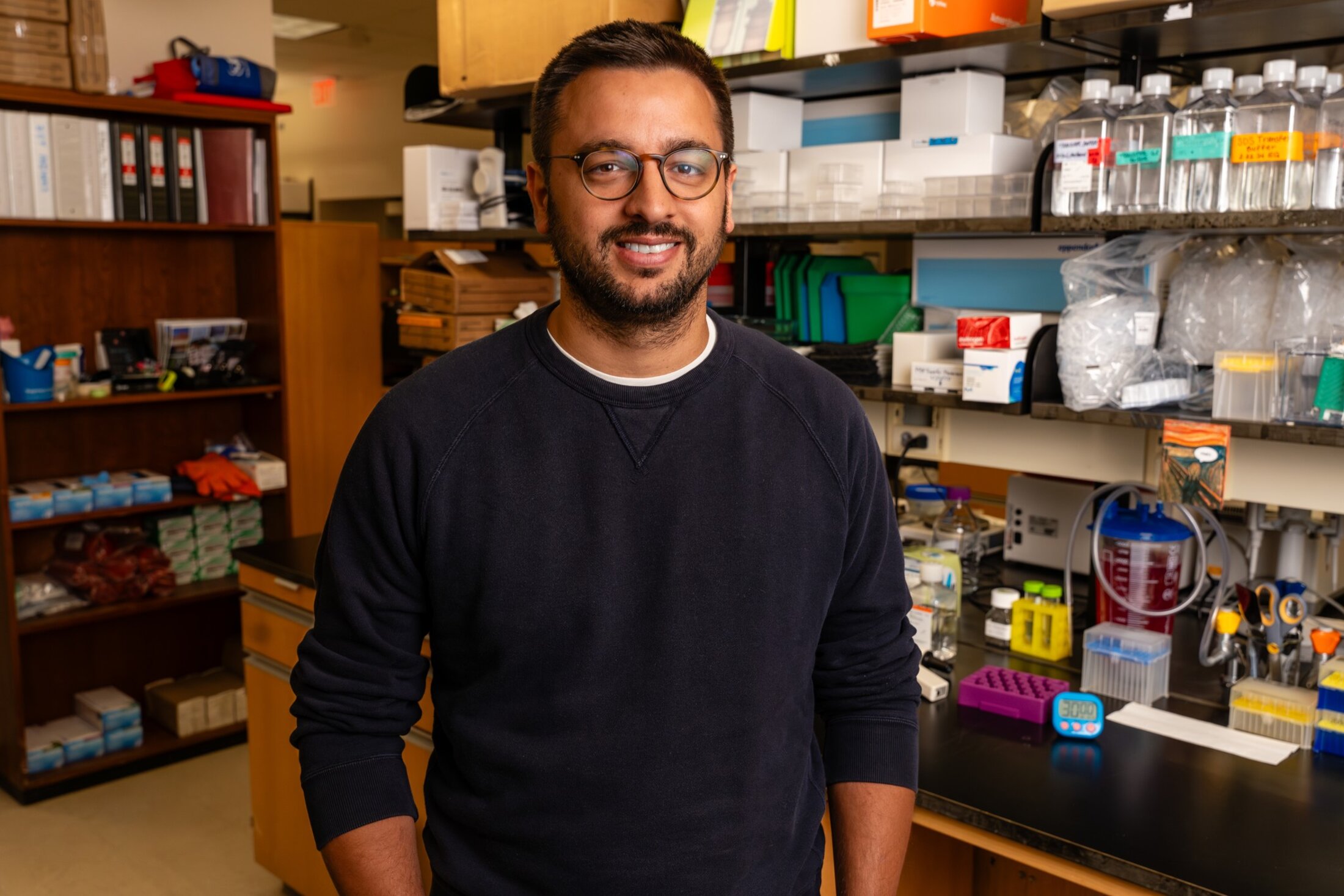
At MUSC Hollings Cancer Center, researcher Tim Barnoud, Ph.D., is studying whether one of these stress-protective proteins could provide a new way to target pancreatic cancer.
A five-year grant from the National Cancer Institute will allow Barnoud and his team to investigate the role of a protein called HSP70 in pancreatic cancer. His team wants to understand why this protein builds up in an unexpected place inside pancreatic cancer cells – and whether targeting it could eventually point to new treatment strategies.
The research examines pancreatic ductal adenocarcinoma, the most common type of pancreatic cancer. Pancreatic cancer is the third-leading cause of cancer-related death in the U.S., with a five-year survival rate of only about 13%.
However, the treatment landscape for pancreatic cancer is beginning to change. In August, the U.S. Food and Drug Administration approved daraxonrasib, the first pancreatic cancer drug designed to block RAS, a protein that drives cancer growth. In a clinical trial, the drug significantly improved survival for people with metastatic disease who had already received treatment.
The approval marked an important advance in pancreatic cancer treatment. However, despite daraxonrasib’s approval, pancreatic cancer can still progress after treatment, underscoring the need to identify additional vulnerabilities that could be targeted alone or in combination with existing therapies.
“There’s still a lot of work to do,” Barnoud said. “Alternative approaches to treat patients remain an important need.”
Helping cancer cells to cope with stress
Barnoud has been studying how cancer cells respond to stress since his postdoctoral training.
His research focuses on heat-shock proteins, a family of proteins that helps cells to function under stressful conditions. The proteins act as cellular chaperones, helping other proteins to maintain their structure and function when cells are under stress.
“Cancer cells can become addicted to these proteins,” Barnoud said, explaining that the proteins help them to survive, grow and eventually spread.
One member of this family, HSP70, caught his attention.
We know HSP70 is important for cancer, but we still don’t fully understand what it’s doing inside mitochondria or how it affects mitochondrial function and the ability of pancreatic tumors to spread. There’s a lot of biology that we need to explore.
Barnoud and his colleagues discovered something unusual: Pancreatic cancer cells accumulate unusually high levels of HSP70 within their mitochondria, structures that produce the energy cells need to function – a pattern they did not observe in normal cells.
“The location of a protein within a cell really matters because it can determine what that protein does and which cellular processes it affects,” Barnoud explained. “Finding HSP70 in the mitochondria of pancreatic cancer cells tells us there may be something important happening there that we need to understand.”
That difference raised an intriguing possibility: Could the unusual buildup of HSP70 give researchers a way to target pancreatic cancer cells without harming normal cells?
Exploiting a cancer-specific weakness
To test that idea, Barnoud and colleagues developed an experimental drug designed to reach the mitochondria and block HSP70 there.
For now, the drug is being used as a research tool. The new grant will allow the team to use this unique tool to understand more fully what HSP70 does in pancreatic cancer, including its role in cancer cell survival, tumor growth and metastasis as well as what happens when this pro-survival protein is blocked.
“We know HSP70 is important for cancer, but we still don’t fully understand what it’s doing inside mitochondria or how it affects mitochondrial function and the ability of pancreatic tumors to spread,” Barnoud said. “There’s a lot of biology that we need to explore.”
One piece of that puzzle involves oxidative stress.
Oxidative stress occurs when potentially harmful molecules build up inside a cell faster than the cell can control them. HSP70 appears to help pancreatic cancer cells to manage that stress.
Barnoud’s team previously found that blocking HSP70 increased oxidative stress inside pancreatic cancer cells. But the cells fought back by activating another survival process called autophagy, which allowed them to break down and recycle the damaged material. When the researchers blocked both HSP70 and that backup pathway, the combination slowed pancreatic tumor growth.
The grant builds on that work by digging deeper into the underlying biology. Rather than simply examining what happens when HSP70 is blocked, the researchers want to understand how and why those changes occur – knowledge that could inform how the approach might be used in cancer treatment.
Changing the environment around a tumor
The researchers are also looking beyond the cancer cells themselves.
Pancreatic tumors do not exist in isolation. Instead, they are surrounded by immune cells, connective tissue and other structures that together form the tumor microenvironment. In pancreatic cancer, that environment tends to suppress immune activity. That is one reason immunotherapies that have transformed treatment for some cancers have had limited success against pancreatic cancer.
Barnoud’s earlier research suggests that targeting HSP70 may affect not only the cancer cells but also the environment around them. In preclinical studies, his team found that blocking HSP70 increased the presence of immune cells involved in antitumor responses.
The new grant will allow his team to investigate those changes more closely and explore whether they could make the tumor more vulnerable to immune-based treatments. Ultimately, the results could determine whether targeting HSP70 might work best in combination with other treatments.
“I don’t expect targeting HSP70 to work as a standalone solution for every tumor,” he said. “Instead, an HSP70-targeting treatment might eventually complement other therapies or become part of a treatment strategy designed to attack the cancer from several directions.”
That combination approach matters because cancer cells can often adapt when only one pathway is blocked.
Building the foundation for future treatments
Before an HSP70-focused treatment can be considered for patients, researchers need to understand both the biology of the protein and the experimental drugs that block it.
No drug targeting HSP70 is currently approved, and Barnoud emphasized that his team’s inhibitor is not yet ready to be tested in patients. For now, the goal is to build the scientific foundation to move the approach in that direction.
That means understanding what HSP70 is doing inside pancreatic cancer cells, what happens when it is blocked and which tumors are most vulnerable. That information could help researchers to develop better drugs, identify promising treatment combinations and move an HSP70-targeting approach toward clinical testing.
Answering those questions requires expertise across cancer biology, pancreatic cancer, drug discovery and tumor immunology. Barnoud, a cancer biologist by training, said that breadth is difficult for any single investigator to master. He credits collaborators, mentors and research programs across Hollings and MUSC with providing the expertise and support needed to move the research forward.
“I received a lot of support along the way,” he said. “It was definitely a team effort.”
For Barnoud, the grant is a chance to find out whether pancreatic cancer cells’ dependence on HSP70 is a vulnerability that can be exploited. By uncovering how pancreatic cancer cells use HSP70 to survive and what happens when that protection is removed, his team hopes to lay the groundwork for a new way to attack one of the most difficult cancers to treat.
Featured in this story

Thibaut 'Tim' Barnoud, Ph.D.
Education and Training
Postdoctoral Fellow, Molecular and Cellular Oncogenesis Program, The Wistar Institute, 2016-2021
Ph.D., Department of Biochemistry and Molecular Genetics, University of Louisville, 2010-2015
B.A., Department of Biology, University of Louisville, 2005-2009
Research
Dr. Barnoud’s laboratory uses genetically engineered mouse models (GEMMs) to study the p53 tumor suppressor, the most frequently mutated gene in human cancer. Their primary focus is on the impact of p53 variants on cancer risk and response to therapy, primarily centered on colorectal cancer. Mechanistically, their research aims to determine the influence of the African-centric P47S variant of p53 on colorectal cancer progression using genetically engineered cell lines, transgenic and colitis-induced mouse models of cancer. His lab is also actively investigating the role of another African-centric variant of p53, Y107H. The long-term goal of their research program is to leverage genetic variants of p53 in order to better understand the role of p53-mediated tumor suppression.
A second major research focus of his laboratory is to understand the role of heat shock proteins (HSPs) on the initiation and progression of cancer. They have studied specific inhibitors that target HSPs with the hopes of developing effective therapies for gastrointestinal (GI) cancers. Specifically, his laboratory is focused on novel small-molecule inhibitors of HSP70 as a potential therapeutic target for GI cancers. They found that a significant fraction of HSP70 localizes to the mitochondria of tumor cells; as a result, they generated novel mitochondrial-targeting HSP70 inhibitors. They are leveraging these inhibitors in order to better understand the role of HSP70 in the initiation, progression, and metastasis of GI cancers. They are also interested in identifying novel combination strategies of HSP70i with standard of care (i.e., Gemcitabine, immune checkpoint inhibitors) in order to improve.

Hayley Kamin
Communications Manager
Hayley Kamin is the communications manager for the Hollings Cancer Center Communications and Marketing team, having joined the team in 2025 after three years as a communications specialist at the National Institutes of Health (NIH). As a science communicator with a Ph.D. from the University of Florida, she has extensive experience translating complex research into clear, engaging content. Her career has included roles at the NIH’s National Institute of Mental Health and the American Psychological Association, where she led content development and editorial strategy, developed science and health communications and worked with researchers and clinicians to strengthen public understanding of research.
Contact Hayley at kamin@musc.edu.
Recent Cancer Research stories