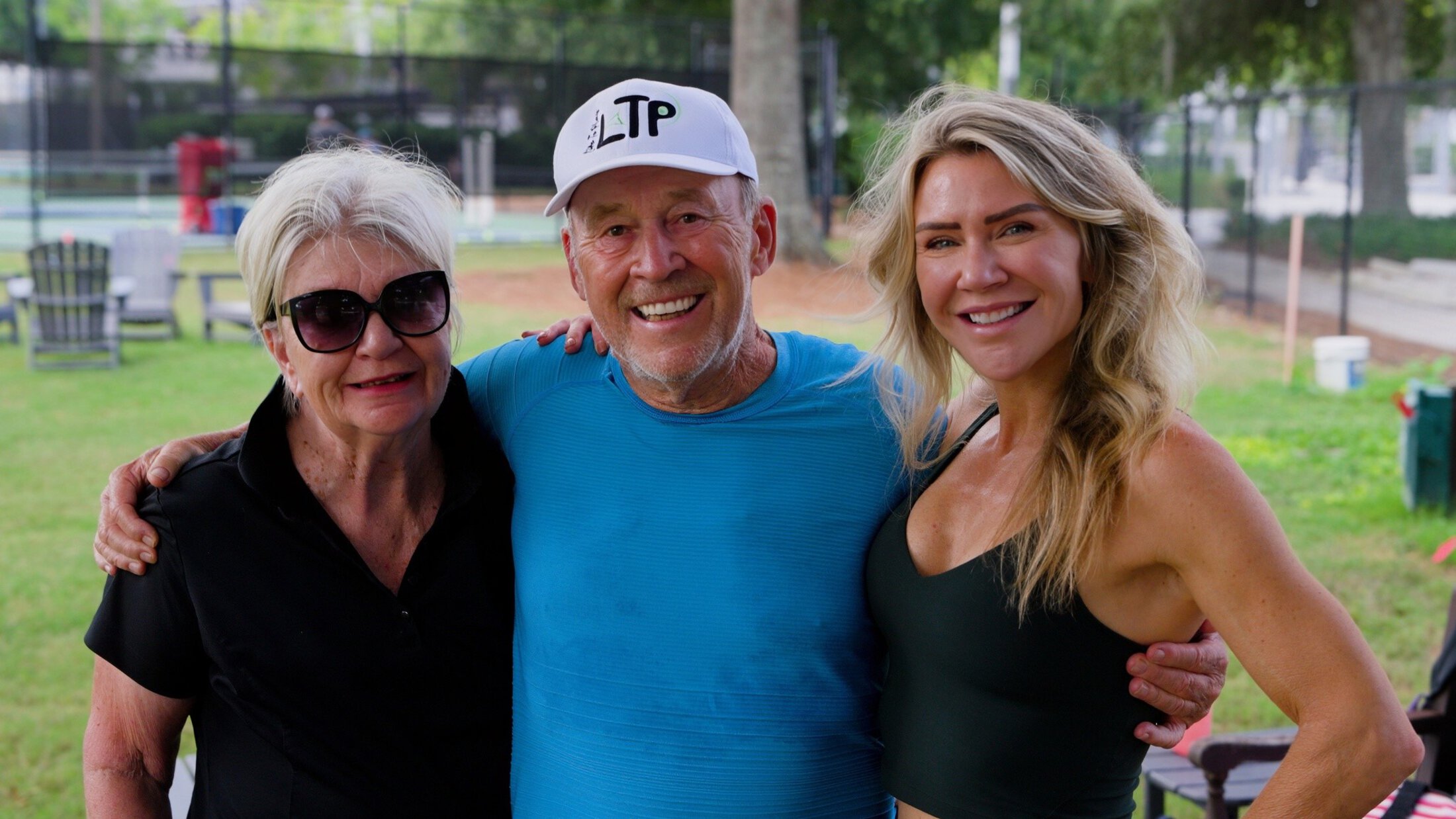
"There's not many people my age playing pickleball," says Jack Smith. It's something this kidney cancer survivor intends to do as long as possible. Video by Clif Rhodes
When 82-year-old Jack Smith steps onto the pickleball court, he plays to win. No stranger to competition, the lifelong athlete and state champion approaches not just sports but life with energy, focus and a drive to succeed. When cancer entered the picture, he relied on that competitive spirit to carry him through a challenge tougher than any he had faced on the court: fighting for his health.
“I’ve always been competitive. And, when I play, I play to win. This was no different. I had to apply that same drive to taking care of myself and getting through treatment.”
In early 2024, an MRI revealed grim news: one kidney essentially nonfunctional, the other kidney damaged, and a cancerous tumor in between. The tumor was lodged in the damaged kidney and pushing on his spine. Surgery was not an option, as removing the tumor risked what little kidney function Smith had left.
“His case was challenging because the tumor was in the center of the kidney,” explained Brian Lally, M.D., Smith’s radiation oncologist at MUSC Hollings Cancer Center. “Making it even more complex is that our kidneys move as we breathe. I had to treat the tumor while accounting for that motion and making sure not to destroy the working kidney.”
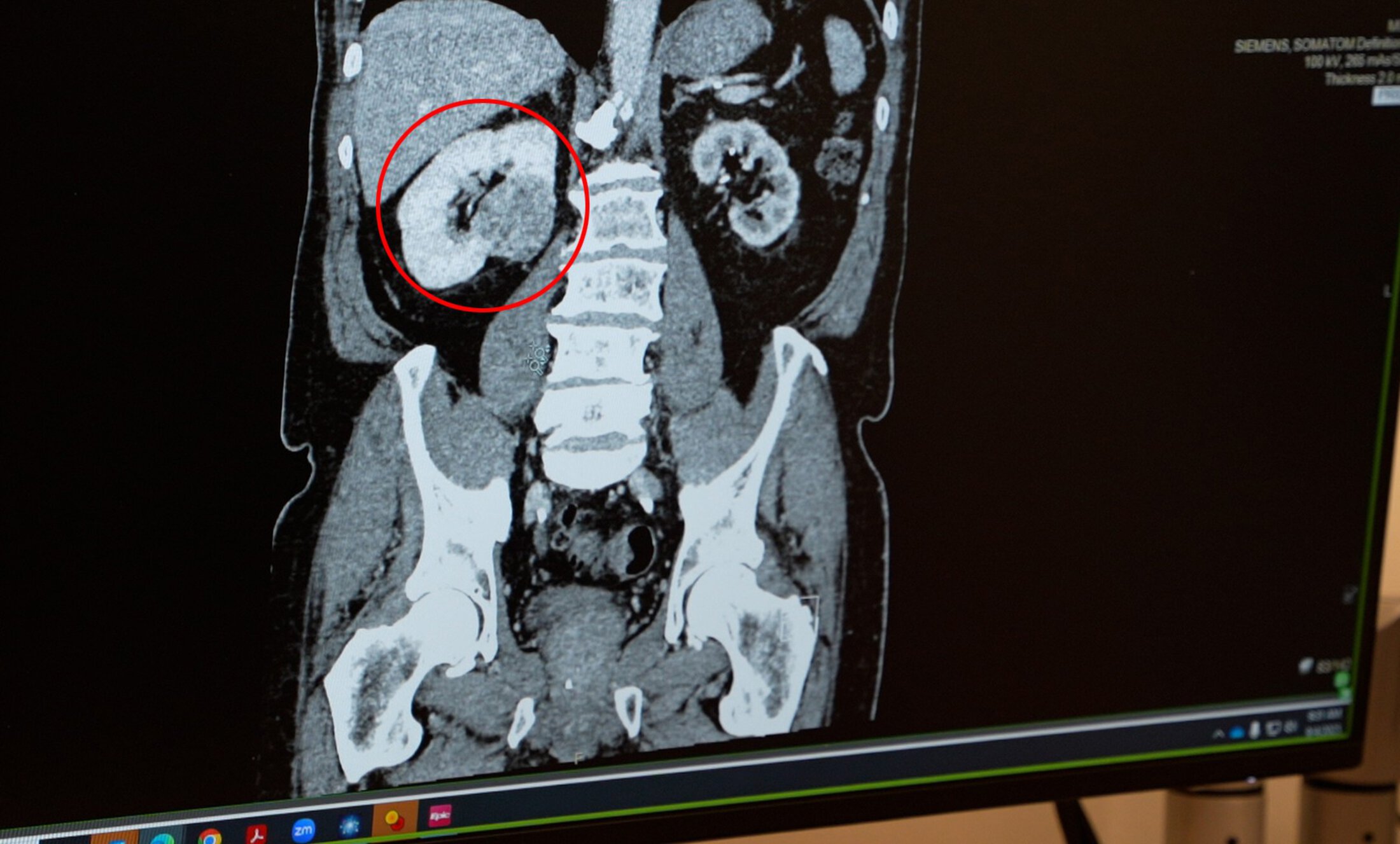
Smith admits to feeling despondent at first. “That really brought me down. But then I met Dr. Lally, and we talked through treatment. I didn’t know if it would work, but he gave me hope.”
A high-tech treatment
That treatment was stereotactic body radiation therapy (SBRT), an advanced form of radiation that uses highly focused beams to deliver large doses of radiation with pinpoint accuracy. The radiation damages the DNA inside cancer cells to the point that those cells die off. Importantly, the treatment does not require cutting into the body and is precisely targeted, both of which were key given the difficult location of Smith’s tumor.
“Radiation allowed us to precisely target the tumor while sparing as much kidney tissue as possible,” Lally said. “For Jack, it was the best option to treat the cancer while protecting his overall health.”
Lally and his team first used imaging to map Smith’s tumor in three dimensions, accounting for how it moved as he breathed. The scans were then entered into specialized planning software that calculated the exact volume to target and the most effective angle to deliver the radiation.
That’s what modern radiation therapy allows us to do: Treat the tumor precisely, minimize side effects and, in Jack’s case, allow him to keep playing pickleball.
During each radiation session, which lasted between 60 and 90 seconds, multiple beams converged on the tumor, hitting it hard while sparing nearby kidney tissue and other organs. For Smith, the result was a cancer-killing therapy with minimal disruption to his daily life.
“We don’t just plan right – we know how to deliver and how not to miss,” Lally said. “That’s what modern radiation therapy allows us to do: Treat the tumor precisely, minimize side effects and, in Jack’s case, allow him to keep playing pickleball.”
Still, during his four sessions, Smith found himself in an unusual position – waiting, with no control over the outcome. He described the months in treatment as mentally taxing, with the uncertainty harder than the radiation itself.
“Every session, I was apprehensive. I didn’t know exactly what was happening, and that was tough. You don’t really feel the radiation – it was more psychological than physical.”
But he faced each appointment with the same grit he brings to pickleball. Instead of celebrating points on the court, he learned to celebrate small victories in his recovery, until he finally heard the word he had been waiting for: remission.
“After about a year of monitoring, we were able to tell Jack he was in remission,” Lally said. “Sharing that news with him was one of those moments you never forget as a physician.”
“It was the best thing I’d heard in a long time,” Smith concurred.
A winning recovery
Remission has not meant slowing down. Managing kidney health is now part of Smith’s daily life: monitoring his kidney function and blood pressure and having regular check-ins with his nephrologist, a doctor who specializes in treating kidney diseases. Dialysis looms as a possibility, but Smith is doing everything he can to prevent it.
Even as he faced medical surprises, difficult treatments and ongoing health risks, he kept his paddle in hand, continuing a routine that included getting out on the court and walking the dog.
“Downtime is not part of my repertoire,” Smith joked. “People talk about uptime and downtime – but I don’t have downtime. I’m always busy.”
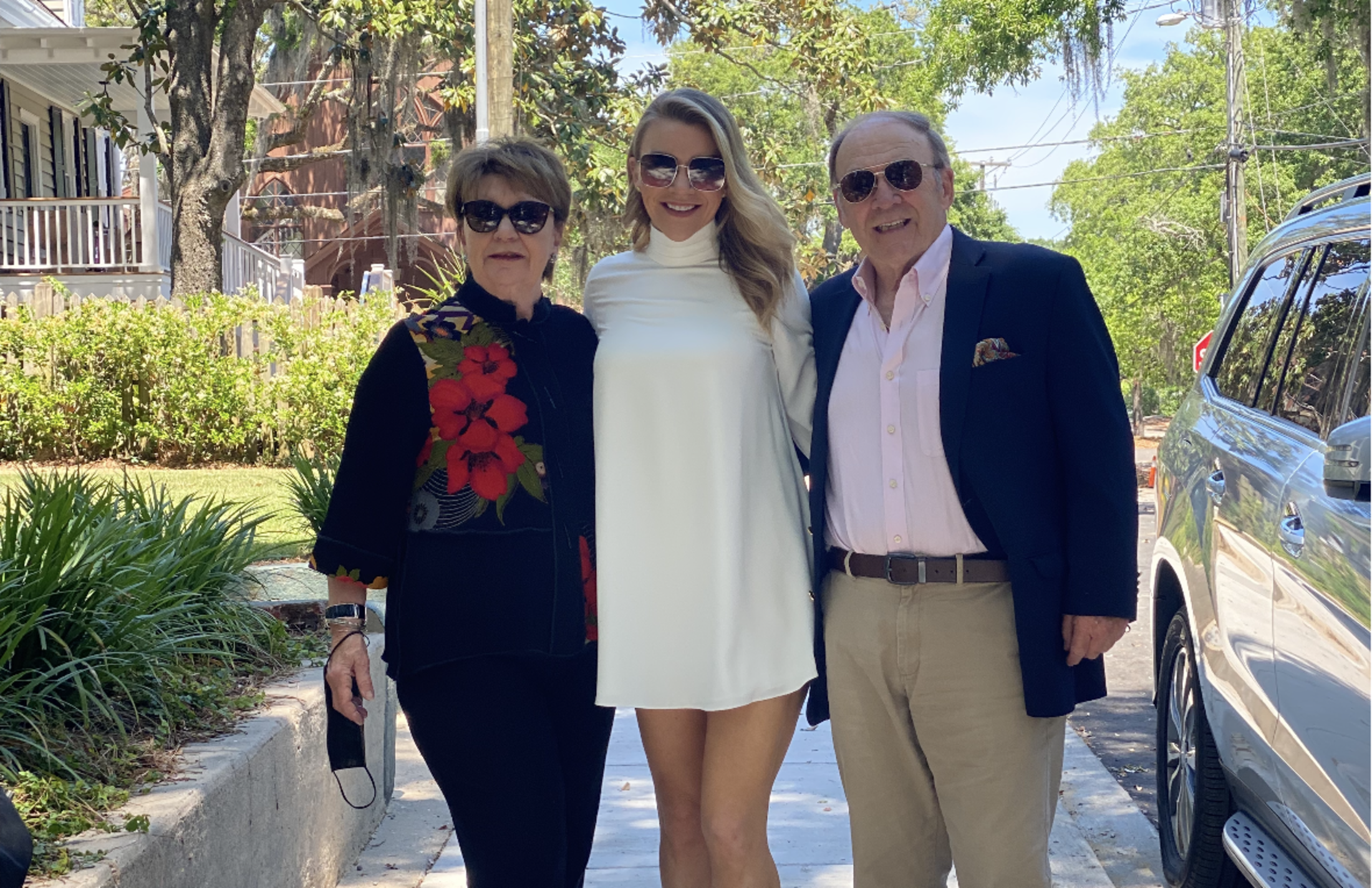
It is that mindset that Lally believes made all the difference.
“What stood out to me about Jack was his attitude,” he said. “He faced treatment the same way he plays pickleball – focused, competitive and determined not to let anything keep him off the court. That mindset makes a real difference in recovery.”
For Smith, much of the credit for his renewed health goes to Lally and the trust they built. From their first meeting, Smith was struck by Lally’s strong credentials and straightforward approach. Even when the medical details were highly technical, Smith valued his doctor’s honesty and persistence in finding a solution.
Initially encouraged by friends to look at cancer care out of state, Smith knows he made the right decision staying close to home, grateful for the world-class care he received at Hollings.
“People told me to go to Boston,” he said. “But I didn’t need to. The best doctors are right here. There are a lot of excellent doctors in Charleston – you just have to find them.”
And that he did. Plus, staying close to home kept him connected to the people who mean the most to him: his wife and two daughters.

Throughout treatment, his family was by his side, cheering him on both on and off the court. His daughter Stacy even described him as her favorite person to be around.
“He’s a delight,” she emphasized. “He’s fun, upbeat and sharp. We always have a good time, and we always laugh. I just love being with him.”
Their bond extends from serious moments in the clinic to lighthearted competition at home. When not trading volleys on the pickleball court, they are gathered around the table for a lively game of Scrabble, where the laughter flows as easily as the conversation.
For Smith, that steady encouragement mattered more than anything.
“Between my wife, my daughters and the dog, I didn’t have time to feel bad for myself. They keep me moving, and I think that’s part of why I’ve gotten through this.”
Looking back, Smith says his approach to cancer mirrors how he plays pickleball: show up, give your all and never back down. And, most importantly, keep doing the things you love.
“For me, that’s pickleball, but it’s also life. Everything I’ve read says if you want to live a long life, play pickleball. So that’s what I do. Because I want to be here a lot longer.”
Hayley Kamin
Communications Manager
Hayley Kamin is the communications manager for the Hollings Cancer Center Communications and Marketing team, having joined the team in 2025 after three years as a communications specialist at the National Institutes of Health (NIH). As a science communicator with a Ph.D. from the University of Florida, she has extensive experience translating complex research into clear, engaging content. Her career has included roles at the NIH’s National Institute of Mental Health and the American Psychological Association, where she led content development and editorial strategy, developed science and health communications and worked with researchers and clinicians to strengthen public understanding of research.
Contact Hayley at kamin@musc.edu.
Recent Cancer Care stories