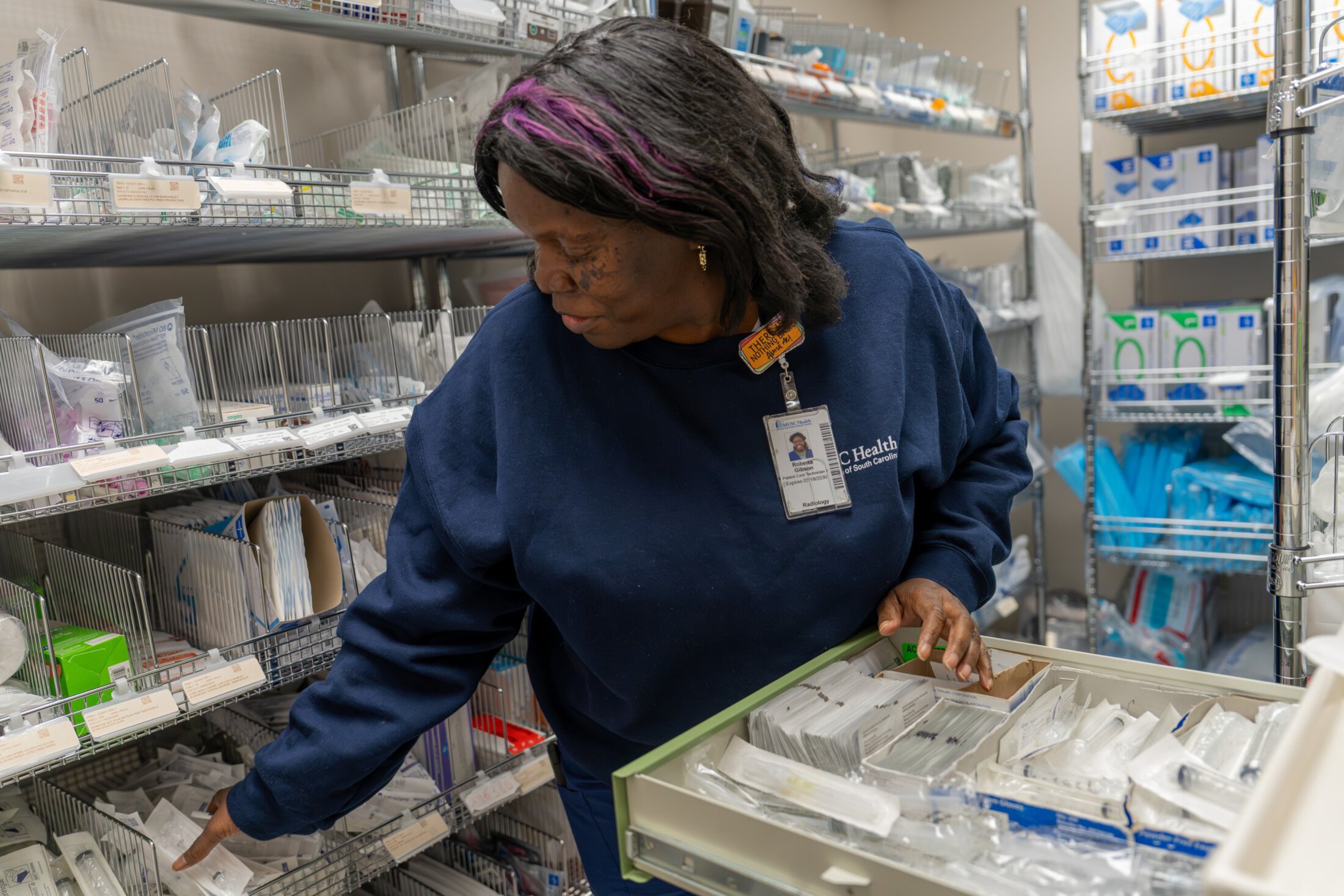
Roberta Gibson had spent years caring for patients at MUSC. She knew the hallways. The routines. The pace of a busy clinical day.
She never imagined she would one day walk those same halls as a patient.
During Colorectal Cancer Awareness Month, Gibson, an MUSC employee for over three decades, is sharing her story to highlight a reality many people do not realize: Cancer does not always announce itself loudly or with dramatic symptoms. Sometimes, the earliest clues are subtle and, even for someone who works in health care, easy to overlook.
Facing a serious diagnosis
When Gibson first noticed blood during bowel movements in the fall of 2019, she did not think much of it. She felt healthy otherwise. She was not unusually tired or losing weight. She went to work every day as a patient care technician at MUSC’s Heart and Vascular Center. Her mother, a nurse, suggested it was likely hemorrhoids.
Still, she finally made an appointment with her primary care doctor to be safe – a decision she now credits with saving her life. The day after her visit, Gibson’s doctor called early with urgency in his voice. Her hemoglobin – the part of blood that carries oxygen – was dangerously low, less than half of what it should be.
“He said, ‘How in the world did you even walk in here?’” she said. “That’s when I realized something was very wrong.”
Within hours, Gibson was admitted to the hospital, and a coordinated care team moved quickly to stabilize her and determine the cause. Blood transfusions were followed by a series of tests, including a colonoscopy, an endoscopy and scans, as her care team worked to understand what her body had been quietly signaling.
The next day, Virgilio George, M.D., chief of the Division of Colorectal Surgery at MUSC, walked into her room, turned off the television and delivered the words she never expected to hear.
“He said, ‘We found a mass. It’s cancer,’” she recalled. “I said he had the wrong chart. I was in denial.”
Unfortunately, it was all too real.
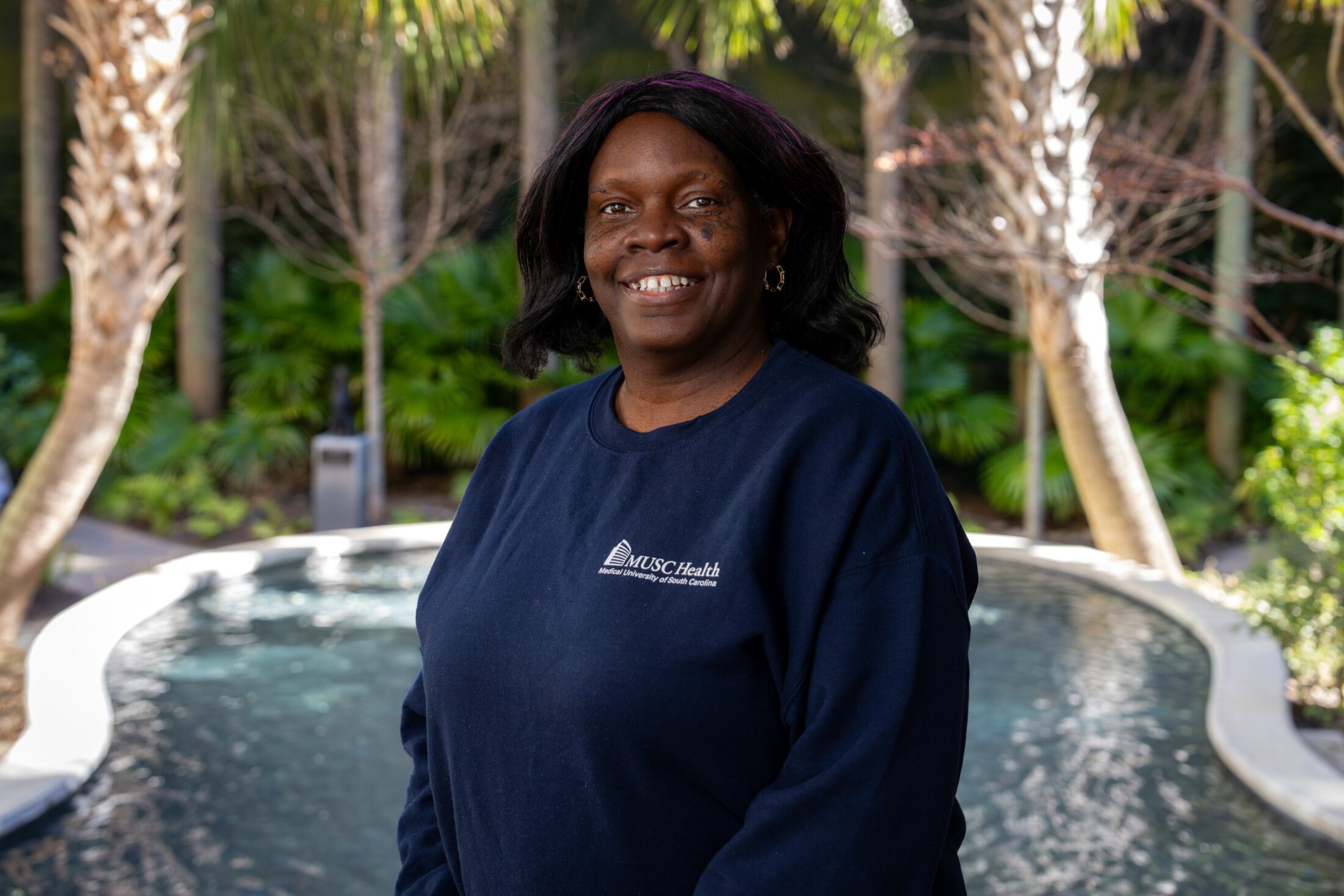
Gibson was diagnosed with Stage 2 adenocarcinoma of the colon, the most common type of colon cancer that develops in the cells lining the inside of the colon.
For Gibson, the diagnosis was especially surreal. She understood the language being spoken, but for the first time, it applied to her.
“I went from being the one caring for patients to being the patient. That changes everything.”
Tailoring a care plan
George explained that he and his team would need to remove about 2½ inches of colon and reconnect the healthy tissue, and there was a chance she might wake up with a colostomy bag.
“That was terrifying,” she said. “But I told myself, ‘OK. We’re going to get through this.’”
The surgery lasted about five hours. When Gibson woke up, her room was filled with family, including her mother, sister, husband and son.
“The first thing I did was kiss my son,” she said. “That meant I had made it through surgery.”
Determined to recover quickly, Gibson set a goal to get home as soon as possible.
“I asked the doctor, ‘What do I need to do to get out of here?’” she recalled. “He said, ‘Walk.’ So I walked.”
She paced the halls again and again, pushing herself forward and celebrating every milestone, even the uncomfortable ones, because each step meant progress. Along the way, she passed familiar faces – coworkers who now greeted her not as a colleague but as a patient, cheering her on.
Once at home, Gibson’s recovery became a family effort. Her mother, drawing on her nursing background, organized medications and kept a close eye on her recovery. Her son helped her to move safely, picked up prescriptions and prepared meals while her husband took care of responsibilities around the house, giving her the space to focus on healing.
“I couldn’t have done it myself. They all stepped in and did whatever needed to be done. They would even wait outside the bathroom door – sometimes it was too much closeness,” she said with a laugh.
I work in health care, and even I almost brushed it off. If something feels wrong, don’t ignore it. Talk to your doctor. Get checked. That one test could save your life.
Her faith also grounded her during the darkest days.
“I told God, ‘You’re not ready for me yet,’” she said. “I’m not going to question why this happened. Maybe I’m someone’s testimony.”
But surgery was only the first step. Pathology results showed another concerning sign: cancer cells near a lymph node, raising the chances that the cancer could return. To reduce that risk, Gibson began six months of oral chemotherapy pills taken at home.
The side effects were intense. Her hands and feet developed painful rashes, and her skin peeled until walking became difficult.
“I couldn’t wear shoes. I had to walk on my tiptoes because my feet were bleeding.”
Her care team adjusted the medication dose, and eventually the side effects became more manageable. By the end of treatment, scans showed no signs of cancer.
Eight months after starting treatment, Gibson returned to work at MUSC – now as a cancer survivor. She gradually rebuilt her stamina, stepping back into a role she knew well and carrying a deeper understanding of what patients experience. Both patients and coworkers continue to be surprised to learn what she has been through.
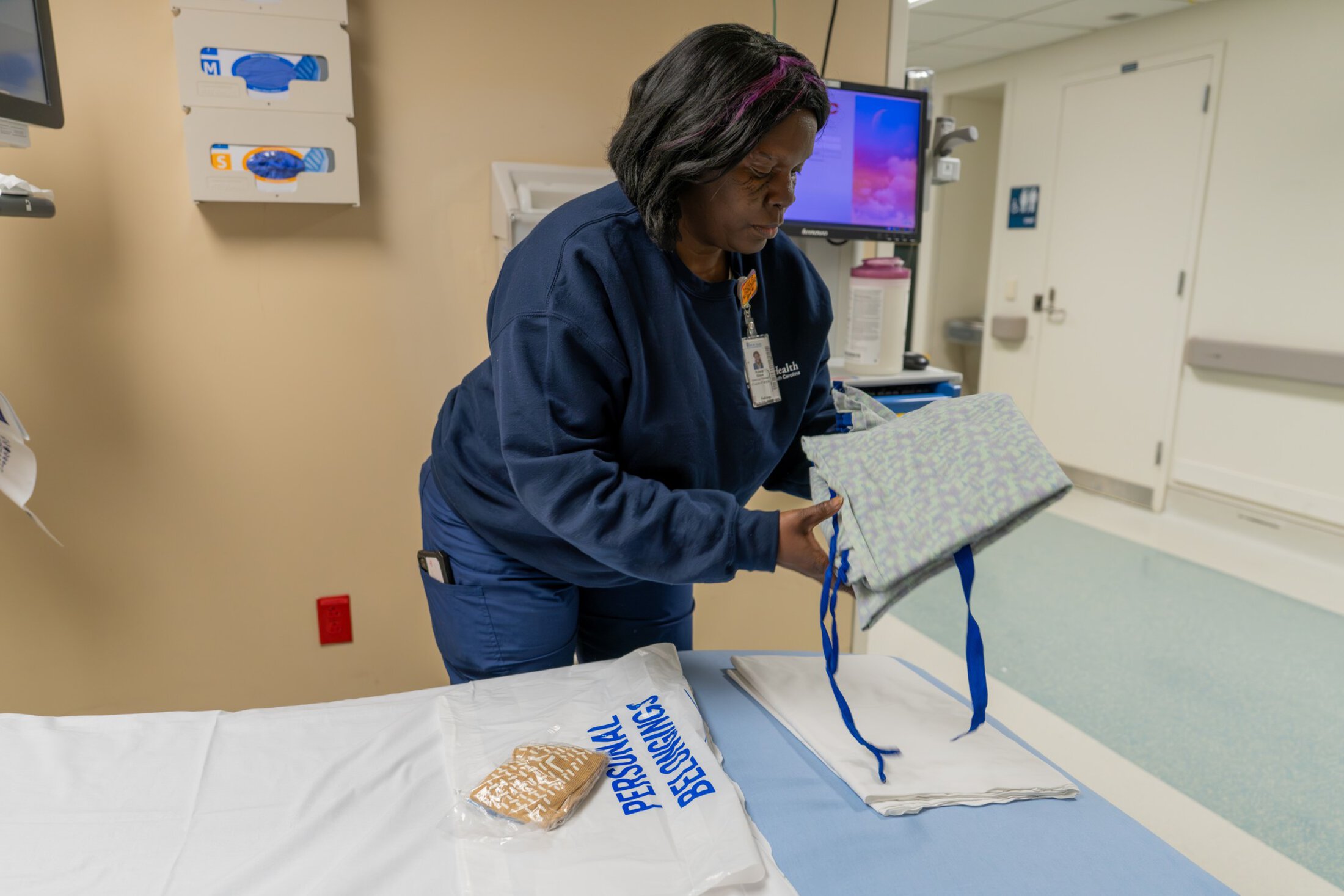
“They say, ‘You don’t look like you had cancer,’” she said. “And my response is always, ‘You can’t judge a book by its cover. You never know what someone’s been through.’”
Today, more than six years out from her diagnosis and care, Gibson remains cancer-free. She continues routine surveillance and participates in advanced blood-based testing for early cancer detection.
“So far, every test has come back clear,” she said. “Knock on wood.”
Prevention starts with screening
Gibson’s experience underscores the lifesaving impact of early detection and screening.
Colorectal cancer specialists at MUSC Hollings Cancer Center note that colorectal cancer is preventable – with screening, doctors can identify precancerous polyps and remove them before they become cancer. Regular colorectal cancer screening, with colonoscopy, stool-based testing or blood tests, can often find cancer in early stages, before people begin to experience symptoms and when the cancer is much easier to treat.
Experts recommend that most adults begin screening at age 45, and earlier for those with certain risk factors or a family history. Because early-stage colorectal cancer can be silent, screening remains one of the most effective tools for prevention and early detection.
Gibson sees her story as a way to encourage others to pay attention to their bodies and get screened, especially those who might dismiss early symptoms. She knows how easy it was to ignore her own symptoms – and how close she came to catching the cancer too late.
“I work in health care, and even I almost brushed it off. If something feels wrong, don’t ignore it. Talk to your doctor. Get checked. That one test could save your life.”
She also sees her story as a reminder to show kindness to others.
“Your smile might be the only smile someone sees all day,” she said. “People smiled at me when I was going through treatment. And I want to do that for somebody else.”
From employee to patient to survivor, Gibson hopes her journey serves as a reminder during Colorectal Cancer Awareness Month and beyond that cancer screening saves lives.
Physicians in this story
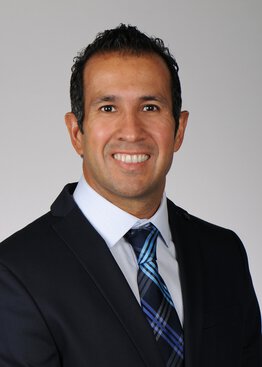
Virgilio George, M.D., FACS, FASCRS
Virgilio V. George, M.D. is a colorectal surgeon in Charleston, S.C. His primary academic and clinical focus is in the field of colorectal surgery including benign and malignant disease.
Dr. George is recognized for his excellence in colorectal surgery both nationally and internationally. His clinical interests cover the range of inflammatory bowel disease: Crohn's disease, ulcerative colitis, diverticular disease, colon and rectal cancer, benign anorectal disease with special interest in minimal invasive colon and rectal procedures, and transanal endoscopy microsurgery for rectal tumors.
Dr. George leads the multidisciplinary team at the MUSC Hollings Cancer Center, which recently earned a three-year accreditation from the National Accreditation Program for Rectal Cancer (NAPRC), recognizing the center's commitment to providing the best possible care for patients with the disease. Hollings is one of only 22 centers in the country to earn the accreditation and is the first in South Carolina, further highlighting the center as a national leader in treating cancers of the digestive system.
Dr. George is developing successful programs in minimally invasive colorectal surgery. This includes collaborations with the division of gastroenterology in the Department of Medicine for inflammatory bowel disease and with the Ralph H. Johnson VA Medical Center to provide specialty surgery services in colorectal surgeries to include robotic surgical techniques.

Hayley Kamin
Communications Manager
Hayley Kamin is the communications manager for the Hollings Cancer Center Communications and Marketing team, having joined the team in 2025 after three years as a communications specialist at the National Institutes of Health (NIH). As a science communicator with a Ph.D. from the University of Florida, she has extensive experience translating complex research into clear, engaging content. Her career has included roles at the NIH’s National Institute of Mental Health and the American Psychological Association, where she led content development and editorial strategy, developed science and health communications and worked with researchers and clinicians to strengthen public understanding of research.
Contact Hayley at kamin@musc.edu.