After cancer treatment ends, many patients enter a period of uncertainty – returning for scans and tests to see whether the disease has come back.
But even when scans look clear, cancer may still linger at a level too low to detect.
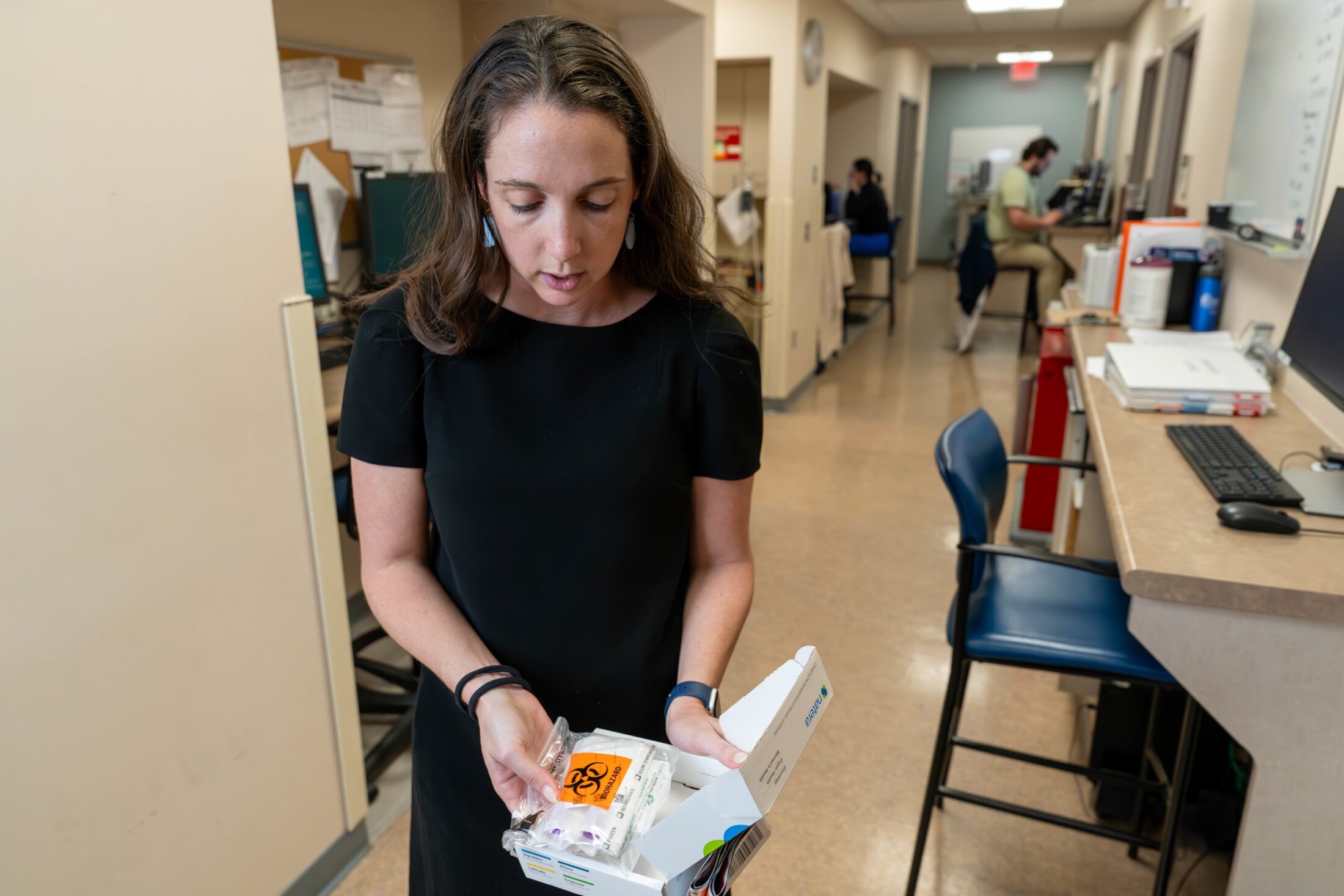
MUSC Hollings Cancer Center has added a powerful tool to detect hidden traces of disease: a blood test that looks for tiny fragments of tumor DNA in the bloodstream.
“Some patients appear to have a complete response to treatment, but microscopic disease may still be present,” said Virgilio George, M.D., colorectal surgeon and chief of the Division of Colorectal Surgery.
Clinicians at Hollings are already using this test – known as circulating tumor DNA, or ctDNA – while researchers continue studying how it can further improve cancer care. The technology is being explored across multiple cancers, but it is currently most extensively used for colorectal cancer.
“Tumors release small pieces of their DNA into the bloodstream,” George added. “Imaging shows us what we can see. ctDNA allows us to detect disease at the molecular level – sometimes long before tumors are large enough to show up on a scan.”
That earlier signal could allow doctors to intervene sooner and tailor treatments more precisely. Patients with no detectable ctDNA may be able to avoid unnecessary treatment or undergo less intensive monitoring, whereas those with detectable ctDNA may receive closer follow-up or additional treatment.
To understand why ctDNA is so powerful, it helps to look at how the test works.
Detecting cancer at the molecular level
For decades, doctors have relied on scans, biopsies and physical exams to determine whether cancer is responding to treatment or returning. But those tools can reveal changes only after tumors grow large enough to detect.
ctDNA offers a different and earlier window into the disease.
Imaging shows us what we can see. ctDNA allows us to detect disease at the molecular level – sometimes long before tumors are large enough to show up on a scan.
Commonly described as a “liquid biopsy,” the test analyzes a blood sample for circulating traces of tumor DNA rather than removing tissue from an existing tumor.
“It measures tumor DNA shed into the bloodstream,” explained Colleen Donahue, M.D., a colorectal surgeon at Hollings. “Tumors naturally release DNA fragments, so by analyzing a blood sample, we can detect cancer without patients needing a separate tissue biopsy.”
There are two approaches to ctDNA:
- In tumor-informed testing, a patient’s tumor is genetically profiled and used to create a personalized test to track the tumor’s specific mutations in the bloodstream.
- In tumor-uninformed testing, the blood test looks for a panel of genetic mutations commonly linked to cancer, without needing a sample of the patient’s own tumor.
“If a patient already had surgery or treatment, ideally, there shouldn’t be any tumor DNA left in their bloodstream,” Donahue said. “So, if we do detect it, that suggests there may still be cancer present.”
Using ctDNA to guide treatment decisions
While ctDNA testing is being studied across several cancer types, including pancreatic, bladder and head and neck cancers, the strongest evidence so far comes from colorectal cancer, where large national studies have demonstrated its ability to predict recurrence. Research shows that colorectal cancer patients with detectable ctDNA after treatment are three to 18 times more likely to have recurrence than those whose tests remain negative.
The test can also provide an earlier warning than conventional monitoring. For patients with colorectal cancer, that information can mean catching cancer earlier and treating it sooner.
“The lead time can be months,” Donahue said. “I’ve seen cases where ctDNA becomes positive nine months before any signs of cancer show up on imaging.”
That early signal does not necessarily mean treatment begins immediately. Instead, it prompts doctors to follow patients more closely.
ctDNA testing can also help to guide treatment decisions. Traditionally, chemotherapy is recommended for Stage 3 colorectal cancer, while Stage 2 patients may or may not benefit from additional treatment. Yet some Stage 2 tumors behave aggressively, while some Stage 3 cancers do not require intensive therapy.
“ctDNA testing helps us clarify risk. If a Stage 2 patient is ctDNA positive, that’s someone we’re definitely going to have a conversation about chemotherapy with,” Donahue said.
Conversely, patients with negative ctDNA results may be able to avoid unnecessary treatment.
“This is really about personalized care,” she continued. “Every patient’s cancer behaves differently. ctDNA gives us another way to understand that biology and individualize treatment.”
Expanding ctDNA testing at Hollings
Doctors at MUSC began using ctDNA testing as part of colorectal cancer care in 2022, and its use has grown quickly. Researchers at Hollings are also conducting clinical trials to understand how ctDNA testing can improve cancer screening.
Through research programs and partnerships with testing companies, the test is currently provided at no cost to many colorectal cancer patients at Hollings as part of standard care, helping to make the technology accessible as researchers study how ctDNA can improve care for colorectal cancer as well as other cancers where the approach is being explored.
Every patient’s cancer behaves differently. ctDNA gives us another way to understand that biology and individualize treatment.
“We get a baseline measure from the first visit,” Donahue said. “Then we track it throughout the entire course of treatment so we can see how a patient responds over time.”
After treatment, patients undergo ctDNA testing every three months during the first two years of surveillance.
For patients, this can bring clarity during what is often an anxious time.
“Patients can really wrap their minds around this,” Donahue said. “And it gives them something very specific and personalized they can track.”
ctDNA testing is also supporting a major shift in colorectal cancer care: organ preservation.
Increasingly, patients with rectal cancer now receive chemotherapy and radiation before surgery, in a strategy known as total neoadjuvant therapy (TNT). At MUSC, up to 40% of patients achieve a complete clinical response after this treatment, meaning no cancer is visible on exams or imaging. In those cases, patients may be able to avoid surgery through strict surveillance, known as “watch and wait.”
But even when a tumor appears to be gone, there is still a risk it could return. To monitor those patients closely, Hollings doctors combine ctDNA testing with standard MRI scans, endoscopy and other surveillance tools.
“Watch and wait is great for patients because they can avoid major surgery,” Donahue said. “But about 30% to 35% will have regrowth of their cancer, so we have to be extremely vigilant about monitoring them.”
Although it does not replace traditional imaging or surveillance guidelines, clinicians praise ctDNA for the valuable additional insight it provides.
“What excites us most is the possibility of detecting cancer recurrence earlier and tailoring treatments more precisely,” George said. “That’s the promise of this technology – helping us stay one step ahead of cancer.”
Featured in this story
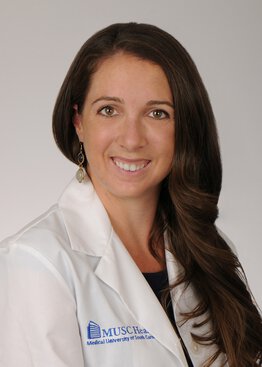
Colleen Ashley Donahue, M.D.
Colleen Donahue, M.D., is a fellowship trained colorectal surgeon that specializes in both benign and malignant diseases of the colon, rectum and anus. Her clinical interests include benign conditions of the anus and rectum, rectal prolapse, diverticulitis, inflammatory bowel disease and cancer of the colon and rectum, focusing on a multidisciplinary, team-based treatment approach. Dr. Donahue is committed to the advancement of surgical education, serving as the program director of the Department of Surgery’s General Surgery Residency Program.
She earned her medical degree from Tufts University School of Medicine followed by General Surgery Residency at Lahey Hospital and Medical Center in Massachusetts. She completed her colon and rectal fellowship at John H. Stroger Jr. Hospital.
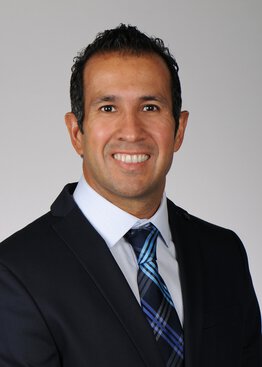
Virgilio George, M.D., FACS, FASCRS
Virgilio V. George, M.D. is a colorectal surgeon in Charleston, S.C. His primary academic and clinical focus is in the field of colorectal surgery including benign and malignant disease.
Dr. George is recognized for his excellence in colorectal surgery both nationally and internationally. His clinical interests cover the range of inflammatory bowel disease: Crohn's disease, ulcerative colitis, diverticular disease, colon and rectal cancer, benign anorectal disease with special interest in minimal invasive colon and rectal procedures, and transanal endoscopy microsurgery for rectal tumors.
Dr. George leads the multidisciplinary team at the MUSC Hollings Cancer Center, which recently earned a three-year accreditation from the National Accreditation Program for Rectal Cancer (NAPRC), recognizing the center's commitment to providing the best possible care for patients with the disease. Hollings is one of only 22 centers in the country to earn the accreditation and is the first in South Carolina, further highlighting the center as a national leader in treating cancers of the digestive system.
Dr. George is developing successful programs in minimally invasive colorectal surgery. This includes collaborations with the division of gastroenterology in the Department of Medicine for inflammatory bowel disease and with the Ralph H. Johnson VA Medical Center to provide specialty surgery services in colorectal surgeries to include robotic surgical techniques.
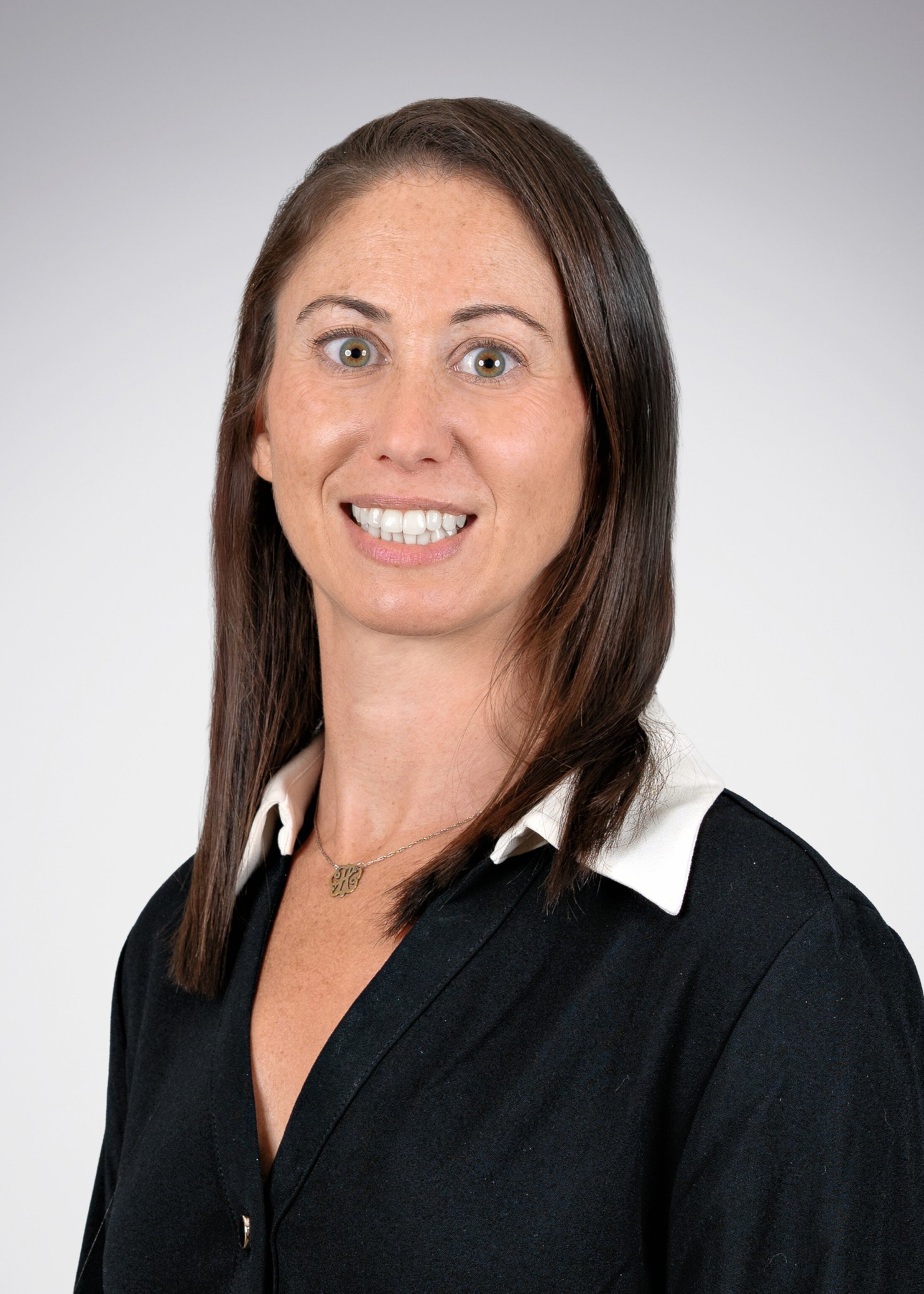
Hayley Kamin
Communications Manager
Hayley Kamin is the communications manager for the Hollings Cancer Center Communications and Marketing team, having joined the team in 2025 after three years as a communications specialist at the National Institutes of Health (NIH). As a science communicator with a Ph.D. from the University of Florida, she has extensive experience translating complex research into clear, engaging content. Her career has included roles at the NIH’s National Institute of Mental Health and the American Psychological Association, where she led content development and editorial strategy, developed science and health communications and worked with researchers and clinicians to strengthen public understanding of research.
Contact Hayley at kamin@musc.edu.