When Robin Via scheduled her first colonoscopy at age 46, she expected a routine exam and a clean bill of health. Instead, she woke up to life-changing news.
Her primary care doctor recommended the test after colorectal cancer screening guidelines were lowered from age 50 to 45 – a shift driven by rising cancer rates in younger adults.
Via woke up from the January 2024 procedure to startling news. The doctor had found a suspicious mass and was “almost 100% sure it was cancer.”
“I was immediately in shock,” Via said. “I wasn’t expecting that at all.”
That routine screening – one she might not have received for several more years under older guidelines – likely saved her life. Doctors later told her the cancer could have progressed to Stage 4 within a year if it had gone undetected.
“I think they should lower the screening age even more,” Via said. “So many young people are being diagnosed, and most don’t see it coming.”
Via’s story underscores why Colorectal Cancer Awareness Month matters. Colorectal cancer is one of the most preventable and treatable cancers when caught early, yet rates are rising among adults under 50 – often without symptoms. National guidelines now recommend that people at average risk begin screening at age 45, or earlier for those with certain risk factors. At MUSC Hollings Cancer Center, experts emphasize that timely screening can not only save lives but also open the door to less invasive and more effective treatment options.
Seeking a second opinion
Initial tests suggested that Via had Stage 2 rectal cancer. But after further review at Hollings, doctors determined the cancer had spread to nearby lymph nodes, classifying it as early Stage 3. Still, it remained potentially curable.
A surgeon near her home in Augusta, Georgia, recommended immediate surgery and warned she might need a permanent ostomy, a surgical procedure that reroutes waste through an opening in the abdomen and into a bag worn outside the body.
“He basically told me my life would never be the same,” she said. “It was overwhelming.”
When the surgeon offered a referral for a second opinion, Via did not hesitate. Within a week, she and her husband, Tim, were sitting down at Hollings with the chief of the Division of Colorectal Surgery, Virgilio George, M.D.
“The minute we walked into Hollings, we felt a sense of peace,” Via said. “Everybody was so caring and informative. They took the time to explain everything, and I finally felt heard.”
I didn’t do this alone – I couldn’t have. I have a great support system and leaned on that.
George spent nearly an hour reviewing Via’s scans with her and explaining treatment options.
“He truly gave me hope,” Via said. “He felt confident in the treatment, and I could tell he was an expert in the field.”
Her case was then presented to a multidisciplinary tumor board – a team-based approach that brings together specialists in different fields to develop a treatment plan tailored to each patient. Instead of rushing into surgery, the board recommended that Via receive total neoadjuvant therapy, often called TNT.
This approach delivers radiation and chemotherapy before considering surgery. For some patients with rectal cancer, the tumor completely disappears after treatment. In those cases, doctors may recommend a carefully monitored “watch-and-wait” strategy. Backed by growing clinical evidence from the mid-to-late 2010s, TNT is now part of standard care for some rectal cancer patients.
George explained that the team’s thinking began to shift as they observed the outcomes of these surgeries. “We realized we were sometimes doing radical operations and, by the time surgery was performed, the cancer was already gone.”
Research now shows that nearly half of rectal cancer patients can achieve a complete clinical response after TNT. For carefully selected patients, this opens the door to a watch-and-wait strategy, potentially avoiding major surgery and a permanent ostomy bag.
Importantly, watch-and-wait is not a passive approach. George emphasized that it requires strict monitoring, including regular MRIs, endoscopic exams and physical evaluations, to ensure that the cancer has not returned.
“It requires commitment from the patient,” George added. “But if we detect regrowth early, outcomes are usually the same as if we had operated at the beginning.”
A challenging treatment journey
Via completed nearly six weeks of radiation – 28 rounds – along with oral chemotherapy. The next step was intravenous chemotherapy – but the initial treatment took a heavy toll.
“I became incredibly sick,” she recalled. “I couldn’t eat, lost a bunch of weight really fast and had pretty much every side effect you can imagine.”
She developed bowel obstructions and intestinal inflammation that required multiple hospitalizations as well as severe hand-foot syndrome that left her feet so inflamed that it was painful to walk even short distances.
“I was in a really dark place mentally,” Via said. “I told my husband that if I needed more treatment, I didn’t think I could do it.”
What carried her through was support: from her care team, her family and her faith.
“I didn’t do this alone – I couldn’t have. I have a great support system and leaned on that.”
Life after rectal cancer
Because her body struggled so much with treatment, her care team decided to evaluate her earlier than planned. In July 2024, scans and endoscopy showed no signs of cancer.
“Everything came back clear,” Via said. “Dr. George said it was like it was gone. He was almost in disbelief because I didn’t finish the standard treatment, but it worked.”
Via now follows the watch-and-wait surveillance plan, returning to Hollings every three months for imaging, endoscopy and a specialized blood test called Signatera that looks for tiny fragments of tumor DNA – known as circulating tumor DNA, or ctDNA – that can signal whether cancer cells remain in the body.
So far, each visit has brought good news, with Via having passed one year with no sign of cancer.
Via’s recovery was not instant, with treatment pushing her into early menopause and causing lingering digestive issues. But, over time, her strength returned, and now, Via said she feels better than she did before her diagnosis.
“It took about a year before I felt what I would call good,” she said. “Now I really feel great.”
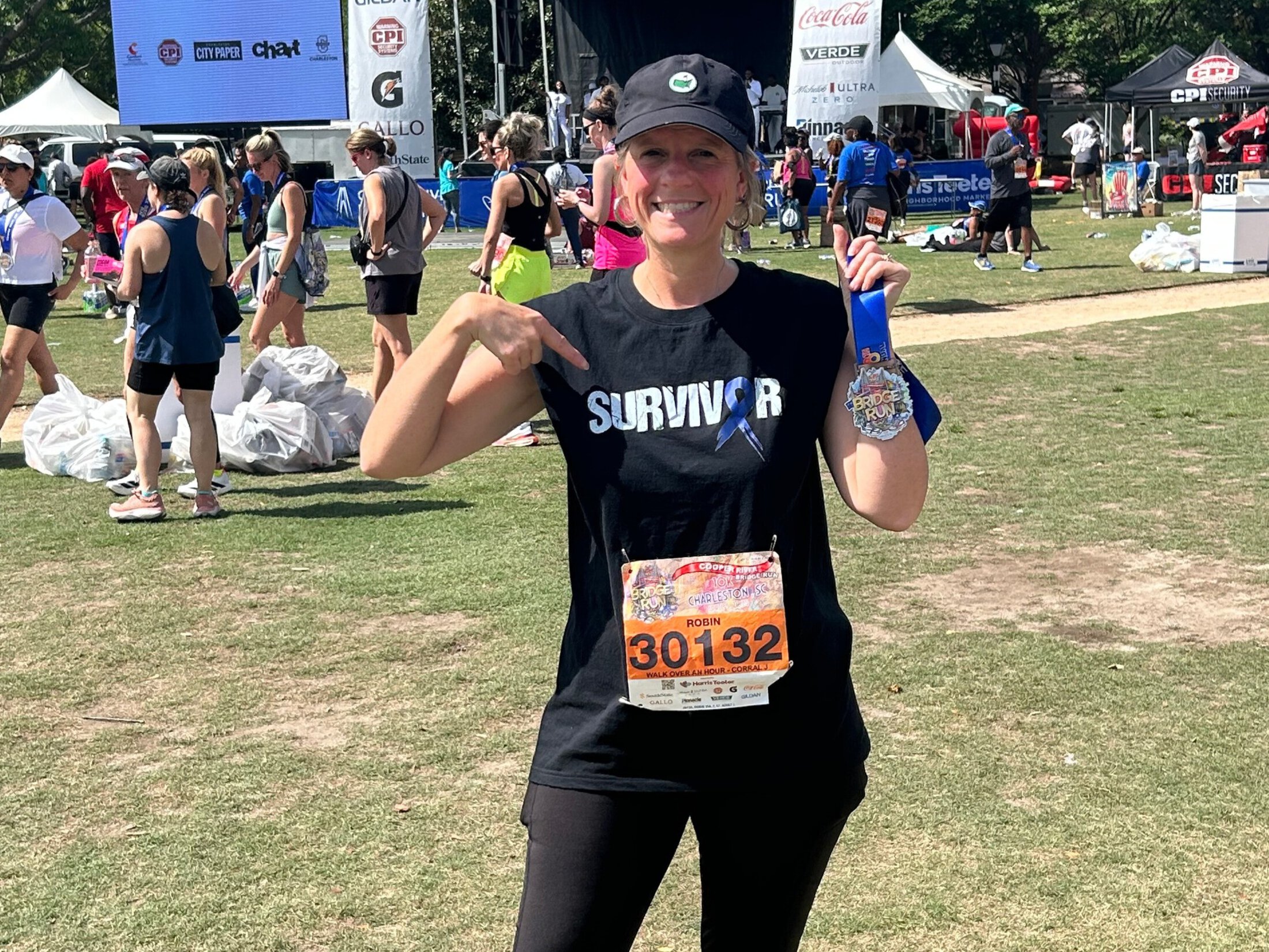
She has made lasting lifestyle changes as well: eating healthier, exercising regularly and cutting back on ultra-processed foods. In April 2025, she crossed the finish line of the Cooper River Bridge Run 10K in Charleston, a milestone she once thought impossible.
“That moment meant everything,” she said. “A year before, I didn’t know if I’d even be here.”
More than anything, her outlook on life has changed. Via now urges others to prioritize screening and self-advocacy.
“Get screened and stay on top of your health,” she said. “If something feels off, speak up.”
George echoed that message, encouraging patients to seek a colonoscopy if they have concerning symptoms.
“It’s the only test that can stop colorectal cancer before it starts by allowing doctors to remove polyps before they become cancerous,” George said. “If you’re eligible or having symptoms – don’t wait. It may not be the most pleasant prep, but 45 minutes later, you have clarity – and you may have prevented a cancer from ever developing.”
Via also urges newly diagnosed patients to ask questions and seek second opinions.
“You deserve to understand your options,” she said. “And you deserve a care team that sees you, not just your diagnosis.”
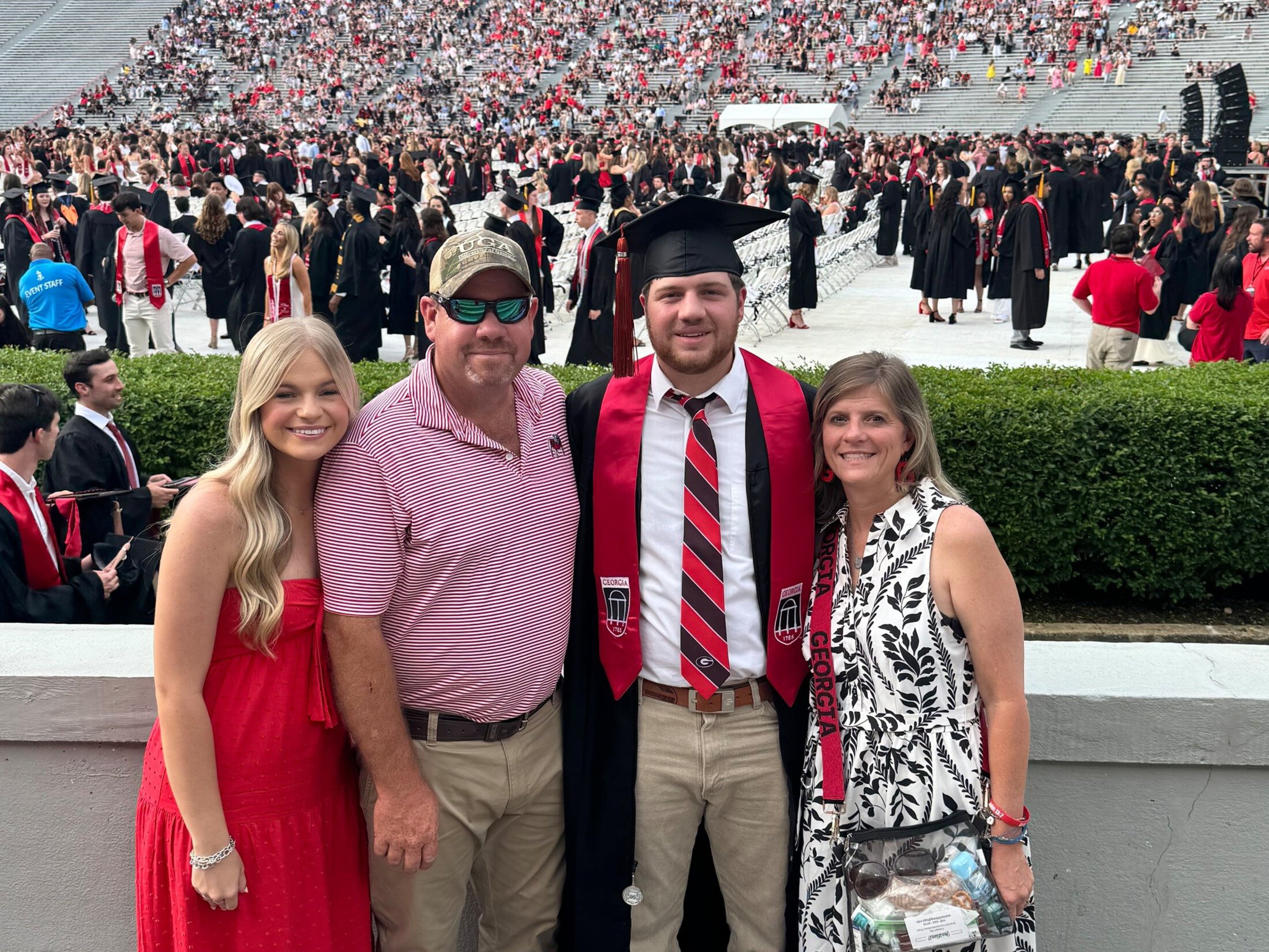
Looking ahead, Via is focused on the milestones she once feared she might miss: watching her daughter graduate college, seeing her children build families of their own and continuing to celebrate each day cancer-free.
Featured in this story
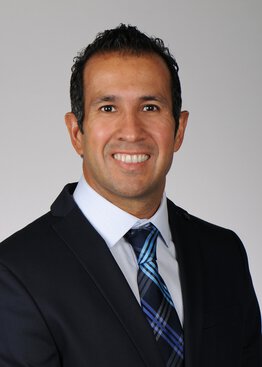
Virgilio George, M.D., FACS, FASCRS
Virgilio V. George, M.D. is a colorectal surgeon in Charleston, S.C. His primary academic and clinical focus is in the field of colorectal surgery including benign and malignant disease.
Dr. George is recognized for his excellence in colorectal surgery both nationally and internationally. His clinical interests cover the range of inflammatory bowel disease: Crohn's disease, ulcerative colitis, diverticular disease, colon and rectal cancer, benign anorectal disease with special interest in minimal invasive colon and rectal procedures, and transanal endoscopy microsurgery for rectal tumors.
Dr. George leads the multidisciplinary team at the MUSC Hollings Cancer Center, which recently earned a three-year accreditation from the National Accreditation Program for Rectal Cancer (NAPRC), recognizing the center's commitment to providing the best possible care for patients with the disease. Hollings is one of only 22 centers in the country to earn the accreditation and is the first in South Carolina, further highlighting the center as a national leader in treating cancers of the digestive system.
Dr. George is developing successful programs in minimally invasive colorectal surgery. This includes collaborations with the division of gastroenterology in the Department of Medicine for inflammatory bowel disease and with the Ralph H. Johnson VA Medical Center to provide specialty surgery services in colorectal surgeries to include robotic surgical techniques.
Screening recommendations
Guidelines call for average-risk adults to begin screening for colorectal cancer at age 45. People at higher risk – perhaps because of a family history – might need to begin screening earlier.
Screening options
- Annually: Fecal immunochemical test (FIT)
- Annually: Guaiac-based fecal occult blood test (gFOBT)
- Every three years: Multi-targeted stool DNA test
- Every 10 years: Colonoscopy
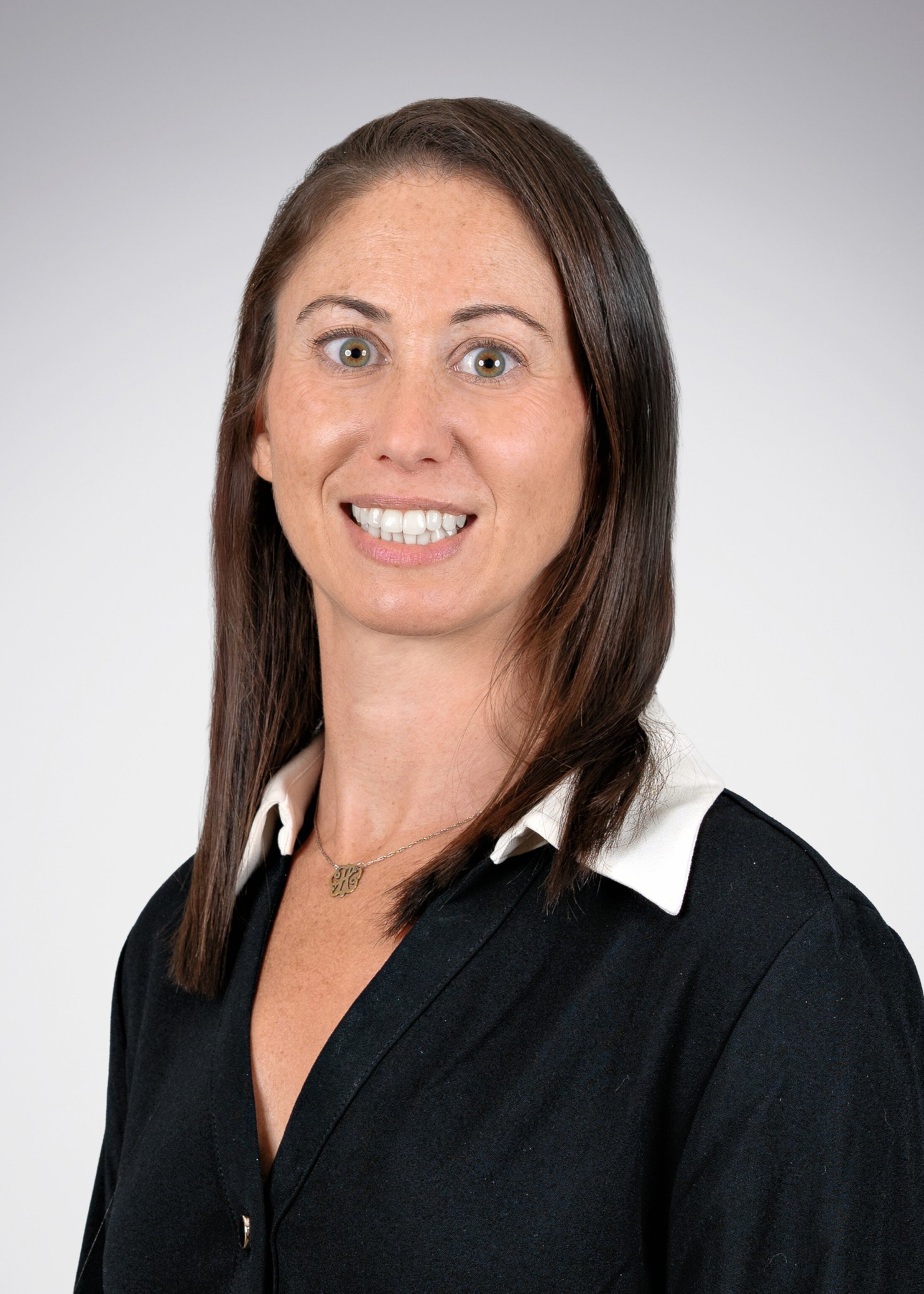
Hayley Kamin
Communications Manager
Hayley Kamin is the communications manager for the Hollings Cancer Center Communications and Marketing team, having joined the team in 2025 after three years as a communications specialist at the National Institutes of Health (NIH). As a science communicator with a Ph.D. from the University of Florida, she has extensive experience translating complex research into clear, engaging content. Her career has included roles at the NIH’s National Institute of Mental Health and the American Psychological Association, where she led content development and editorial strategy, developed science and health communications and worked with researchers and clinicians to strengthen public understanding of research.
Contact Hayley at kamin@musc.edu.