At the end of his third year of medical school at the Medical University of South Carolina, Hayden Braun should have been focused on becoming a doctor.
Instead, he could barely leave his apartment.
Persistent stomach pain, exhaustion and an inability to eat had taken over his life. Braun told classmates he was busy studying for the Step 2 Clinical Knowledge exam – a key milestone in medical training. In reality, he was simply trying to get through each day.
“I was mostly lying on the floor of my apartment in pain,” he said. “I kept telling myself I’d deal with it later.”
Like many medical students working long hours under intense pressure, Braun blamed stress, maybe an ulcer or burnout. Finishing rotations and preparing for residency felt far more urgent than investigating vague symptoms.
But his body kept sending stronger warnings.
During an away rotation in Austin, Texas, his health rapidly declined. Braun began running constant fevers and experiencing worsening pain. He struggled to stand during clinical activities and nearly passed out during a skills lab.
Finally, urged by his fiancee, now wife, Catherine, he agreed to seek further testing.
Months later, an extraordinary path forward would give Braun not only a chance to survive but to continue the career he had been training for.
Facing a devastating cancer diagnosis
A colonoscopy revealed colon cancer that had spread extensively to his liver. At just 25 years old, Braun was diagnosed with Stage 4 colon cancer.
“They lost count after 50 tumors,” he said.
For colorectal surgeon Colleen Donahue, M.D., who treated Braun at MUSC Hollings Cancer Center, the case reflects a troubling national trend.
“Unfortunately, we’re seeing more patients like Hayden, presenting with cancer at younger ages and often with more advanced disease,” she said.
Because the cancer had spread throughout his liver, surgery was not initially possible.
“When the burden of disease is that extensive, the first step is chemotherapy to see how the cancer responds,” Donahue explained.
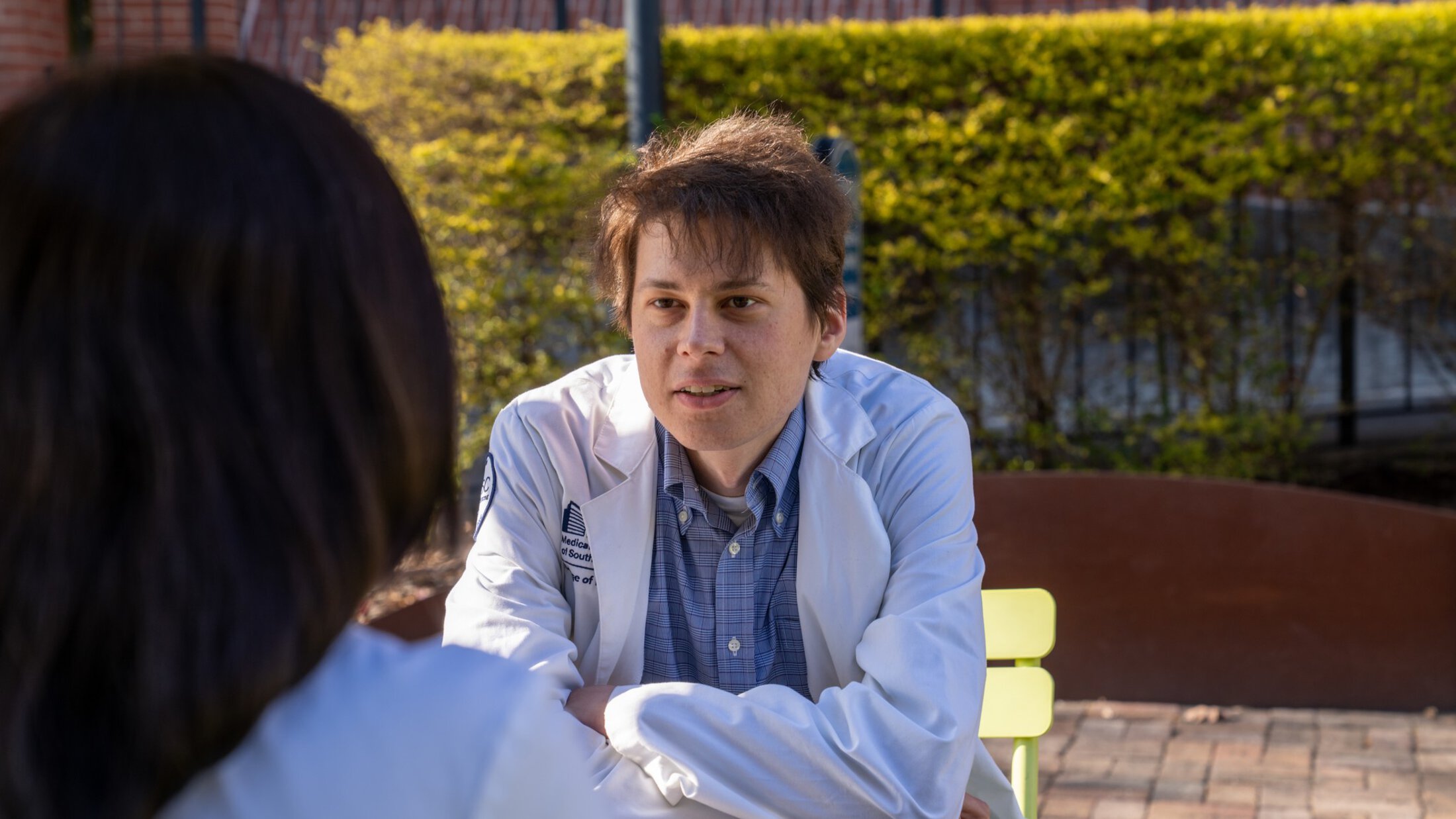
Too weak to travel home, Braun began chemotherapy in Austin while staying with family. Within weeks, the treatment began working. His appetite returned, and his strength improved.
His family rallied around him as he worked to get well enough to return home. Friends stepped in as well, delivering meals and moving his belongings, including a large saltwater aquarium, to a new apartment.
“It sounds small,” Braun said, “but that aquarium meant a lot. It all meant so much to me.”
A team willing to push further
Once Braun was healthy enough to return to South Carolina, he transferred his care to Hollings, where medical oncologist Craig Lockhart, M.D., chief of the Division of Hematology and Oncology, oversaw the next phase of treatment.
Braun resumed aggressive chemotherapy while finishing medical school – an exhausting balance that required carefully timing treatments around his academic and clinical schedules.
“The chemotherapy worked well for him,” Lockhart said. “The bleeding stopped, and we started seeing signs that things were heading in the right direction.”
As the tumors responded to treatment, the team began exploring options that once seemed unlikely. There were too many tumors in Braun’s liver to be removed by surgery. But one possibility stood out: a liver transplant.
“He really listened to what my goals were,” Braun said of Lockhart. “And he pushed for what might give me the best chance.”
Transplants are rarely used to treat colorectal cancer that spreads to the liver. Although about 30% of liver transplants in the U.S. are performed for cancer, most are for primary liver cancer. But newer research indicates that this procedure can benefit carefully selected patients whose tumors cannot be removed through traditional surgery.
All the things that make a National Cancer Institute-designated cancer center what it is came together for this.
“Historically, liver transplantation for colorectal cancer metastases wasn’t done,” said transplant surgeon Steve Hanish, M.D. “But in the right patients, it can lead to excellent long-term survival. For Hayden, removing the entire liver was the only option.”
For Braun to be considered, however, several steps had to happen. First, Donahue performed surgery to remove the primary tumor in Braun’s colon. After recovering, Braun then resumed chemotherapy under Lockhart’s care.
“If there was no change for six months, he could qualify for a transplant,” Donahue said. “The goal was to show that the cancer was under control and confined to the liver.”
Braun’s case was reviewed by multiple tumor boards at Hollings, where oncologists, surgeons and transplant specialists carefully evaluated his eligibility. Over the following months, he met each of the required criteria.
According to Lockhart, Braun was an ideal candidate: His primary colon tumor had been removed, chemotherapy had successfully controlled the disease and scans confirmed there was no cancer outside the liver.
“He was young, otherwise healthy and someone we could really partner with in making complex decisions about his medical care.”
Then came another unexpected moment: Braun’s younger brother Zach volunteered to be his donor.
A rare and complex transplant surgery
Braun’s transplant marked a milestone for MUSC: the first adult-to-adult living donor liver transplant and the first transplant for colorectal cancer that had spread to the liver.
It was also an unusually complex procedure.
Unlike most transplants, which rely on organs donated after death, Braun’s transplant came from a living donor. Those account for only about 600 of the roughly 12,000 liver transplants performed in the U.S. each year.
The procedure required two surgical teams working simultaneously. Hanish led the donor operation, carefully removing part of Braun’s brother’s liver, while MUSC Health Surgical Director of Liver Transplantation Diego di Sabato, M.D., removed Braun’s diseased liver, transplanted the donated organ and connected it to critical blood vessels and bile ducts.
“It’s an intricate and highly coordinated effort,” Hanish said. “Two operating rooms, two teams, two anesthesiologists – everything happens in parallel.”
Hanish stressed that protecting donor safety is a top priority throughout the process. Potential donors undergo extensive medical testing and meet with an independent donor advocate – a social worker whose role is to ensure the decision is voluntary.
Living donor transplantation relies on the liver’s ability to regenerate. Surgeons removed about 70% of his brother’s liver and transplanted it into Braun. Both men recovered quickly and were discharged within a week, and their livers grew back, returning to full function in the weeks that followed.
Hanish said the case reflects what is possible when specialists across disciplines work together to push the boundaries of cancer care.
“All the things that make a National Cancer Institute-designated cancer center what it is came together for this.”
For Braun, the surgery accomplished something equally important.
“I needed a treatment option that would give me the energy to complete residency,” he said. “This gave me that opportunity.”
Supported every step of the way
Doctors continue monitoring Braun closely, as Stage 4 cancer carries uncertainty. But the transplant accomplished something critical: It allowed him to move forward without more chemotherapy and return to the goal that cancer had nearly taken away.
Throughout treatment and recovery, Braun said he never faced the journey alone. Friends and family provided constant support, while faculty advisors reorganized medical school requirements so he could graduate on time.
“When they heard that I wanted to stay and graduate with my class, they moved heaven and earth to make that possible,” he said.
At Hollings, nurses quickly recognized complications, once identifying a dangerous drug reaction before symptoms escalated. Staff also spent hours talking with Braun during long infusion days.
“It really does take a village to manage something this complex,” Lockhart emphasized.
“They didn’t just treat the cancer,” Braun added of his care team. “They wanted to know my story. They treated me like a person.”
Often people receive life-changing news completely out of the blue. Having gone through that myself, I feel more prepared to have those conversations with patients.
Cancer has reshaped how Braun thinks about success. Before his diagnosis, scores and metrics dominated his attention. Now, those measures feel smaller compared to what he experienced. Uncertainty about the future also shifted personal priorities.
“The most important thing I did this past year wasn’t graduating from medical school,” Braun said. “It was marrying Catherine.”
Rather than waiting months, the couple decided not to postpone, marrying in a small ceremony last year with immediate family, before later celebrating with friends.
Braun currently works in the MUSC Emergency Department coordinating a hepatitis and HIV screening program while preparing to begin residency in emergency medicine at Dell Medical School of the University of Texas, Austin, in June.
His experience as a patient has already changed how he plans to care for others.
“Often people receive life-changing news completely out of the blue,” Braun said. “Having gone through that myself, I feel more prepared to have those conversations with patients.”
Featured in this story
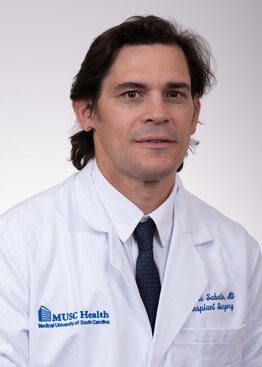
Diego di Sabato, M.D.
Diego di Sabato, M.D., serves as the Surgical Director of Liver Transplantation for both adult and pediatric patients at MUSC, a position that allows him to make a significant impact on patient care. He is developing a robust Living Donor Liver Transplant (LDLT) program and works with multidisciplinary teams including MUSC Health's Transplant Oncology practice, the Pediatric Liver Transplant Program, and other LDLT indications.
Dr. di Sabato joined MUSC from the University of Chicago School of Medicine, where, since 2019, he served as the co-director of the Living Donor Liver Transplant (LDLT) Program. Dr. di Sabato is exceedingly well trained, having completed two fellowships in Transplantation at Northwestern University Feinberg School of Medicine. He was also a visiting surgeon at the world's busiest living donor liver transplant program, Asan Medical Center, in Seoul, South Korea, the first center in the world to perform living donor liver transplantation.
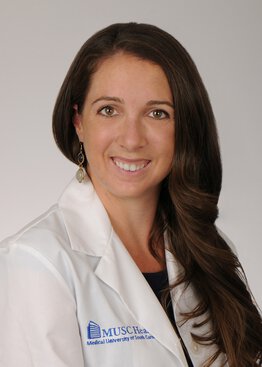
Colleen Ashley Donahue, M.D.
Colleen Donahue, M.D., is a fellowship trained colorectal surgeon that specializes in both benign and malignant diseases of the colon, rectum and anus. Her clinical interests include benign conditions of the anus and rectum, rectal prolapse, diverticulitis, inflammatory bowel disease and cancer of the colon and rectum, focusing on a multidisciplinary, team-based treatment approach. Dr. Donahue is committed to the advancement of surgical education, serving as the program director of the Department of Surgery’s General Surgery Residency Program.
She earned her medical degree from Tufts University School of Medicine followed by General Surgery Residency at Lahey Hospital and Medical Center in Massachusetts. She completed her colon and rectal fellowship at John H. Stroger Jr. Hospital.
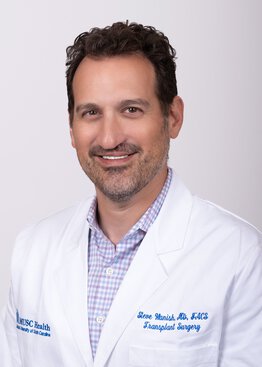
Steve Hanish, M.D., FACS
Steven I. Hanish, M.D., is a Professor in the Department of Surgery at MUSC, as well as the Division Chief of Transplant Surgery. He specializes in complex surgeries of the liver and bile duct as well as Living Donor Liver Transplant. His clinical focus is on expanding the availability of liver transplant - from both living and deceased donors - to patients who weren't previously eligible for transplant due to their age, obesity, tumor size, or insufficient sobriety time.
Dr. Hanish earned his medical degree at the Indiana University School of Medicine. He completed a residency in general surgery at Duke University School of Medicine and received advanced training in transplant surgery through a fellowship at the University of Wisconsin Hospitals and Clinics. He performed additional training at Asan Medical Center in Seoul, South Korea, learning the techniques of performing living-donor liver transplantation.
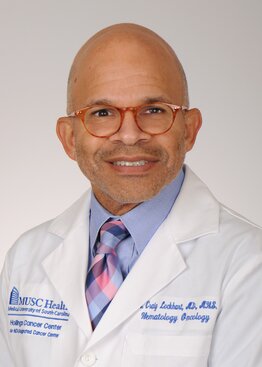
A. Craig Lockhart, M.D., MHS, FASCO
Dr. Craig Lockhart is the Director of the Division of Hematology & Oncology at MUSC and Associate Director for Clinical Science at MUSC Hollings Cancer Center. His research specialty is gastrointestinal cancers, and he has been a principal investigator on more than 100 Phase I/II and III trials.
Prior to joining MUSC, Dr. Lockhart was on the faculty and in leadership roles at the University of Miami, Miller School of Medicine, Washington University in St. Louis/Siteman Cancer Center, and at Vanderbilt University/Vanderbilt-Ingram Cancer Center.
Dr. Lockhart has been conducting early-phase clinical trials for over 20 years. His specific research interests are developing and conducting Phase I/II clinical trials of novel therapeutics applied to gastrointestinal cancers. In treating these cancers, he aims to incorporate novel agents or molecular/genetic-based treatments into therapeutic trials in the pursuit of personalized cancer care. He has developed and led multi-institutional clinical trials involving the treatment of GI tumors through national cooperative groups as well as investigator-initiated studies. He has been an investigator and co-investigator on individual grants, on successful SPORE grant applications and on successful multi-institutional UM1 grant applications.
Dr. Lockhart has also served on several committees for the American Society of Clinical Oncology (ASCO), including the scientific and career development committees. He has been a member of the National Comprehensive Cancer Network (NCCN) guidelines committee for gastric and esophageal cancers. He also serves as faculty at the ASCO/American Association for Cancer Research (AACR) Methods in Clinical Cancer Research Workshop, mentoring fellows and junior faculty on the development of gastrointestinal cancer therapeutic protocols.
Dr. Lockhart graduated from the University of Texas Southwestern Medical School at Dallas in 1993. He completed residency training at Barnes Hospital at Washington University, fellowship training in hematology/oncology at Duke University and a fellowship in drug development at GlaxoSmithKline in the North Carolina Research Triangle Park. He also earned a Master of Health Science degree in clinical trials at Duke University. He completed his undergraduate degree, a bachelor’s in biology, at Rice University.
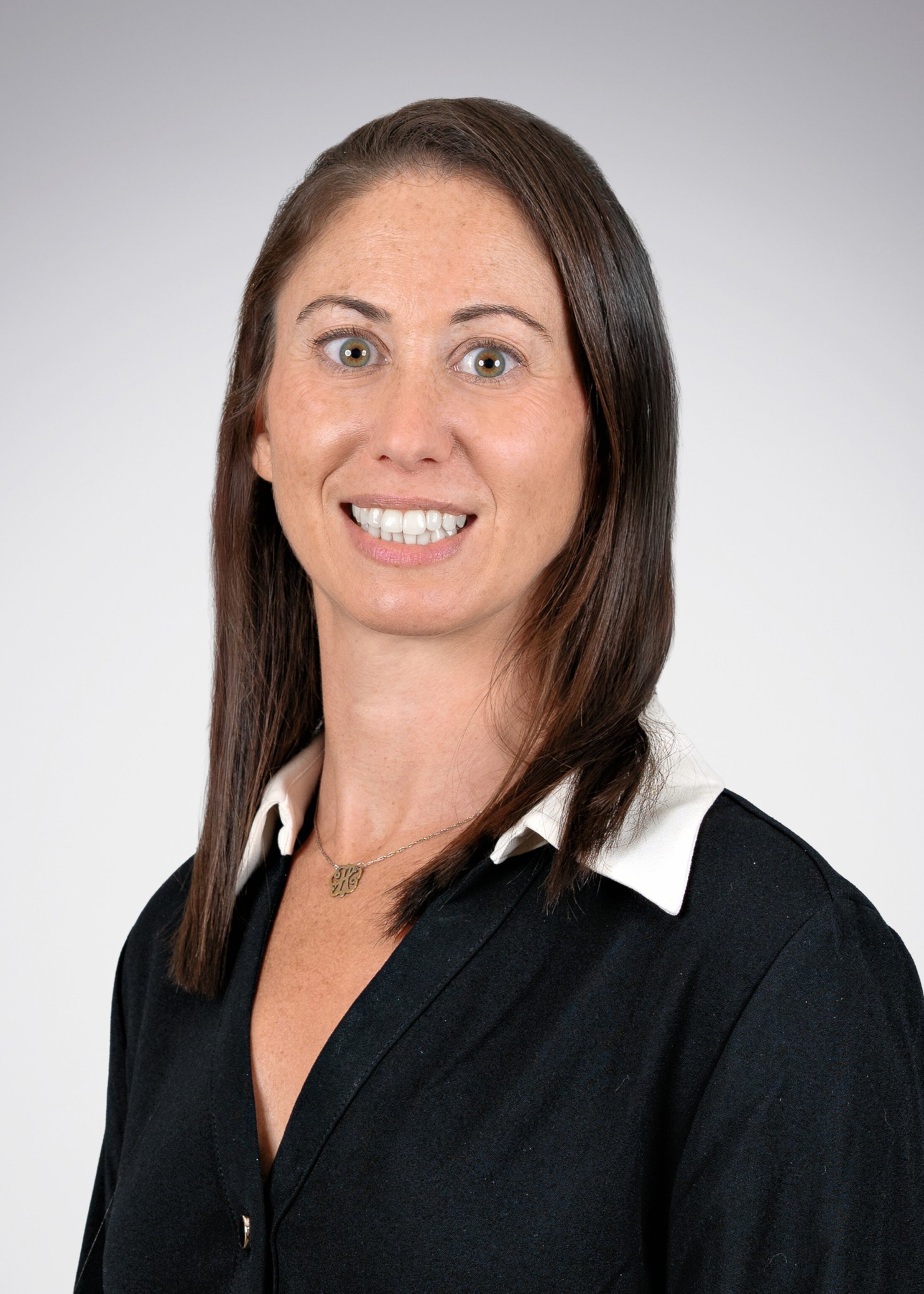
Hayley Kamin
Communications Manager
Hayley Kamin is the communications manager for the Hollings Cancer Center Communications and Marketing team, having joined the team in 2025 after three years as a communications specialist at the National Institutes of Health (NIH). As a science communicator with a Ph.D. from the University of Florida, she has extensive experience translating complex research into clear, engaging content. Her career has included roles at the NIH’s National Institute of Mental Health and the American Psychological Association, where she led content development and editorial strategy, developed science and health communications and worked with researchers and clinicians to strengthen public understanding of research.
Contact Hayley at kamin@musc.edu.
Recent Cancer Patient Journeys stories