
Breast medical oncologist Abirami Sivapiragasam (Abi Siva), M.D., shared her perspective on the recent American Society of Clinical Oncology (ASCO) conference.
ASCO 2026: Four Studies I'm Still Thinking About
ASCO 2026 highlighted two parallel themes in breast cancer. On one side, we are becoming more comfortable de-escalating therapy when biology suggests treatment can be safely avoided. On the other, we continue to push for better options in metastatic disease where outcomes remain suboptimal. Four studies stood out to me.OPTIMA addressed one of the most important questions in early ER-positive, HER2-negative breast cancer: who truly needs chemotherapy? The study enrolled 4,429 clinically high-risk patients, including those with up to nine positive lymph nodes, and compared standard chemotherapy plus endocrine therapy with a PAM50-guided approach. Patients with a PAM50 score ≤60 received endocrine therapy alone. Remarkably, 68% of patients in the biomarker-guided arm avoided chemotherapy. Five-year invasive breast cancer-free survival was nearly identical between groups (90.4% vs 91.5%; HR 0.99), meeting the noninferiority endpoint. These results are encouraging, but I remain cautious. Follow-up is relatively short for ER-positive disease, and only 19% of patients had N2/N3 disease.
VIKTORIA-1 was one of the most important metastatic presentations. In patients with HR-positive, HER2-negative, PIK3CA-mutant disease previously treated with a CDK4/6 inhibitor and aromatase inhibitor, the triplet of gedatolisib, fulvestrant, and palbociclib doubled median PFS compared with alpelisib plus fulvestrant (11.1 vs 5.6 months; HR 0.50). The doublet regimen performed similarly and both appeared to have less hyperglycemia than alpelisib. The main limitation is the requirement for weekly IV therapy.
PANKU-Breast02 delivered encouraging results for metastatic triple-negative breast cancer. The EGFR×HER3 bispecific ADC iza-bren improved both progression-free and overall survival compared with physician's choice chemotherapy in previously treated patients. Median PFS improved by 5.4 months and OS by 3.4 months. It is exciting to see a bispecific ADC achieve both PFS and OS benefit in TNBC, though confirmation in broader global populations will be important given the study was conducted entirely in China.
Finally, a large retrospective GLP-1 analysis suggested approximately a 30% lower incidence of breast cancer among overweight women using GLP-1 receptor agonists. While intriguing, this remains hypothesis-generating. The study cannot separate the effects of the medication from the benefits of weight loss and could not account for several important breast cancer risk factors. Prospective studies are clearly needed.
Together, these studies remind us that progress in breast cancer comes from both smarter treatment selection and continued innovation for patients with advanced disease.
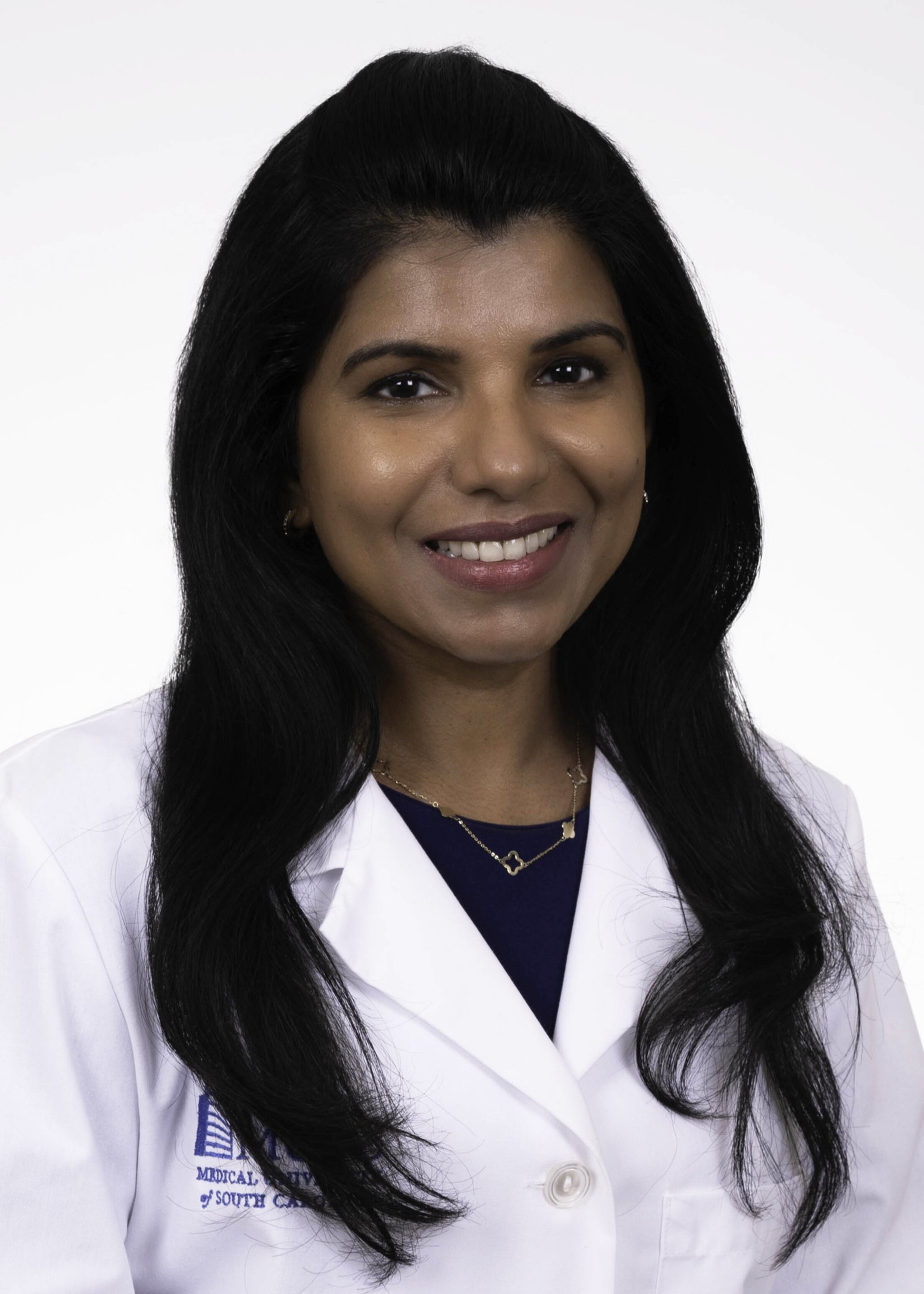
Abirami (Abi) Sivapiragasam
Director, Medical Oncology, Hollings Cancer Center Director, Hematology and Oncology Fellowship Program Associate Professor, Hematology and Oncology
Dr. Abirami Sivapiragasam (Abi Siva) is an Associate Professor of Medicine and a board-certified medical oncologist at MUSC Hollings Cancer Center, with more than a decade of clinical and academic experience. She specializes in the care of patients with breast cancer and serves as the Director of Medical Oncology. In this role, she focuses on strengthening clinical programs, expanding access to innovative therapies, and building collaborative models of care that improve outcomes across South Carolina and beyond.
Dr. Sivapiragasam is equally committed to education and mentorship. As Program Director of the Hematology and Oncology Fellowship Program, she is dedicated to training the next generation of oncologists. She has developed structured mentorship and research initiatives designed to support fellows in building strong clinical skills, pursuing meaningful scholarship, and growing into thoughtful, patient-centered leaders in oncology.
A passionate clinician-scientist, Dr. Sivapiragasam serves as principal investigator on multiple clinical trials and leads the Breast Cancer Clinical Research Group at MUSC. Her research focuses on designing pragmatic clinical trials that can be seamlessly integrated into everyday practice. She is particularly interested in right-sizing therapy through de-escalation strategies that reduce toxicity while maintaining efficacy, as well as biomarker-driven approaches that personalize treatment decisions.
She collaborates closely with translational scientists to advance innovative therapeutic concepts from bench to bedside, with the goal of accelerating access to cutting-edge treatments for patients. Through her clinical leadership, research efforts, and dedication to education, Dr. Sivapiragasam remains deeply committed to improving breast cancer care and advancing the field of oncology.
Recent Cancer Conference Perspectives stories