
Medical oncologist Craig Lockhart, M.D., shared his biggest takeaway from the American Society of Clinical Oncology 2026 annual meeting.
New paradigm for pancreatic cancer
I have taken care of pancreatic cancer patients for 25 years. At the ASCO plenary session presenting the results of the RASolute-302 clinical trial evaluating daraxonrasib, it felt like, suddenly, everything has changed in the pancreas cancer treatment paradigm.
RASolute-302 was a Phase III randomized clinical trial that evaluated daraxonrasib, an oral RAS(ON) inhibitor, in patients who had previously received chemotherapy.
The results of the study were significant, demonstrating that daraxonrasib doubled both the median overall survival and progression-free survival compared to traditional chemotherapy. Notably, these benefits were consistent across all patient subgroups, including variations in age, prior chemotherapy, RAS mutation types, and metastasis sites.
Although daraxonrasib was associated with an increased incidence of low-grade side effects such as skin rash, mouth sores, and gastrointestinal issues like diarrhea and nausea, chemotherapy resulted in a higher frequency of more severe side effects. As a result, daraxonrasib is poised to become a new standard of care for pancreatic cancer patients and may influence future approaches to targeting RAS.
The RASolute-302 study results raise important considerations about the design of new clinical trials in pancreatic cancers:
- Do we incorporate daraxonrasib into clinical trials in patients who have not received prior chemotherapy?
- What about before or after surgery?
- Will daraxonrasib now make other lesser used treatments (e.g. immune therapy) become more useful in treating pancreatic cancers?
More clinical trials are needed to figure out the optimal clinical settings for the drug's effectiveness, and the potential for curing more pancreatic cancer patients. Importantly, RAS genes are known to be the most commonly mutated oncogenes in human cancers and drive approximately 20% of all malignancies. This highlights that daraxonrasib or other similarly designed therapeutic agents could have treatment benefits extending beyond pancreatic cancers into other cancer types.
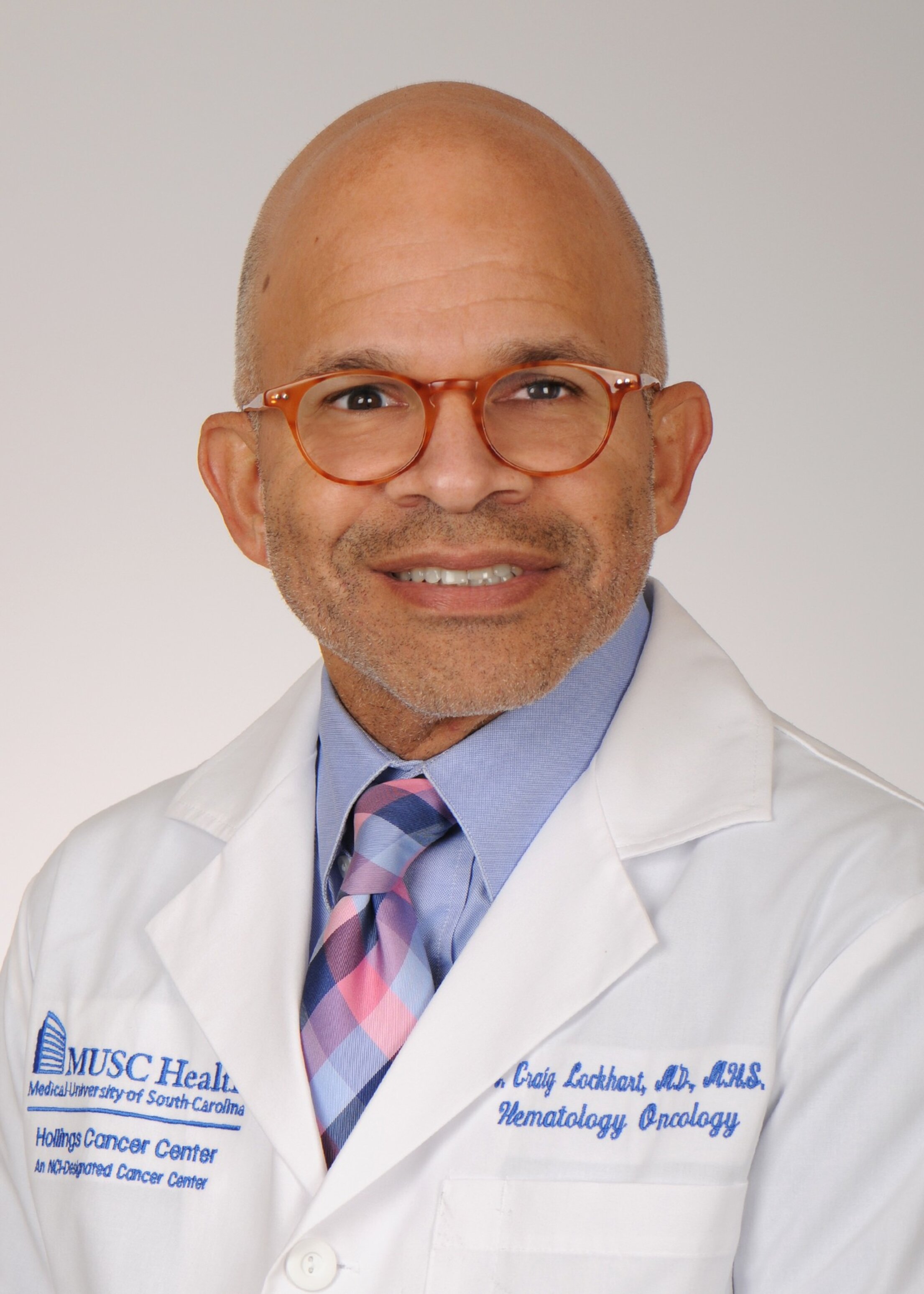
A. Craig Lockhart
Division Chief and Professor, Division of Hematology & Oncology Associate Director, Clinical Science, Hollings Cancer Center Medical Director, APP Fellowship - Hematology-Oncology Grace DeWolff Professor of Medical Oncology
Dr. Craig Lockhart is the Director of the Division of Hematology & Oncology at MUSC and Associate Director for Clinical Science at MUSC Hollings Cancer Center. His research specialty is gastrointestinal cancers, and he has been a principal investigator on more than 100 Phase I/II and III trials.
Prior to joining MUSC, Dr. Lockhart was on the faculty and in leadership roles at the University of Miami, Miller School of Medicine, Washington University in St. Louis/Siteman Cancer Center, and at Vanderbilt University/Vanderbilt-Ingram Cancer Center.
Dr. Lockhart has been conducting early-phase clinical trials for over 20 years. His specific research interests are developing and conducting Phase I/II clinical trials of novel therapeutics applied to gastrointestinal cancers. In treating these cancers, he aims to incorporate novel agents or molecular/genetic-based treatments into therapeutic trials in the pursuit of personalized cancer care. He has developed and led multi-institutional clinical trials involving the treatment of GI tumors through national cooperative groups as well as investigator-initiated studies. He has been an investigator and co-investigator on individual grants, on successful SPORE grant applications and on successful multi-institutional UM1 grant applications.
Dr. Lockhart has also served on several committees for the American Society of Clinical Oncology (ASCO), including the scientific and career development committees. He has been a member of the National Comprehensive Cancer Network (NCCN) guidelines committee for gastric and esophageal cancers. He also serves as faculty at the ASCO/American Association for Cancer Research (AACR) Methods in Clinical Cancer Research Workshop, mentoring fellows and junior faculty on the development of gastrointestinal cancer therapeutic protocols.
Dr. Lockhart graduated from the University of Texas Southwestern Medical School at Dallas in 1993. He completed residency training at Barnes Hospital at Washington University, fellowship training in hematology/oncology at Duke University and a fellowship in drug development at GlaxoSmithKline in the North Carolina Research Triangle Park. He also earned a Master of Health Science degree in clinical trials at Duke University. He completed his undergraduate degree, a bachelor’s in biology, at Rice University.
Recent Cancer Conference Perspectives stories