
John Kaczmar, M.D., is a medical oncologist who focuses on head and neck cancer. He shared his impressions of head and neck cancer-related research presented at the American Society of Clinical Oncology 2026 annual meeting.
After a practice-changing year for head and neck cancer oncologists last year, this year’s ASCO annual meeting showed continued reason for optimism as the interim results of several clinical trials of EGFR bispecifics continue to roll in.
I and my colleagues are eagerly awaiting the final results of a handful of phase 3 studies in this space: FORTIFI for ficerafusp alfa, LiGeR HN1/2 for petosemtamab, and ORigAMI 5 for amivantamab.
In the meantime, our team at Hollings is heavily involved in this clinical research. Here’s what caught my eye at ASCO this year:
The OrigAMI-4, Phase 1b/2 trial. This is evaulating amivantamab (EGFR-MET Bispecific) monotherapy in HPV-unrelated recurrent/metastatic head and neck squamous cell carcinoma after an immune checkpoint inhibitor and chemo. Most impressive: The strong activity in a population with limited options. With 102 patients, the objective response rate was 47%, with four complete responses.
Ficerafusp alfa. I was excited to present one poster on the impact of depth of response on long term outcomes of patients and be senior author on the poster updating long-term (up to three years) follow-up outcomes of patients with recurrent/metastatic HPV-negative head and neck squamous cell carcinoma treated with front line ficerafusp alfa + pembrolizumab. We found a majority of patients on the higher dose cohorts (1500 mg and 2000 mg) had responses of >80% reduction in target lesions correlating with very impressive progression free survival and duration of response (>2.5 years with median OS not reached). Long term data demonstrated that the 1500 mg group had overall survival nearly doubling historical benchmarks for HPV negative disease. Correlative data showed pSMAD2 was significantly reduce in tumor tissue treated, TGF-Beta levels were neutralized at all measured time points and markers of immune activation were increased suggesting the drug’s mechanism of action is helping drive the immune response.
RAMPART trial. My radiation medicine colleague, Bhisham Chera, M.D., was a co-author on this oral abstract. RAMPART assessed definitive radiotherapy for patients with locally advanced unresectable cutaneous squamous cell carcinoma with neoadjuvant, concurrent and adjuvant cemiplimab, an immune checkpoint inhibitor.
This study is promising because historical outcomes for this group, using only radiation therapy or chemotherapy, have been suboptimal. Integrating PD-1 blockade with response-adapted RT appears to substantially improve disease control and survival, offering a promising non-surgical option for this population. The researchers noted this trial showed the highest rates of event-free survival, progression-free survival, and overall survival ever reported, although more research is needed to determine the most suitable patients for this approach.
CRB-701. This drug is a next-generation Nectin-4–targeted monomethyl auristatin E antibody-drug conjugate (ADC). This was a phase 1 / 2 trial for people with recurrent or metastatic head and neck squamous cell carcinoma. It is designed for improved safety and showed good results for people with pretreated HPV cancers – I'm favorably impressed and we are investigating opening a trial site at Hollings once the team moves to phase 3.
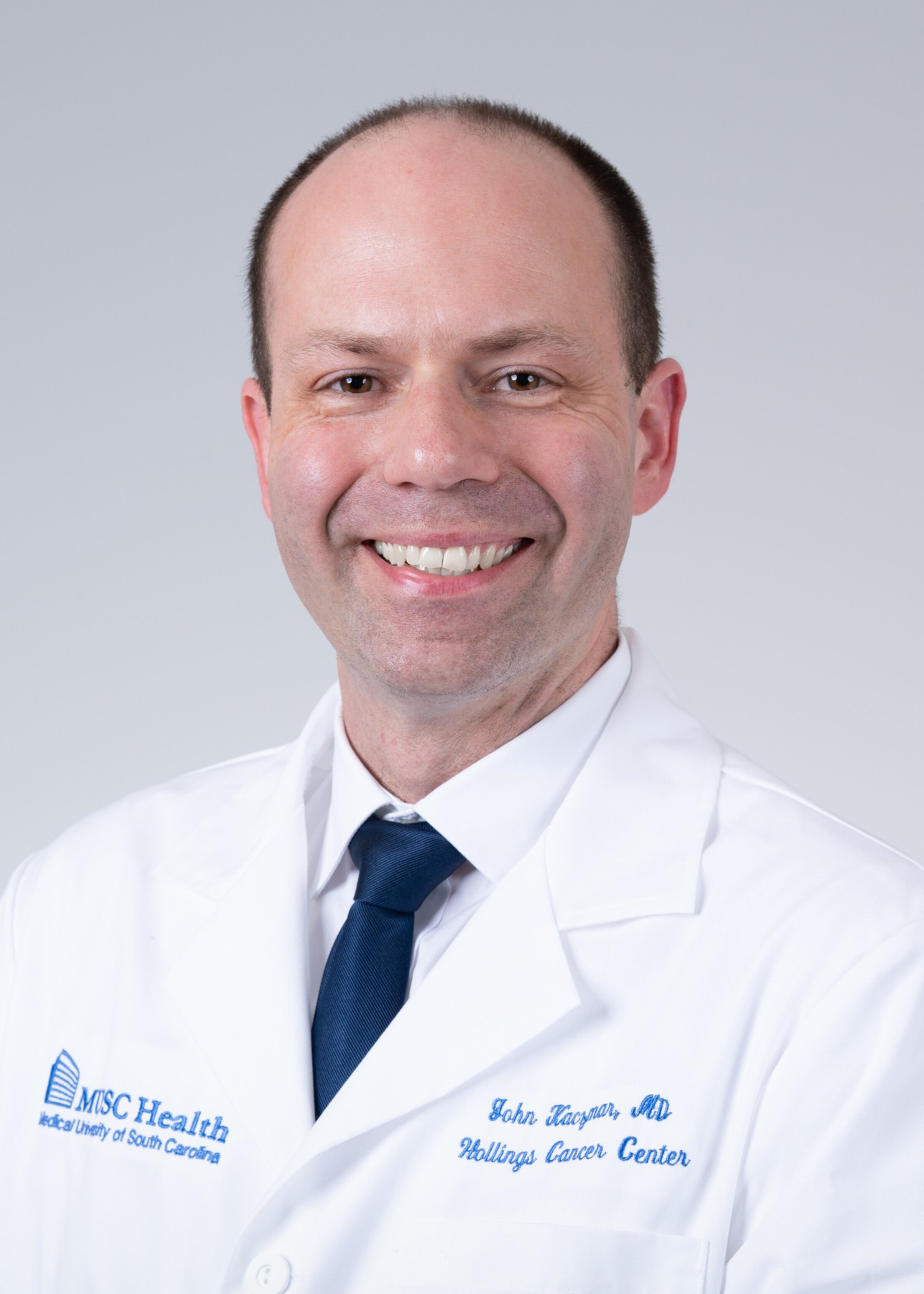
John Kaczmar
Deputy Medical Director, Hollings Clinical Trials Office Research Director, Hematology & Oncology Division Director, Anderson Advanced Cancer Therapy Clinic Associate Professor, College of Medicine
John Kaczmar, M.D., is the Clinical Trials Office Deputy Medical Director and Director of the Phase 1 Clinical Tials Program at MUSC Hollings Cancer Center. Dr. Kaczmar also serves as Director of the Anderson Advanced Cancer Therapy Clinic which is a specialized unit that provides a team of clinicians who are completely dedicated to the needs of patients participating in Phase 1 clinical trials. Dr. Kaczmar is a medical oncologist who specializes in caring for patients with head and neck cancers.
Recent Cancer Conference Perspectives stories