
Millions of men face a decision about whether to be screened for prostate cancer. National guidelines say that decision should begin with a conversation about the risks and benefits of testing.
But a new MUSC study suggests those conversations may not be happening nearly as often as they should. Researchers found that discussions about prostate cancer screening were documented in only a small fraction of primary care visits. Yet when those conversations did occur, men were far more likely to get screened.
The research, published in the Southern Medical Journal and led by Nicholas Shungu, M.D., a family medicine physician at MUSC Health and researcher at MUSC Hollings Cancer Center, underscores a gap between national guidelines and clinical practice.
"One of the biggest takeaways was the surprisingly low rate of documented shared decision-making conversations," said Shungu. "The other key finding was that when those conversations were documented, screening was much more likely to occur."
A different approach to cancer screening
Unlike mammograms or colonoscopies, prostate cancer screening is not universally recommended once men reach a certain age. Instead, the U.S. Preventive Services Task Force, American Cancer Society and other medical organizations recommend that men discuss screening with their clinicians and make an informed decision based on their personal risks and preferences.
We've moved away from the idea that everyone should automatically be screened or not be screened. The recommendation now is that patients and clinicians have a discussion and decide together what's right for that individual.
That recommendation reflects the complex history of prostate cancer screening.
The prostate-specific antigen, or PSA, blood test can detect prostate cancer early and has been shown to reduce deaths from the disease. However, the test is not perfect. As men age, the prostate naturally enlarges and produces more PSA, which can raise blood test levels even when cancer is not present. Because the PSA test cannot determine why levels are elevated, some men without cancer may undergo unnecessary biopsies. At the same time, many prostate cancers grow slowly and may never cause symptoms or become life-threatening, raising concerns about overtreatment. These factors have shaped the ongoing discussion around prostate cancer screening.
Historically, those concerns led experts to question whether the benefits of screening outweighed the risks. But Shungu said the landscape has changed dramatically in recent years.
New tools such as prostate MRI can help doctors to determine which patients need additional testing, while many low-risk cancers can be safely monitored through active surveillance. Those advances, he said, have reduced some of the concerns that originally fueled resistance to widespread screening.
"We've moved away from the idea that everyone should automatically be screened or not be screened," he said. "The recommendation now is that patients and clinicians have a discussion and decide together what's right for that individual."
As screening and treatment options have become more sophisticated, Shungu said that conversations between patients and clinicians have become even more important.
Looking at what happens in practice
To determine whether those conversations were taking place, the researchers reviewed the medical records of 600 men ages 45 to 69 who received care at MUSC family medicine clinics between 2019 and 2020.
"Different guideline organizations recommend slightly different ages to start screening discussions, particularly for higher-risk groups such as Black men," Shungu said. "We wanted to be fairly broad in who we included so we could capture the population for whom these conversations should be taking place."
This study builds on Shungu's previous research by examining what happens during real-world clinical encounters. The researchers examined whether clinicians documented shared decision-making conversations about prostate cancer screening in patients’ medical records and whether those patients went on to receive PSA testing.
The results revealed a substantial gap between guideline recommendations and clinical practice. Overall, conversations about prostate cancer screening were uncommon, with only 6% of patients having a documented discussion. Documentation rates did not differ significantly by race, age, insurance status or family history of cancer.
One important caveat is that some discussions may have occurred without being documented in the medical record.
"With any chart review study, there's always the possibility that clinicians had the conversation but didn't document it," Shungu said. "Even with that limitation, though, the numbers were surprisingly low."
Conversations linked to higher screening rates
Although the conversations themselves were uncommon, their impact was striking.
Among men with documented shared decision-making discussions, nearly 72% went on to receive a screening PSA test. Among those without a documented conversation, only about 36% received screening.
Engaging with Communities
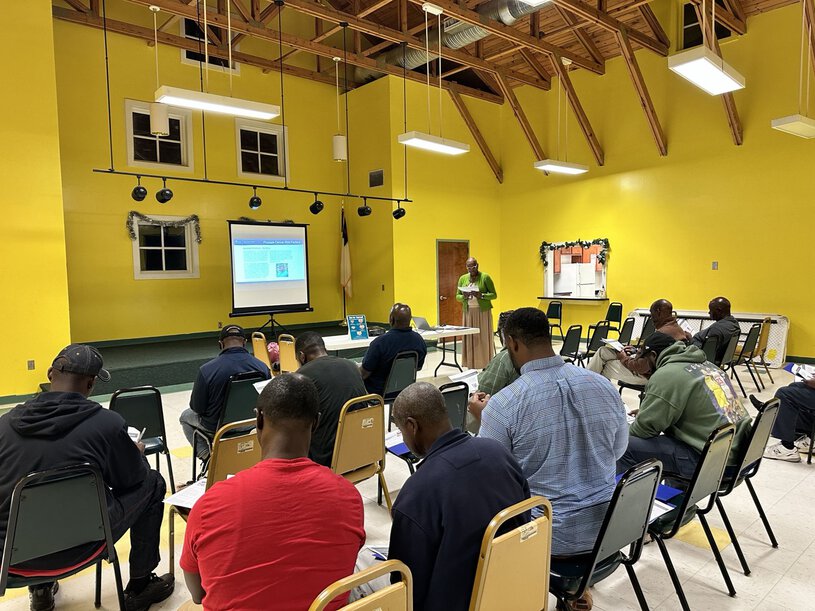
SC AMEN program
The association was even stronger among Black men. Eighty-five percent of Black men who had a documented discussion received a screening PSA test, compared with 36% who did not have a conversation. After accounting for other factors, shared decision-making discussions remained one of the strongest predictors of prostate cancer screening.
The finding suggests that shared decision-making does more than help patients to weigh options. For many men, learning about both the benefits and limitations of screening appears to have increased their willingness to be tested.
"When these conversations occurred, most men decided they wanted to be screened," Shungu said. "That tells us these discussions really matter."
Starting the conversation
The findings carry particular importance in South Carolina, where prostate cancer is the most common non-skin cancer in men. South Carolina also has some of the nation's highest prostate cancer mortality rates, raising the need to promote informed screening and early detection. For Shungu, the findings also stand out because of prostate cancer's disproportionate impact on Black men, who are more than twice as likely to die from the disease as men of other races.
Improving awareness and access is already a major focus at Hollings. Through initiatives such as SC AMEN and SC PRENS, Hollings researchers and community partners are working to increase prostate cancer screening and reduce longstanding disparities across South Carolina. The new findings suggest that ensuring men have opportunities to discuss screening with a trusted clinician may be another important step toward that goal.
Shungu hopes the study serves as a reminder for both clinicians and patients. For clinicians, the findings underscore the importance of making time for conversations about prostate cancer screening, even during busy primary care visits. For patients, they highlight the value of asking questions and raising the topic if it is not discussed.
"A lot of people assume that if their doctor doesn't bring up prostate cancer screening, it must not be important. But sometimes there just isn't enough time during a visit,” Shungu said. “Patients are always going to be their own best advocates and should feel empowered to ask about it and make sure the conversation happens so they can make the most informed choice possible."
Featured in this story
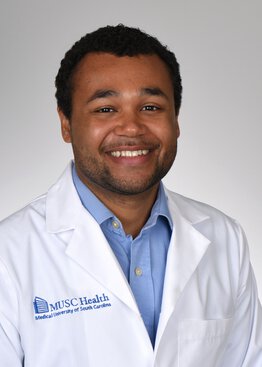
Nicholas Shungu, M.D.
Dr. Nicholas Shungu is a family medicine physician at MUSC Health who strives to provide compassionate and high quality care to patients of all ages and backgrounds. His clinical interests include chronic disease management, self-care, care for underserved populations, and medical student education. He provides office-based procedures including trigger point injections, joint injections, long-term contraception, and treatment of warts and calluses. He has a special interest in care for adolescents and individuals with HIV.
Dr. Shungu attended Duke University for college and received his medical degree from the University of Pennsylvania. He completed his residency in family medicine at Thomas Jefferson University, where he also served as chief resident. He practiced in Philadelphia and Chapel Hill before relocating to Charleston. While practicing in North Carolina, he was recognized with the UNC Health Care and UNC Faculty Physicians Award for Carolina Care Excellence. He has also been the recipient of the Thomas Jefferson University Department of Family Medicine Faculty Teaching Award.
Dr. Shungu is committed to addressing healthcare disparities through patient care, teaching, and research. He loves to learn from and grow with his patients. His favorite part of practicing medicine are the relationships he is able to establish with a diverse group of people. He is proudly Safe Zone trained.
Reference
Nicholas Shungu, Jaylynne Le, Nekia E. Robinson and Vanessa Diaz. Prostate Cancer Screening Shared Decision Making and Prostate-Specific Antigen Testing in Black and Non-Black Men in Primary Care in South Carolina. Southern Medical Journal [2 June 2026]. doi: 10.14423/SMJ.0000000000001980.

Hayley Kamin
Communications Manager
Hayley Kamin is the communications manager for the Hollings Cancer Center Communications and Marketing team, having joined the team in 2025 after three years as a communications specialist at the National Institutes of Health (NIH). As a science communicator with a Ph.D. from the University of Florida, she has extensive experience translating complex research into clear, engaging content. Her career has included roles at the NIH’s National Institute of Mental Health and the American Psychological Association, where she led content development and editorial strategy, developed science and health communications and worked with researchers and clinicians to strengthen public understanding of research.
Contact Hayley at kamin@musc.edu.