MUSC Hollings Cancer Center is taking prostate cancer screening on the road. With new funding, Hollings will bring prostate cancer education and on-site blood tests directly to communities across South Carolina.
The statewide effort addresses a significant need. South Carolina has a higher prostate cancer death rate than the nation overall, with barriers such as limited access to care, gaps in knowledge and lack of health insurance contributing to the problem.
But the new effort goes beyond making screening easier to access. Hollings patient navigators will also help participants to get follow-up care if needed – extending support beyond the initial screening and into the healthcare system.
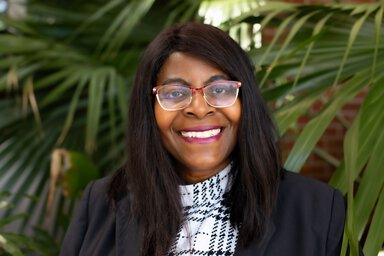
For Marvella Ford, Ph.D., associate director of Hollings Community Outreach and Engagement, bringing screening closer to home while providing that follow-through is essential.
“We want to meet people where they are in their communities,” Ford said. “It’s not enough to simply provide screening. We want to make sure people are connected to the care they need and supported every step of the way.”
The S.C. Department of Health and Human Services awarded the grant money, using funds from the federal Rural Health Transformation Program. This program is meant to help states to improve healthcare access, quality and outcomes in rural communities.
Bringing prostate cancer screening into communities
Prostate cancer is one of the most common cancers diagnosed in men, and detecting it early can make a major difference. Yet too many men who could benefit from early detection miss opportunities to be screened.
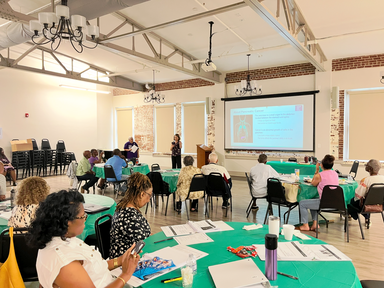
The new project is meant to bring both education and screening into communities.
Participants will first attend a one-hour educational session that explains prostate cancer and its risk factors, screening and treatment in plain language. Immediately afterward, eligible men will have the opportunity to undergo a PSA, or prostate-specific antigen, test. Higher-than-expected PSA levels can signal a problem with the prostate, although they do not necessarily mean a person has cancer.
For men who may associate prostate cancer screening with a digital rectal exam, Ford emphasized that screening has changed. Those exams are now rarely used for routine prostate cancer screening. Instead, screening typically begins with a PSA test, which requires only a blood draw. The Hollings outreach team will include a phlebotomist who collects the samples, which will then be taken to MUSC laboratories for analysis.
“What’s exciting about this program is that not only will we be able to provide education, but we’ll also be able to actually screen the men at the same time,” Ford said.
The program focuses on men ages 40 through 69 who are at a higher risk for prostate cancer. Factors that can increase prostate cancer risk include being over age 55, having a family history of prostate cancer, obesity, physical inactivity and being Black or having Black ancestry.
Screening will also be offered starting at age 50 to men who are at average risk of developing prostate cancer.
It’s about connecting patients and community members to the healthcare system, and that’s a sustainable approach. We’re so excited to be able to offer this service and help people get through the system. It’s something we’ve been dreaming about doing.
To reach eligible men, the project will use two pathways.
The first builds on Hollings’ existing community outreach model. Community organizations across South Carolina can request a prostate cancer session, and the Hollings outreach team travels to them. The team also works with trusted community leaders to organize events, identify venues and recruit participants. Through its SC AMEN program, Hollings has already used that approach to provide more than 800 Black men with prostate cancer education. The new funding will allow community organizations to host similar events, with the outreach team providing on-site screening.
The second pathway reaches men through participating federally qualified health centers (FQHCs). These centers can identify eligible patients who have not been screened and connect them with Hollings education and screening opportunities. Hollings is partnering with four FQHCs whose locations extend the program’s reach across much of the state:
- ReGenesis Health Care in the Upstate.
- Eau Clair Cooperative Health Family Health Center in the Midlands.
- Beaufort Jasper Hampton Comprehensive Health Services in the Lowcountry.
- Low Country Health Care Services in the coastal region.
Together with MUSC Health locations and community-based events, the two pathways will create a broad network for reaching men closer to their homes.
Screening is only the first step
Regardless of how someone enters the program, Ford said screening is only the beginning. What happens next is just as important.
The clinical side of the effort is led by urology chair Eric Wallen, M.D., assistant director of Community and Clinical Engagement and medical director for the Rural Health Transformation Program. As participants move from screening to testing and specialty care, Wallen and the urology team will ensure they receive appropriate clinical follow-up.
If a participant has an abnormal PSA result, Hollings patient navigators will arrange a repeat screening. If that result is also abnormal, the navigator will connect the patient with a urologist and schedule a prostate MRI. Depending on those results, a biopsy may follow.
Throughout the process, navigators will use electronic health records to track screening results and participants’ progress through follow-up care. They will also address practical barriers, connecting participants with care close to home and transportation resources.
“It’s not enough to say, ‘OK, we met our goal; we screened 400 patients,’” Ford said. “If we don’t continue to navigate them for repeat screening, MRI or biopsy, we’re doing a disservice to people who already have trouble accessing the healthcare system.”
The team will remain connected even when results are normal, reminding participants when it is time to be screened again. For men without additional risk factors, yearly prostate cancer screening is recommended beginning at age 50. Black men and those with a family history of prostate cancer may begin screening as early as age 40.
“We’re not screening them and leaving them,” Ford added. “We’re screening them and then staying with them step by step and side by side until they get what they need.”
Ultimately, Ford hopes those connections will outlast the one-year project. That goal reflects the Rural Health Transformation Program’s emphasis on creating sustainable changes in the delivery of rural healthcare.
Bringing a blood test into a community is only the starting point. The larger goal is to turn that moment of screening into a lasting connection to care.
“It’s about connecting patients and community members to the healthcare system, and that’s a sustainable approach,” Ford said. “We’re so excited to be able to offer this service and help people get through the system. It’s something we’ve been dreaming about doing.”
Interested in hosting a prostate screening event?
Community organizations across South Carolina can request a prostate cancer education and screening session from the Hollings Community Outreach and Engagement team. The team will come to you to provide education and on-site screening for eligible men.
To request a session or learn more, contact Melanie Slan at slan@musc.edu.
Featured in this story
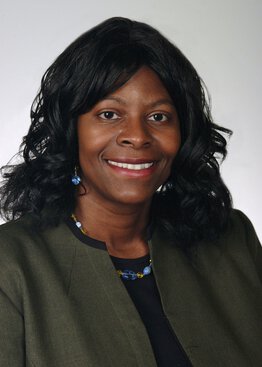
Marvella E. Ford, Ph.D.
A professor of public health sciences, Marvella E. Ford, Ph.D., oversees the center’s effort to address the state’s critical cancer disparities. Through community outreach and educational programs, Ford and her team work with leaders throughout the state to build bi-directional, trusting, and long-lasting partnerships, which are critical to Hollings investigators in tailoring culturally and contextually knowledgeable cancer interventions. She also works with the South Carolina Department of Public Health to implement cancer-focused initiatives, including the State Cancer Plan.
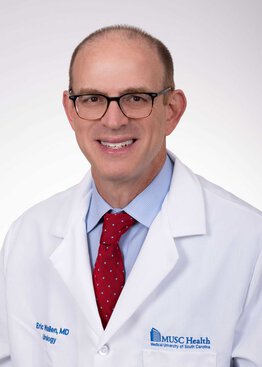
Eric Wallen, M.D.
Dr. Wallen specializes in care and treatment of patients with cancers of the prostate, kidney, bladder and testis. He was an early adopter and innovator in robotic surgery in urology. He is an expert in robotic kidney and prostate surgery. Dr. Wallen is a strong advocate for patient-centered care, who counsels patients so that they can make informed decisions about their care, such as having surgery for a small kidney tumor or having an MRI, a biomarker test, or a biopsy for elevated PSA (the blood test that screens for prostate cancer). He uses the latest prostate biopsy techniques to decrease pain and the risk of infection.
As a member of the Hollings Cancer Center, he also works closely with community groups, especially those with a higher risk of prostate cancer, to raise awareness and increase access to healthcare in rural and underserved communities.
A native of Setauket, New York, Dr. Wallen graduated from Yale College, then attended UCLA Medical School and completed urology training at Stanford University. His first faculty appointment was at Dartmouth Medical School where he established a minimally invasive urology program. He was on faculty at the University of North Carolina at Chapel Hill for over 20 years prior to his appointment as MUSC Chair of Urology in November 2024.
During his tenure at UNC Chapel Hill Dr. Wallen established the robotic urology program and served as Vice Chair of Education, Urology Program Director, Director of the UNC Men’s Health Program, member of the UNC Lineberger Comprehensive Cancer Center, and Medical Director of the UNC System Supply Chain. An acclaimed educator in the field, Dr. Wallen was awarded the national American Urological Association’s (AUA) “Teacher of the Year” Award, and in 2020 was elected the Chair of the ACGME Residency Review Committee for Urology. In 2021, Dr. Wallen received the UNC School of Medicine Academy of Educators Lifetime Achievement Award in Medical Education, which recognized his 20+ years of sustained excellence in teaching and mentoring medical students, residents, and fellows.
Dr. Wallen’s commitment to global health has taken him to Cuba and China on multiple visiting professorships. He was part of the development of the UNC Project Malawi, establishing an elective rotation for urology residents to experience healthcare delivery in Malawi, starting in 2017.
Dr. Wallen is the author of over 150 publications and book chapters. He has presented his research nationally and internationally. He is certified by the American Board of Urology, is a fellow of the American College of Surgeons, and is a member of the American Urological Association, the Society of Academic Urology, the Society of Urologic Oncology, and the Endourologic Society.
Hayley Kamin
Communications Manager
Hayley Kamin is the communications manager for the Hollings Cancer Center Communications and Marketing team, having joined the team in 2025 after three years as a communications specialist at the National Institutes of Health (NIH). As a science communicator with a Ph.D. from the University of Florida, she has extensive experience translating complex research into clear, engaging content. Her career has included roles at the NIH’s National Institute of Mental Health and the American Psychological Association, where she led content development and editorial strategy, developed science and health communications and worked with researchers and clinicians to strengthen public understanding of research.
Contact Hayley at kamin@musc.edu.