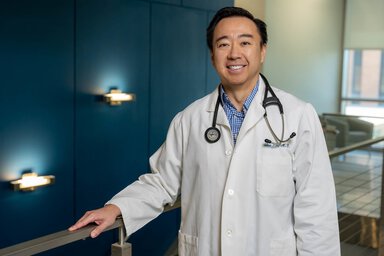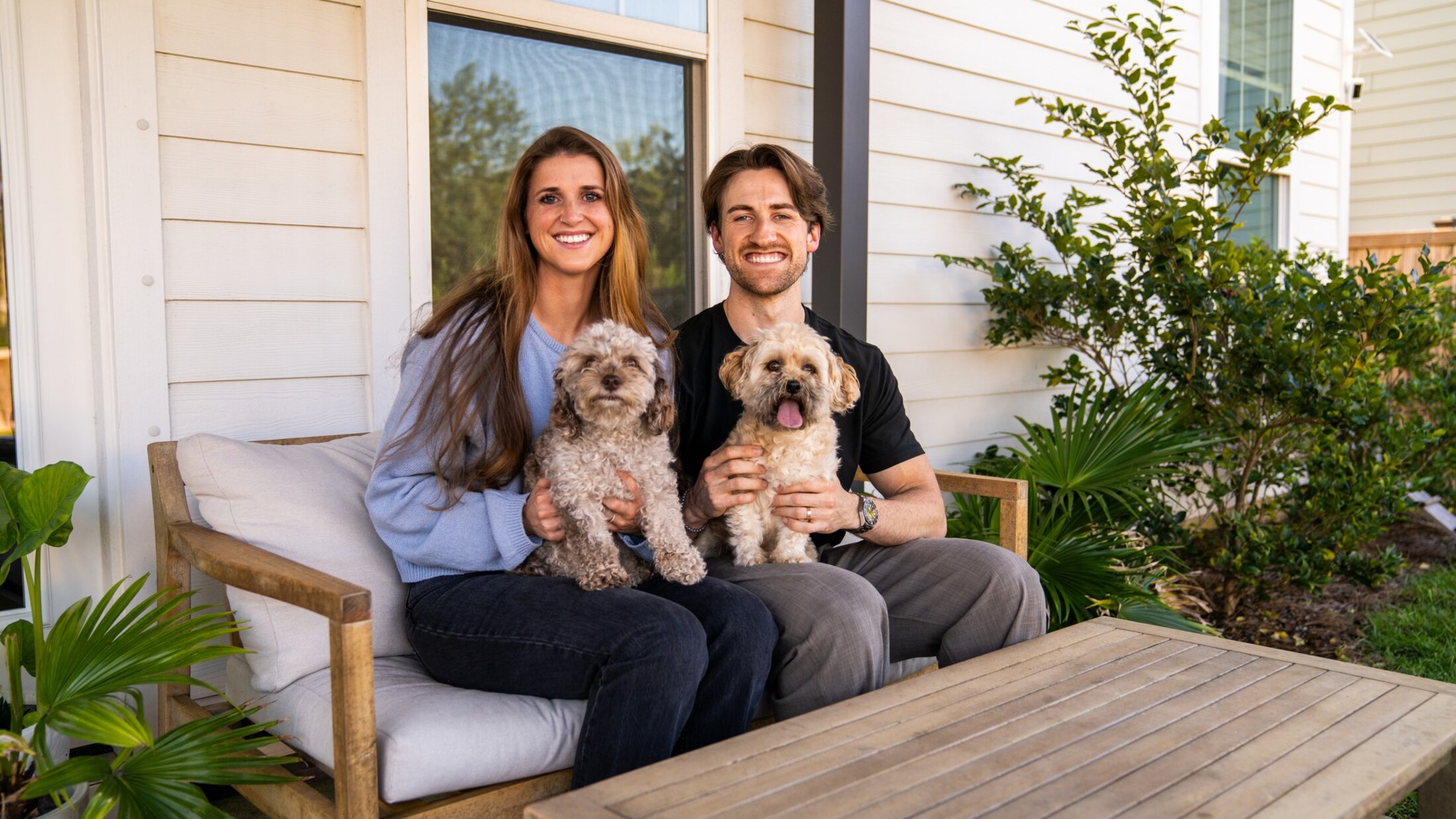
Colton Southard-Goebel, M.D., was not worried about cancer when he signed up for genetic screening. He was young, healthy and curious about what his DNA might reveal.
“I just thought it would be interesting to see,” the MUSC anesthesiology resident said. “I wasn’t expecting anything in particular.”
He certainly was not expecting to find a BRCA2 gene mutation. But that is what the free genetic screening through MUSC’s In Our DNA SC program revealed.
Like many people, Southard-Goebel associated BRCA genes with breast cancer in women. Even with his medical background, he did not fully realize what a BRCA2 mutation could mean for a man.
That message is especially timely during Breast Cancer Awareness Month, when much of the focus is on women. But BRCA1 and BRCA2 mutations can be inherited by both women and men – and can provide important health information for entire families.
Southard-Goebel learned that men with certain BRCA2 mutations have a higher risk of prostate, pancreatic and male breast cancers. Suddenly, a gene he primarily associated with women had implications for his own health.
“I wasn’t super familiar with the different male cancers associated with it,” he said. “I didn’t know that you also had increased risk of pancreatic and prostate cancer.”
And the implications did not stop with him. The result raised questions about his family’s health, too. As he and his wife think about having children, they now know about a genetic risk that could be passed on.
“I keep circling back to it feeling empowering to know more about my health,” he said. “We all have genes that can be carried on to future generations, so the more we know, the better.”
An unexpected result from a simple test
Southard-Goebel, who is originally from Indiana, came to South Carolina with his wife for his residency. He learned about In Our DNA SC through MUSC Health and decided to take part in the free genetic screening.
In Our DNA SC is a community health research program launched by MUSC in partnership with population genomics company Helix. The statewide initiative offers individual screenings while building a de-identified database of genetic information that researchers can use to deepen their understanding of health and disease in South Carolina.
The program screens 11 genes associated with three conditions identified by the Centers for Disease Control and Prevention as having significant potential for early detection or prevention: hereditary breast and ovarian cancer; Lynch syndrome, which increases the risk of colorectal, uterine and other cancers; and familial hypercholesterolemia, an inherited form of high cholesterol.
I keep circling back to it feeling empowering to know more about my health. We all have genes that can be carried on to future generations, so the more we know, the better.
The screening includes BRCA1 and BRCA2, two genes linked to an increased risk of several cancers. For MUSC Hollings Cancer Center, identifying these inherited risks is important because it gives people information they can use to talk with a genetics specialist about additional or more advanced screenings and other preventive measures.
Samantha Norman, program manager for In Our DNA SC, said making screening broadly available can identify people who might otherwise never know they carry an inherited risk.
“We have identified many individuals with a variant who would have never known – just because there isn’t a large known family history,” Norman said.
Southard-Goebel is a good example of what screening can uncover. He did not seek genetic testing because he thought he carried a cancer-related mutation. Now, the information could guide his health decisions for years to come.
“That’s the main intention of population genomic screening,” Norman said. “We are changing your care trajectory. We are hopefully going to improve your health outcomes.”
For people with a personal or family history of cancer, Norman stressed that the program does not replace more comprehensive genetic testing that a genetic counselor may recommend.
Turning genetic information into action
Participating was simple, Southard-Goebel said. A kit arrived at his home, he provided a saliva sample and mailed it back. His results later appeared in his health chart, accompanied by additional information and follow-up.
“I was surprised by how convenient it was,” he said. “I got results right to my phone, and they were communicated with further information that didn’t just leave me in the dark.”
According to Norman, that aligns with the program’s mission. In Our DNA SC is designed not only to identify genetic risks but also to help participants to understand what their results mean and what they can do next.
When a genetic variant is identified, the study team contacts the person and offers a genetic counseling appointment at no cost. Counseling is available via telehealth, so people across the state can participate easily.
A genetic counselor explains the result and what it could mean for the person and their family. The counselor also reviews family history and provides resources for follow-up care.
That’s the main intention of population genomic screening. We are changing your care trajectory. We are hopefully going to improve your health outcomes.
The program is already showing signs that participants are acting on what they learn. Norman said people with genetic findings are starting recommended cancer screenings earlier than they otherwise might. Among participants with relevant variants, for example, the average age of mammography has dropped from 40 to 35, while colonoscopy is occurring about 10 years earlier.
Southard-Goebel plans to meet with a genetic counselor to understand more fully what his result means for him, including how it could affect his future cancer screenings.
“When you hear you have a gene that predisposes you to cancer, that can be kind of scary. But once you are better informed, I feel like it has the opposite effect, and you feel more comforted,” Southard-Goebel said. “It gives me a sense of security. These are the cards I’ve been dealt, but now I know how to take care of myself and look out for my future.”
Looking at family history differently
The finding also gave Southard-Goebel new insight into his family’s health history.
His father and uncle have had prostate cancer, and he thinks his grandfather may have had it as well. He does not yet know whether his BRCA2 variant is connected to those diagnoses, but it is information that he can bring to a genetic counselor as he considers his own risk.
The result also sparked conversations within his family. Because inherited BRCA2 variants can be passed from parents to children, Southard-Goebel told his parents and siblings what he had learned.His mother informed her primary care provider and went on to get screened.
The finding also matters as Southard-Goebel and his wife think about having children. His brother recently had a daughter, making the possible family connection especially meaningful.
“Understanding the likelihood of passing this on and having more information empowers us in whichever decision we choose,” he said.
While In Our DNA is reserved for South Carolina residents, Helix also offers free variant testing for relatives, regardless of where they live, to determine whether they carry the same genetic variant.
Reaching more people
Southard-Goebel’s experience highlights an opportunity for In Our DNA SC to reach more men – and to build a participant group that more fully reflects South Carolina.
Norman said women, particularly white women, make up a large share of participants so far. Men remain underrepresented, which may be partly related to the way hereditary cancer risk is commonly discussed. The term “hereditary breast and ovarian cancer” can make BRCA1 and BRCA2 sound like genes that apply only to women, obscuring the fact that men can inherit these genetic changes, too, and that BRCA2 can increase their risk of several cancers.
Reaching a wider range of people is also important for the research that In Our DNA SC makes possible. The program pairs genetic information with health information, creating a database researchers can use to study connections among genetics, health and disease.
Having a diverse group of participants is important because genetic research historically has been built on people of European ancestry. For MUSC and Hollings researchers, building a participant pool that reflects South Carolina makes research findings more useful to the people they serve and supports efforts to improve cancer prevention, early detection and precision health.
“We’re trying to be as inclusive as possible so that everyone is represented,” Norman said. “We want to learn and provide information that’s relevant to everyone. That way, it’s helping guide care for South Carolina that’s applicable widely – and not just applicable for a subset of our patients.”
For Southard-Goebel, what started as curiosity about his DNA became something much bigger: information about his future health, knowledge his family can act on and a contribution to research that could benefit people across South Carolina.
“Not only is it helpful for you as an individual, but it can help others,” he said. “It’s almost like helping care for the community around you as well.”
In Our DNA SC
Genetic screening for South Carolina
Ready to learn more? Have questions?
Contact the In Our DNA SC study team by emailing InOurDNASC@musc.edu or calling 843-876-0582.

Hereditary Cancer Clinic
Hayley Kamin
Communications Manager
Hayley Kamin is the communications manager for the Hollings Cancer Center Communications and Marketing team, having joined the team in 2025 after three years as a communications specialist at the National Institutes of Health (NIH). As a science communicator with a Ph.D. from the University of Florida, she has extensive experience translating complex research into clear, engaging content. Her career has included roles at the NIH’s National Institute of Mental Health and the American Psychological Association, where she led content development and editorial strategy, developed science and health communications and worked with researchers and clinicians to strengthen public understanding of research.
Contact Hayley at kamin@musc.edu.
Recent Hereditary Cancer stories