It’s the patient’s own immune system – just expanded and reactivated.



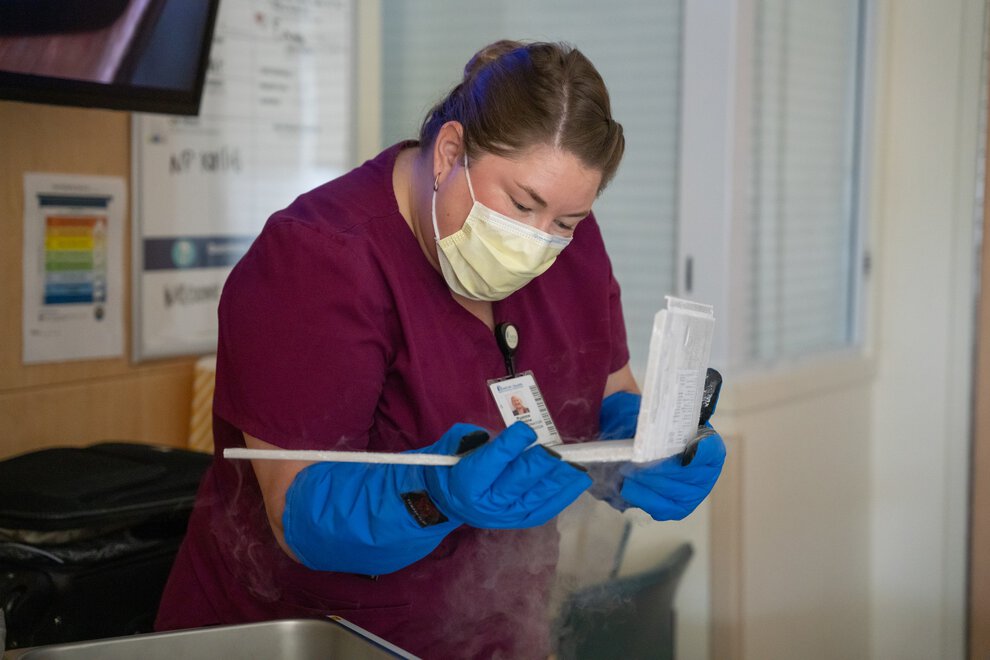
MUSC is bringing tumor-infiltrating lymphocyte (TIL) therapy to South Carolina, ensuring that residents have access to the most advanced cancer treatments today.
Tumor-infiltrating lymphocyte therapy, or TIL therapy, is a type of immunotherapy. It uses the body’s own immune cells to fight cancer.
TILs are unique to the specific cancer in an individual patient. They are already in the tumor to fight it, but they may be outmanned.
In this therapy, doctors send a sample of the patient’s tumor to a lab. In the lab, scientists isolate the TILs and then give them a reinvigorating boost, helping them to multiply into the billions.
The patient then undergoes lymphodepleting chemotherapy. This is a preparatory step that clears space for the billions of TILs. The TILs are then re-infused into the patient along with a protein called interleukin-2, or IL-2, to help stimulate the TILs. This is an inpatient procedure so the patient can be closely monitored.
TIL therapy is a one-time procedure.
MUSC Hollings Cancer Center has been nationally recognized by U.S. News & World Report as High Performing for Cancer Care as well as ranked as the No. 1 hospital in South Carolina for Cancer Care 2026–2027, affirming our excellence in preventing, diagnosing, treating, and supporting patients with cancer. As the only National Cancer Institute (NCI)-designated cancer center in South Carolina, Hollings blends cutting-edge research, multidisciplinary clinical expertise and advanced treatments to deliver outcomes that stand out on a national scale.
It’s the patient’s own immune system – just expanded and reactivated.
Right now, advanced melanoma that cannot be removed with surgery and has already been treated with other medications is the only cancer that can be treated with an FDA-approved TIL therapy. The therapy is called Amtagvi (lifileucel).
There are clinical trials under way to test TIL therapy with other types of cancer.
TIL therapy can produce meaningful and sometimes long-lasting responses for some patients with advanced melanoma, including patients whose cancer has continued to grow despite prior immunotherapy. However, not all patients benefit, and doctors are still working to better understand who is most likely to respond.
Lifileucel, the FDA-approved TIL therapy for melanoma, caused tumors to shrink or disappear in about one-third of patients in clinical studies. Importantly, many of these responses lasted a long time, and some patients have remained in remission for years after a single treatment.
More recent studies suggest that TIL therapy may work even better when it is used earlier in a patient’s treatment course. Patients who received lifileucel after two or fewer prior treatments appeared more likely to benefit than patients who had received many prior therapies, supporting early referral and evaluation for TIL therapy when appropriate.
Most of the side effects of TIL therapy are from the conditioning regimen beforehand, also called lymphodepleting chemotherapy, and from the IL-2 that is given along with the TILs. The TILs themselves don’t appear to cause many side effects because they are already precisely targeted against the tumor. Possible side effects include:
These side effects usually occur in the first week or so – most people do not have long-term side effects from the TIL therapy.
But it’s important to know that the lymphodepleting chemotherapy leaves patients immunocompromised for several weeks after treatment, so patients and families must be very careful to avoid sick people or crowded public spaces.
TIL therapy is a single, intensive course delivered over several weeks. Patients can expect:
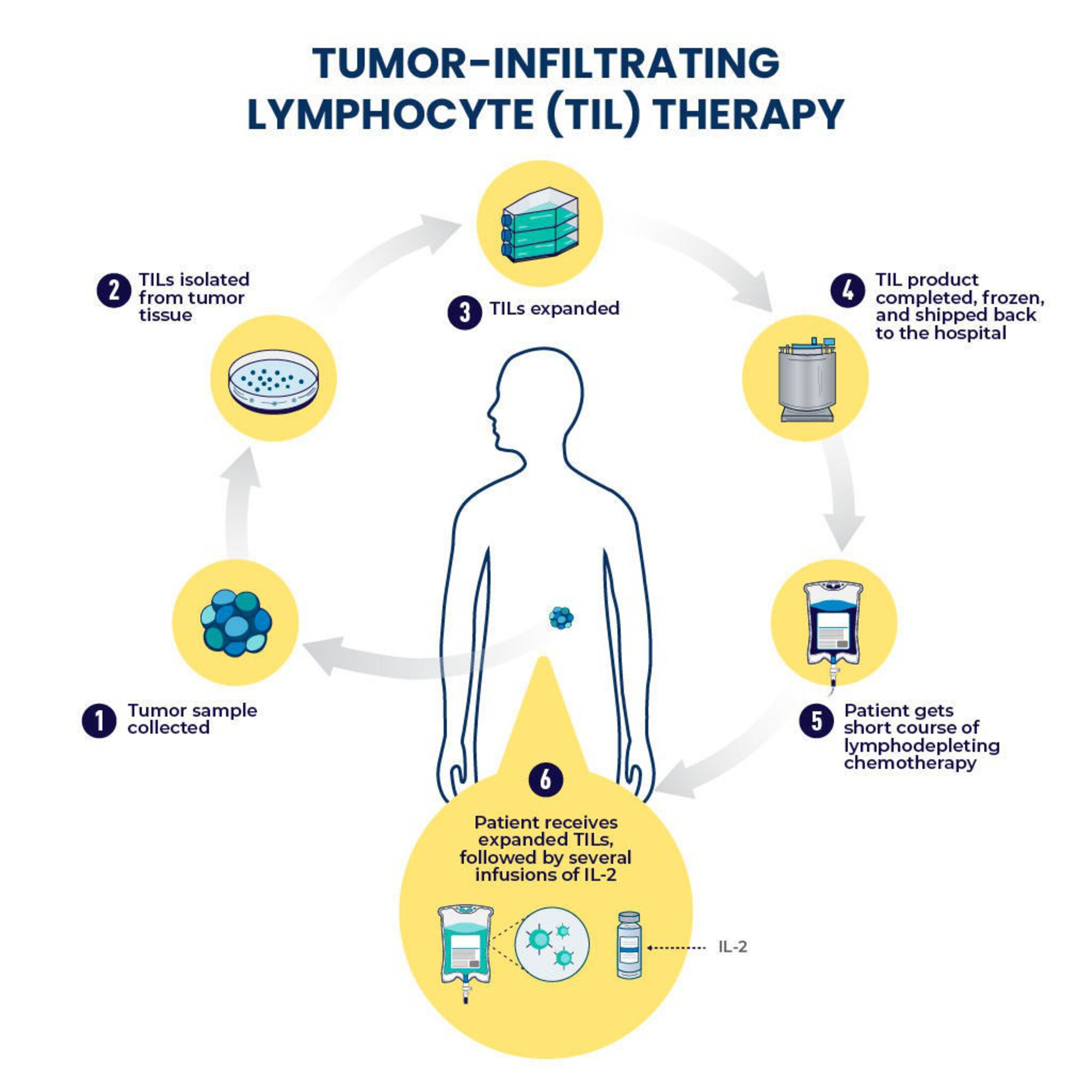
This illustration from the National Cancer Institute shows the steps involved in TIL therapy.


Providers can refer a patient to the TIL program by calling 843-792-0709 or faxing 843-792-1177.
Unsure whether the patient is appropriate for TIL therapy or general melanoma oncology referral? Please contact the melanoma team at 843-985-3973.
The FDA approval for TIL therapy for melanoma was an exciting milestone because it was the first approved cellular therapy for a solid tumor. Before this, cellular therapy was available only for blood and lymphatic cancers.
Research is happening at Hollings and across the country to develop TIL therapies for other types of solid tumors, like lung cancer and gynecologic cancer.