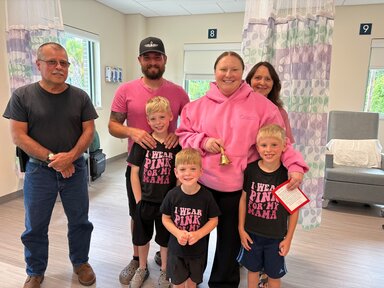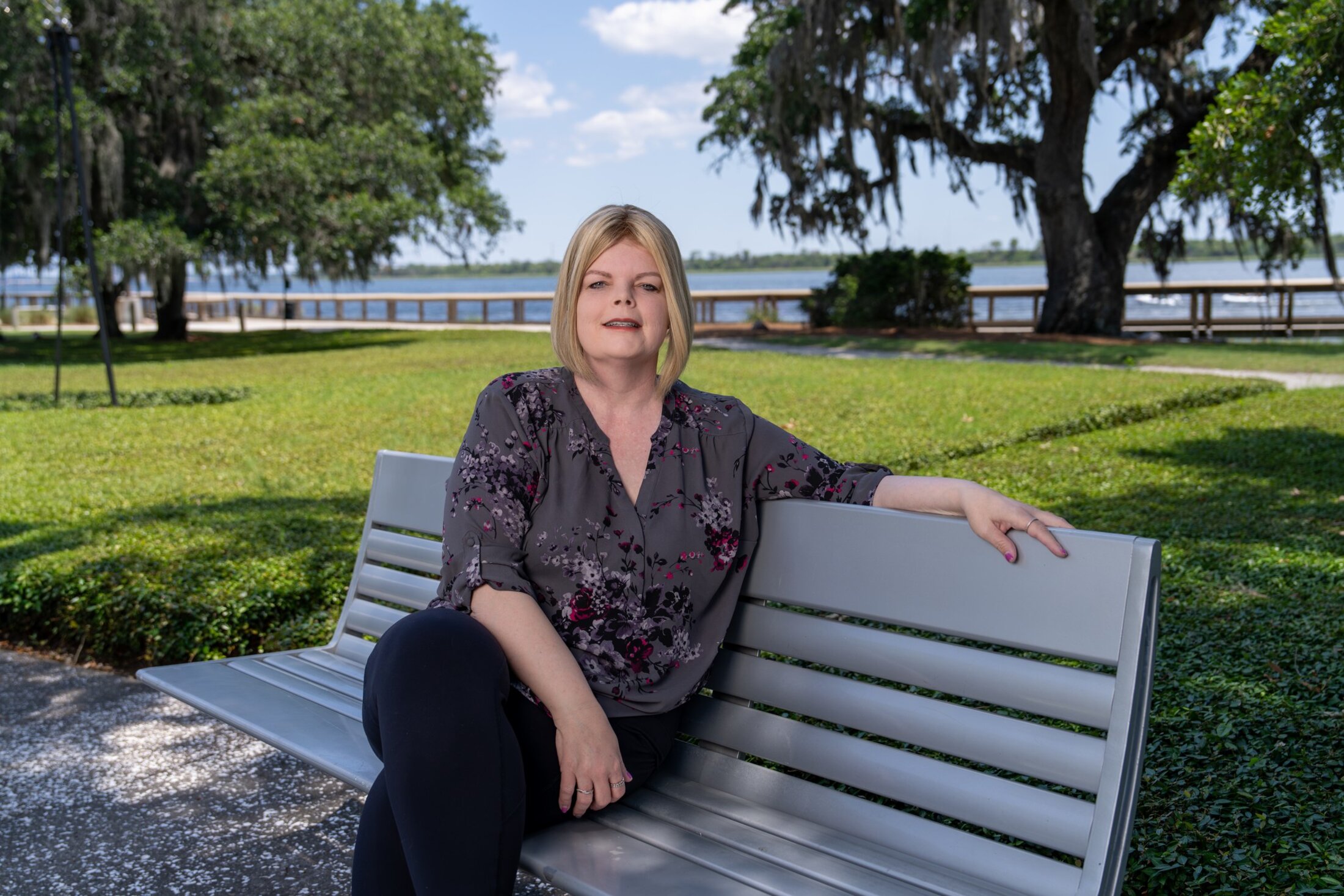
When Sally Holcomb watched bags containing her own immune cells arrive at her bedside at MUSC Hollings Cancer Center, she knew they held something extraordinary: a new way to fight her cancer.
Just weeks earlier, those cells had been hidden inside one of her melanoma tumors. Now, after years of surgery, immunotherapy, radiation and targeted therapy, Holcomb was about to have billions of cancer-fighting cells infused into her body – becoming the first patient at Hollings to undergo tumor-infiltrating lymphocyte, or TIL, therapy.
“It surprises people how straightforward the infusion actually is,” said Carrie Moore, R.N., cellular therapy program director. “After everything patients go through to reach this point, the infusion itself is almost anticlimactic. It’s very similar to receiving a blood transfusion.”
Behind that seemingly simple procedure were months of planning and decades of research at labs across the country, all coming together at Holcomb’s bedside. But for her, those bags represented something much more personal: hope that she could finally stop her metastatic melanoma.
A long road to a new option
Holcomb’s journey to that hospital room began nearly a decade earlier.
In 2017, while serving in the U.S. Air Force, she noticed an unusual mole on her left thigh that kept growing back. A biopsy confirmed melanoma. Surgeons removed the tissue and nearby lymph nodes, and follow-up visits showed no signs that the cancer had spread.
For several years, life returned to normal. Then, a routine scan revealed a small spot in her lung. After it began to change, surgeons removed part of her lung, and pathology confirmed the melanoma had returned. But it did not stop there: Additional imaging uncovered five tumors in her brain.
What began as early-stage melanoma had progressed to metastatic cancer.
Holcomb began immunotherapy, the standard first-line treatment for metastatic melanoma. When that failed to stop the cancer, she underwent radiation for the brain tumors and then targeted therapy. Despite treatment, scans showed the cancer was continuing to grow.
Her oncologist at home in Aiken, South Carolina, told her he had exhausted the available options and suggested she seek specialized treatment at cancer centers in Atlanta or Charleston.
Holcomb said the choice was easy, “I just felt like Charleston was where I needed to be.”
At Hollings, melanoma specialist Russell Jenkins, M.D., Ph.D., determined that Holcomb was a candidate for TIL therapy – a newly approved treatment for patients whose melanoma continues to progress.
“She had tried everything else there was to try,” Jenkins said. “For patients whose other treatments have failed, TIL can offer the best of what’s around as the next option.”
After years of seeing her cancer progress despite one treatment after another, Holcomb finally had a path forward. And this time, part of the treatment would come from an unlikely source: her own tumor.
A treatment built from the patient’s own immune system
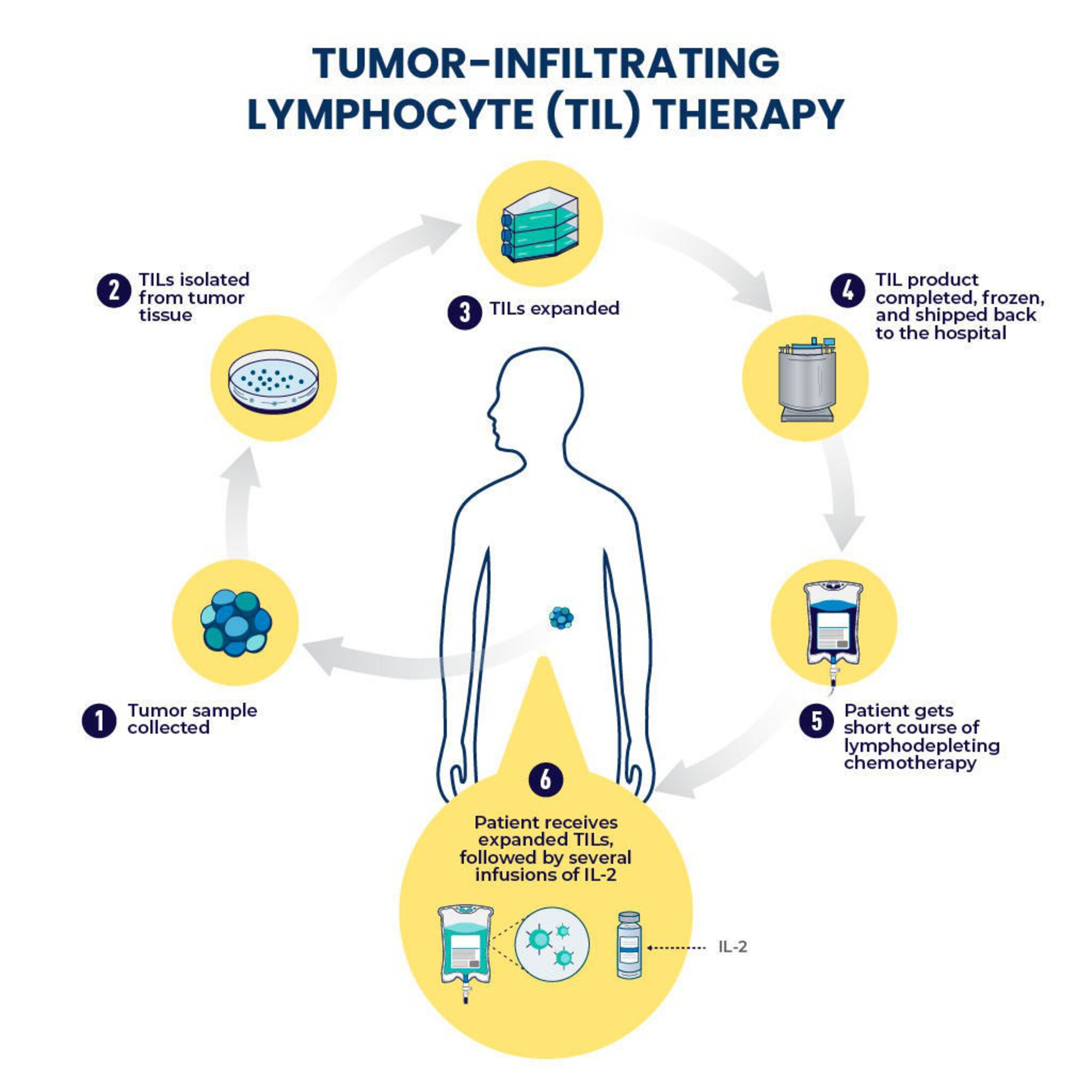
TIL therapy harnesses immune cells that are already attacking a patient’s tumor and turns them into a much larger cancer-fighting force. Surgeons remove tissue directly from the tumor and send it to a specialized facility, where the immune cells are isolated and multiplied to billions before being returned to the patient for infusion. The idea is to give immune cells that are already trying to fight the cancer the reinforcements they need to overwhelm the tumor.
The full TIL therapy process unfolds over several weeks, from tumor collection and cell manufacturing to chemotherapy, infusion and post-treatment monitoring. When the cells return to MUSC, the focus shifts to getting them back safely to the patient they came from.
“These cells are manufactured specifically for each individual patient,” Moore explained. “We have a carefully designed process to ensure we can track the identity and chain of custody of those cells throughout the entire process, all the way to the patient.”
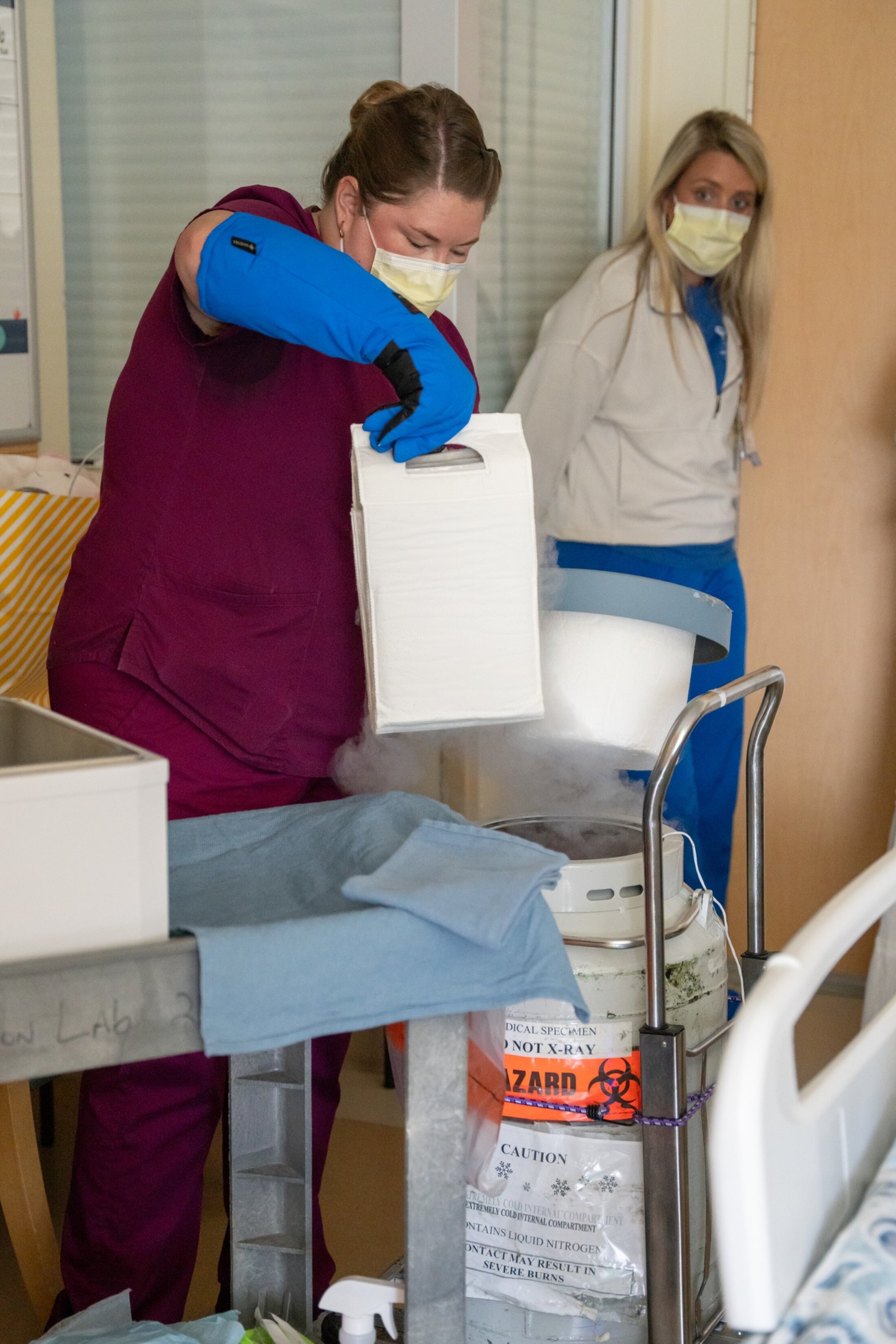
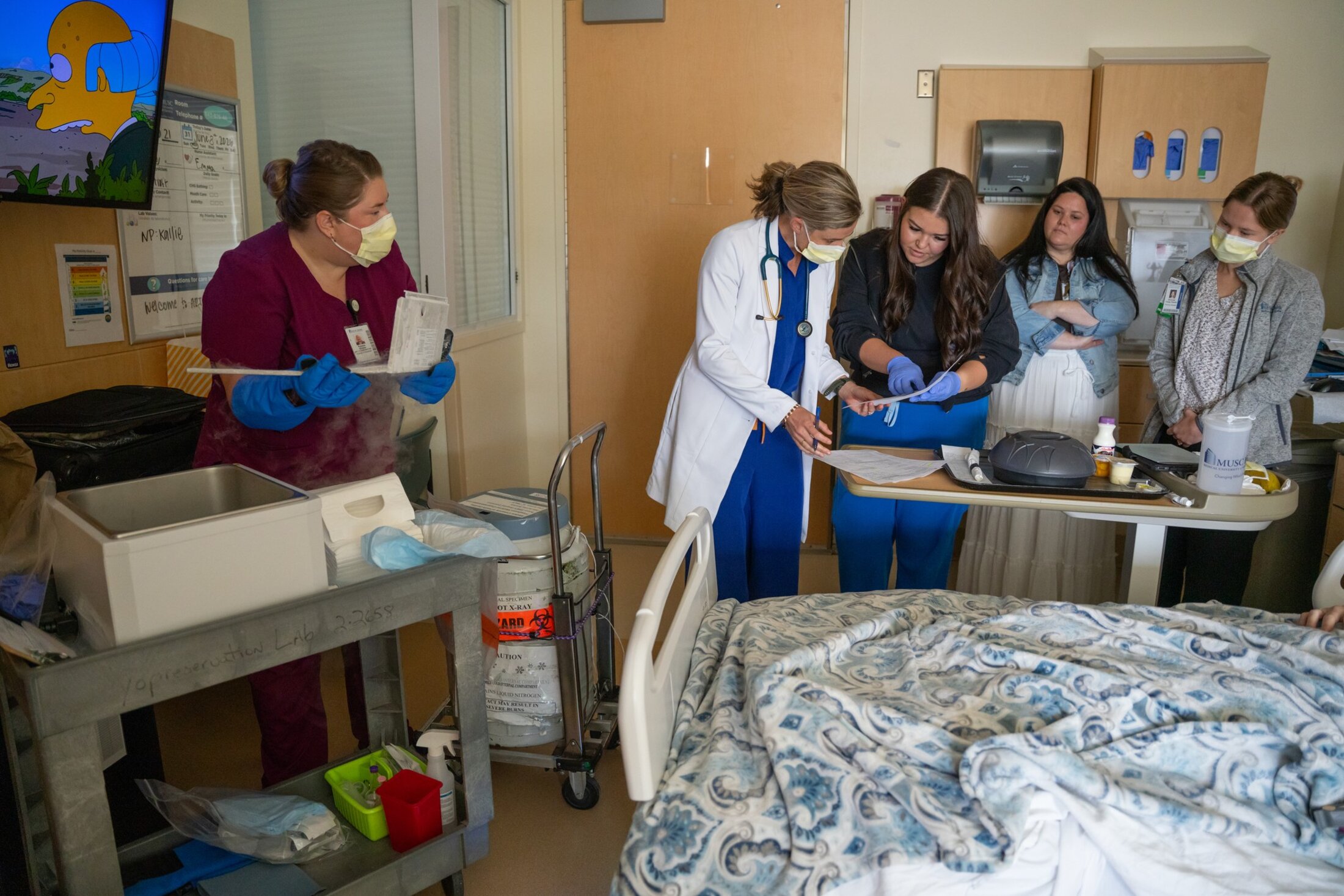
For all the preparation leading up to it, the infusion itself can be surprisingly uneventful.
“It’s a day to celebrate,” Moore added. “Once the infusion starts, patients can even take a nap. After all the planning and preparation, they finally get to sit back and let the TILs do the work.”
The infusion may be the milestone that patients have been working toward, but the most intensive part comes after. About 24 hours later, patients begin high-dose interleukin-2, or IL-2, which helps the newly infused T-cells to survive and thrive. Patients may receive up to six doses over three days. During that time, nurses closely monitor them for fever, chills, low blood pressure, fluid shifts and other expected side effects.
“It’s supportive care,” Moore said. “But it’s very intensive supportive care.”
Holcomb remembers those days as the most difficult part of treatment.
“The transplant itself really wasn’t bad,” she said. “It was the IL-2 afterward that was the hard part. I was pretty wiped out.”
Within days, however, Holcomb began regaining her strength. Soon, she was feeling better.
Bringing a new treatment to South Carolina
To say TIL therapy requires a multi-expert team would be an understatement, with dozens of clinicians and staff coordinating each step of a treatment tailored to each person.
“TIL therapy is most definitely a team sport,” Jenkins said. “It requires industry partners, collaboration across MUSC and a balance between inpatient and outpatient.”
Julia Potts, R.N., who served as Holcomb’s cellular therapy nurse coordinator, acted as the central point of contact among the team of surgeons, oncologists, pharmacists, transplant specialists, operating room staff and nurses.
“Our medical director says it’s like being a wedding planner for 200 people,” Potts said of her role. “There are so many different interdisciplinary teams involved, and if one thing changes, you have to reorganize everything. Our role is to be the main point of contact and make sure everything goes as planned.”
As the first patient to receive TIL therapy at MUSC, Holcomb’s care paved the way for those who would come next. The team built out many new processes, from removing and shipping tumor tissue to preparing for the cells’ return and monitoring recovery. Hollings is the only center in South Carolina currently offering TIL therapy, giving eligible patients access to this highly specialized treatment without having to leave the state.
“They were wonderful,” Holcomb said of the care team. “I was very impressed with how everyone worked together. The care was fantastic.”
And despite the complexity of the process, Jenkins emphasized that TIL therapy is not experimental. It is approved by the U.S. Food and Drug Administration for eligible patients with advanced melanoma, and Hollings is now receiving referrals from across the state.
The goal is to give patients with advanced melanoma whose cancer has continued to progress another chance at something that can be difficult to achieve: control of their disease.
About a third of patients who receive TIL therapy will see their tumors shrink or even disappear. For those for whom the therapy works, remission can last for years.
“Figuring out a way to treat patients more effectively, not just buying them days and weeks, but truly getting back to durable, long-lasting disease control, or hopefully even a cure, has always been the dream,” Jenkins said.
For Holcomb, that possibility has shifted her attention away from the treatments she has already endured and toward what she wants to do next.
“I’m hopeful about what’s ahead. There are trips I want to take and things I want to do. I’ve always been a workaholic, and now I just want to enjoy life and be thankful for it.”
Featured in this story
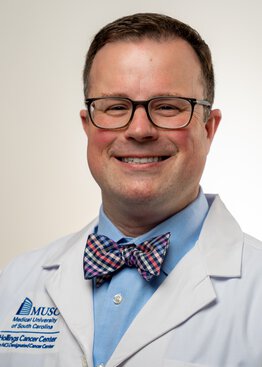
Russell Jenkins, M.D., Ph.D.
I am a physician-scientist medical oncologist with a clinical focus on melanoma and cutaneous malignancies. My research is focused on the development of novel therapeutic strategies to overcome immunotherapy resistance in melanoma and other cancers. In addition to established in vivo and in vitro models of cancer, my lab utilizes novel patient-derived tumor models. Our patient-derived organotypic tumor spheroids (PDOTS) platform involves ex vivo 3D microfluidic culture of multicellular tumor spheroids from tumor explants that retain native tumor-infiltrating immune and stromal elements. PDOTS profiling enables evaluation of tumor-immune dynamics in response to therapeutic pressure using clinically relevant biospecimens for preclinical and clinical applications.
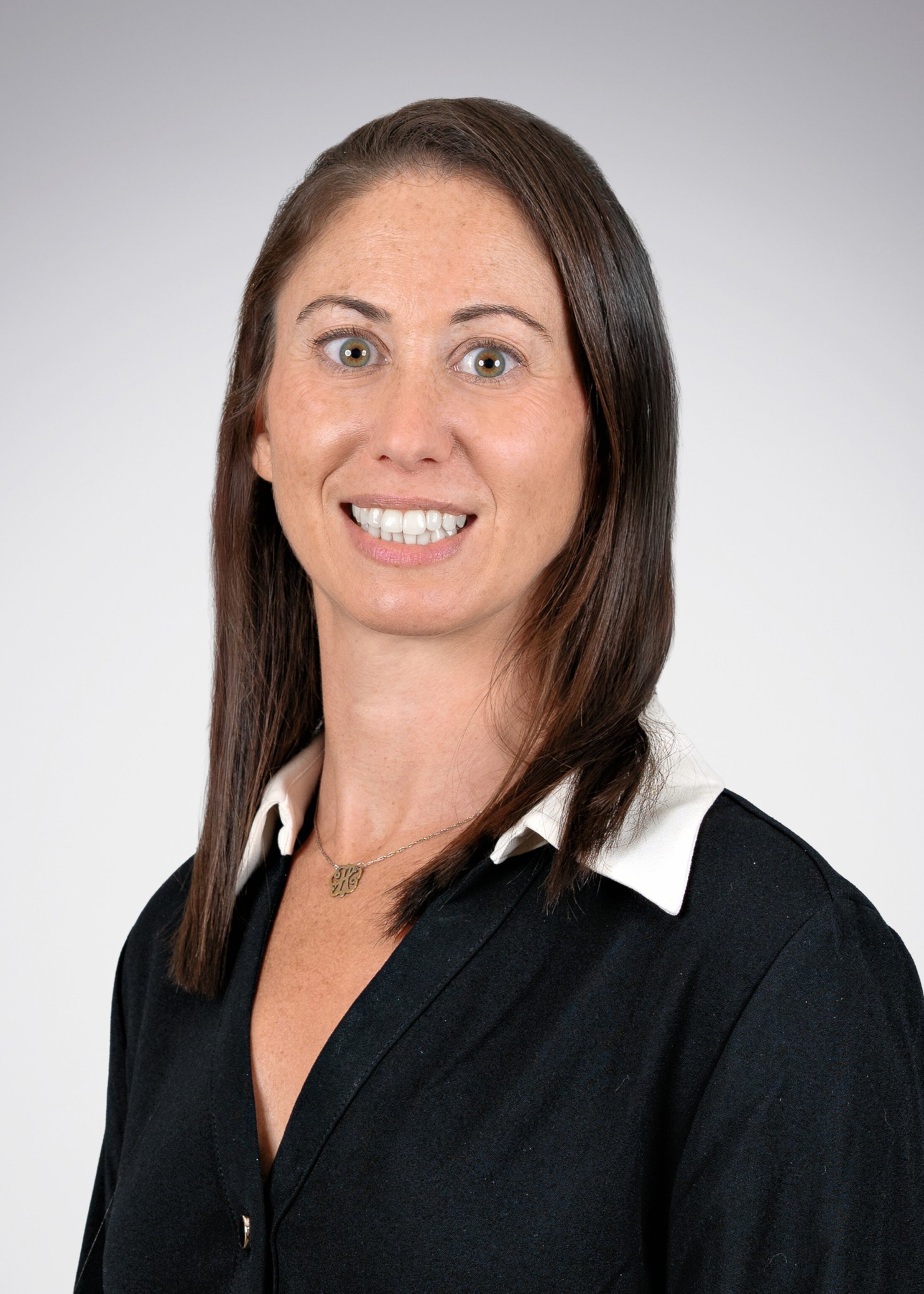
Hayley Kamin
Communications Manager
Hayley Kamin is the communications manager for the Hollings Cancer Center Communications and Marketing team, having joined the team in 2025 after three years as a communications specialist at the National Institutes of Health (NIH). As a science communicator with a Ph.D. from the University of Florida, she has extensive experience translating complex research into clear, engaging content. Her career has included roles at the NIH’s National Institute of Mental Health and the American Psychological Association, where she led content development and editorial strategy, developed science and health communications and worked with researchers and clinicians to strengthen public understanding of research.
Contact Hayley at kamin@musc.edu.
Recent Cancer Patient Journeys stories