For many people with cancer, the chemotherapy drug cisplatin is a lifesaving treatment. But survival can come with a lasting consequence: hearing loss.
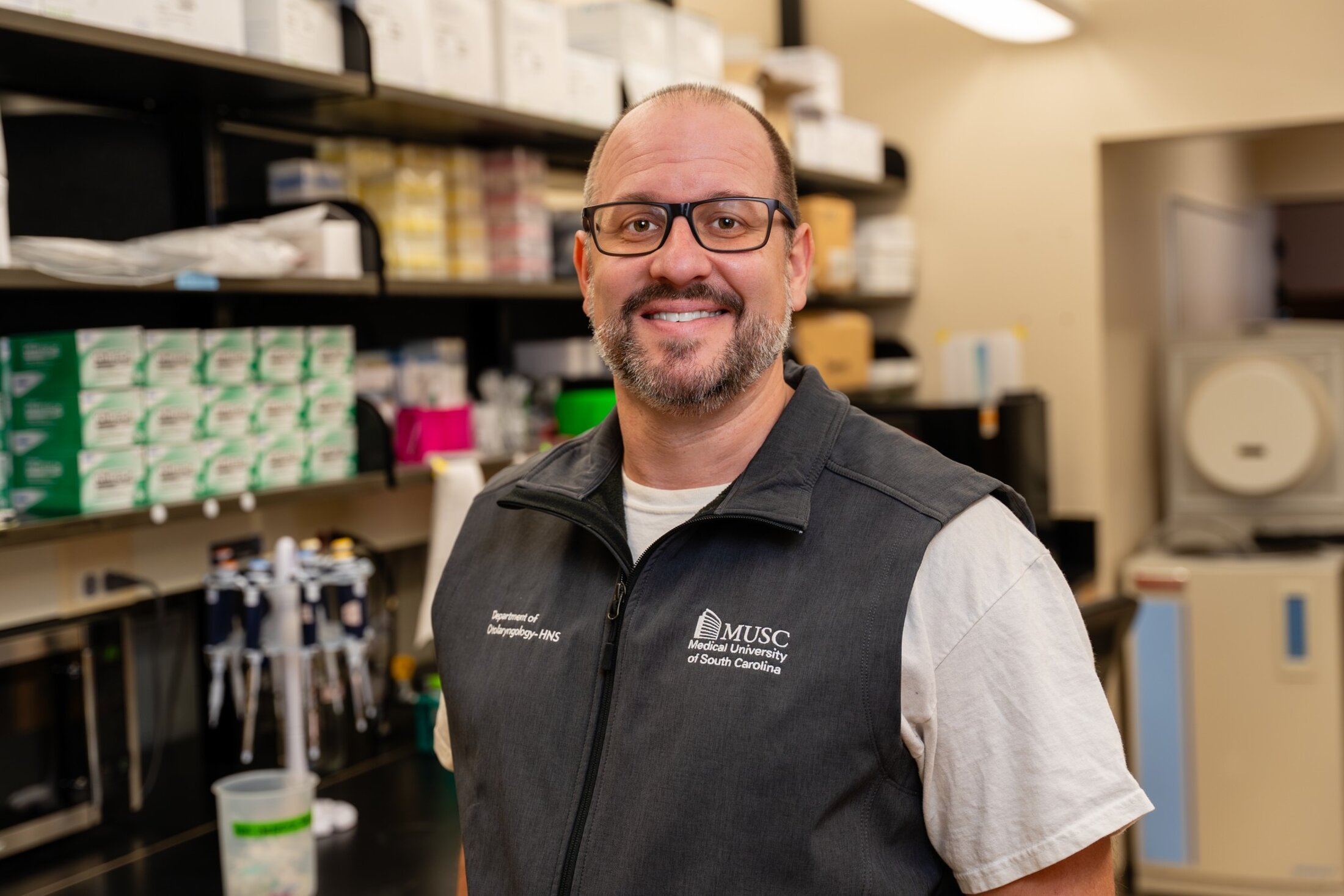
At MUSC Hollings Cancer Center, researcher Brent Wilkerson, Ph.D., assistant professor in the MUSC Department of Otolaryngology – Head and Neck Surgery, wants to understand why that happens and why some patients experience more severe hearing loss than others.
With support from a new five-year grant from the National Cancer Institute (NCI), Wilkerson and his team are taking a closer look inside the inner ear. Their research goes beyond the parts of the hearing system that scientists have traditionally studied to uncover other ways cisplatin may cause damage – knowledge that could lead to better ways to protect patients’ hearing without interfering with the drug’s ability to fight cancer.
“We know this is a problem,” Wilkerson said. “We really want to make the knowledge base available so that it can be leveraged to one day get more and better treatments to reduce these kinds of medical burdens for patients so they can enjoy their life and not just survive.”
A lifesaving treatment with a lasting side effect
Cisplatin has been used to treat cancer for decades. It is an important treatment for several types of cancer, including testicular, bladder, lung and head and neck cancers. Wilkerson described it as a “cornerstone treatment” that remains particularly important for cancers without targeted treatment options.
But the drug can accumulate in the cochlea, the spiral-shaped structure in the inner ear that is essential for hearing. Research suggests that 40% to 50% of patients treated with cisplatin experience hearing loss or ringing in the ears – though Wilkerson said the true impact on hearing may extend beyond what is captured by traditional hearing tests.
Hearing loss can affect cancer survivors of all ages, making everyday communication more difficult and affecting relationships, employment and quality of life. But for children, the consequences can be especially severe. Hearing loss during critical stages of development can make it harder to learn how to speak, communicate with others and keep up in school. And because many children treated with cisplatin survive their cancer, they may face those challenges for decades to come.
That makes hearing loss more than an unwanted side effect of treatment. It is also a survivorship issue.
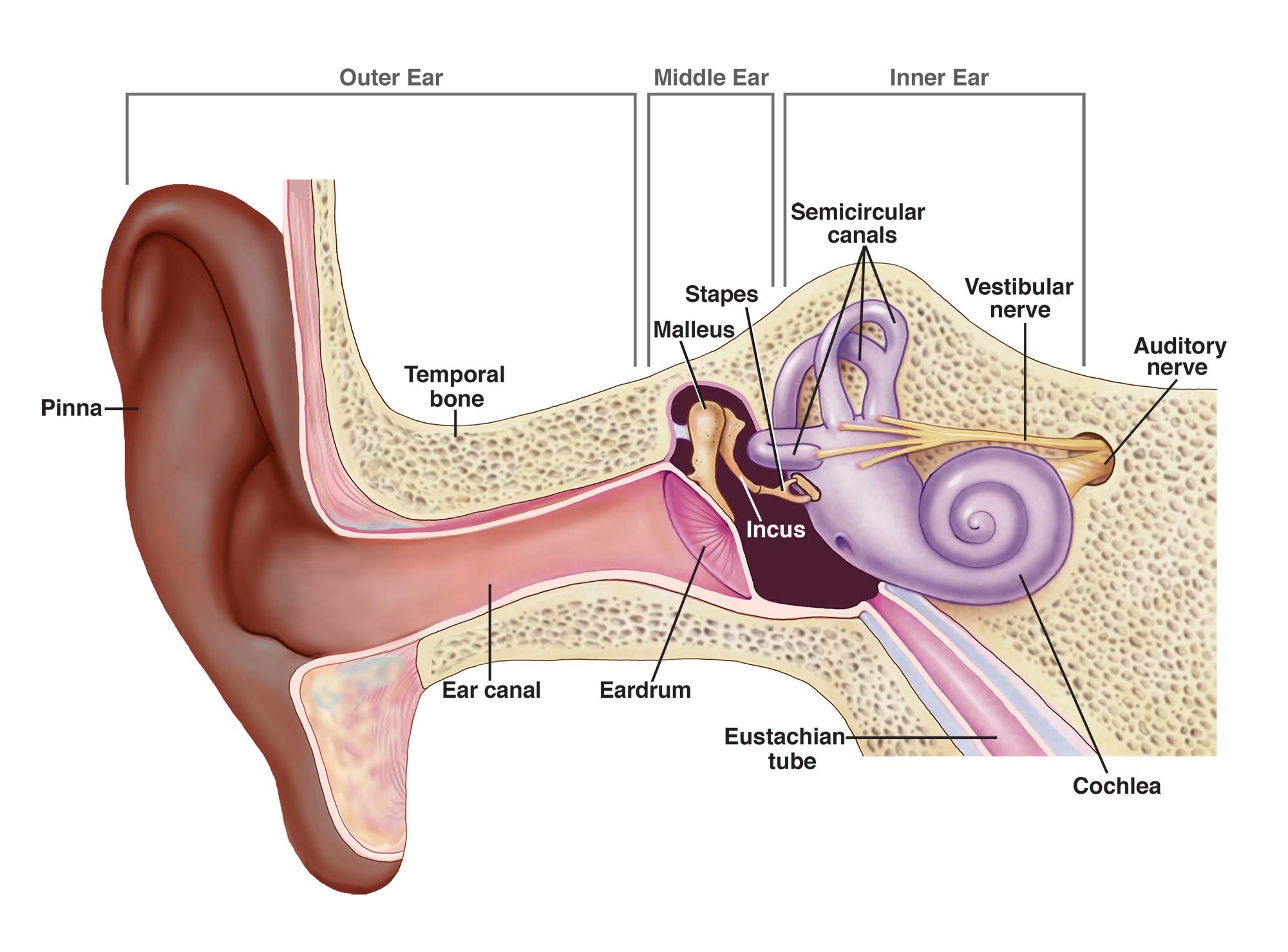
The outer ear includes the pinna, temporal bone, and ear canal. The middle ear includes the eardrum, malleus, incus, and stapes. The inner ear includes semicircular canals, eustachian tube, cochlea, and vestibule and auditory nerves. Image courtesy of National Institute on Deafness and Other Communication Disorders, National Institutes of Health.
Looking beyond the inner ear’s ‘amplifier’
Much of the research into cisplatin-related hearing loss has focused on structures in the ear called outer hair cells. These tiny cells help to amplify sound within the cochlea.
Wilkerson likens them to an amplifier in a sound system: They boost vibrations inside the cochlea, making it easier for other cells to pick up sound and send that information to the brain. When outer hair cells are damaged or die, sounds become harder to hear.
Although outer hair cells remain an important part of the story, Wilkerson’s research suggests they may not be the whole story.
His team has seen changes in hearing that cannot be fully explained by the loss of outer hair cells. This suggests that cisplatin is also injuring neurons and other cells involved in carrying sound information from the ear to the brain. The new project will examine that possibility using functional hearing tests as well as studies of molecular changes within cells.
“We’re trying to hit it at lots of angles to really understand this mechanism,” Wilkerson said.
One of those angles involves looking at what cisplatin does inside individual cells. Cisplatin attacks cancer in part by damaging DNA, preventing cancer cells from continuing to grow and divide. Unfortunately, its effects are not limited to cancer cells. In preliminary studies, Wilkerson’s team found broad changes in gene activity across multiple healthy cell types in the cochlea after cisplatin treatment.
The researchers will use an approach called single-nucleus multiomic profiling to create a detailed map of how different types of cells in the inner ear respond to cisplatin. By connecting those molecular changes with changes in hearing, they hope to build a more complete picture of how the drug causes hearing loss – and identify weak points that could eventually become targets for new treatments.
Hearing is about more than detecting a beep
The researchers are also taking a broader look at what it means to hear well.
A typical hearing test measures the quietest sound that a person can detect at different frequencies. Those thresholds are useful, Wilkerson said, but they do not necessarily capture the challenges of everyday hearing.
For most people, life is rarely quiet. People need to follow conversations in restaurants, classrooms and workplaces; distinguish voices from background noise; and process complex sounds. Damage to the nerves involved in hearing can make those everyday listening situations more difficult in ways that a standard hearing test may not detect.
People are more likely to survive and for longer than before. We really want to reduce these kinds of medical burdens for them so they can enjoy their lives.
Using mouse models, Wilkerson’s team will track several measures of hearing over the course of cisplatin treatment and compare the changes with what is happening inside the inner ear. By examining the tissue at different points during treatment – something that would not be possible in patients – they can begin to piece together when different types of damage emerge and how they progress. Ultimately, Wilkerson hopes to identify measures that reveal neural damage earlier or more precisely and could be translated into studies with people.
Protecting hearing without protecting cancer
There has already been an important advancement in preventing cisplatin-related hearing loss. A drug called sodium thiosulfate can reduce hearing loss in some people.
But there is a catch. The drug works by binding to and neutralizing cisplatin. That creates a difficult balancing act: A treatment meant to protect healthy tissue must not also interfere with the chemotherapy’s ability to kill cancer cells.
That challenge underscores the importance of understanding how cisplatin damages the hearing system. If researchers can pinpoint the cells and biological processes involved, they may eventually be able to develop more targeted approaches that preserve hearing without shielding the tumor from treatment.
Wilkerson emphasized that this research is an early step toward that goal. But he sees growing momentum in the field and believes understanding the underlying biology will be essential to developing the next generation of hearing-protection strategies.
This project builds on the pilot support Wilkerson received through Amanda’s Research Award from the Hollings Survivorship and Cancer Outcomes Research (SCOR) Initiative. That two-year award allowed his team to perform experiments that laid the groundwork for the new NCI grant.
“Dr. Wilkerson’s research reflects SCOR’s comprehensive approach to cancer survivorship – understanding the challenges survivors face throughout their lives and ensuring that research is informed by patient needs,” said Evan Graboyes, M.D., director of Survivorship and Cancer Outcomes Research. “We’re thrilled that Amanda’s Research Award provided the pilot support his team needed to generate the data for this NCI grant. We look forward to seeing how this work can ultimately improve hearing and quality of life for cancer survivors.”
For Wilkerson, the project’s larger goal reflects a growing focus in cancer research: helping people not only to survive cancer but also to live well after treatment. As treatments improve and people live longer, reducing the lasting effects of therapy becomes increasingly important.
For survivors treated with cisplatin, preserving something as fundamental as hearing could make a difference long after their final chemotherapy treatment.
“People are more likely to survive and for longer than before,” Wilkerson said. “We really want to reduce these kinds of medical burdens for them so they can enjoy their lives.”
Featured in this story
Brent Wilkerson, Ph.D.
Dr. Wilkerson's research will focus on hearing loss caused by chemotherapy. Cisplatin chemotherapy is associated with hearing loss and/or tinnitus in 40-50% of patients. To increase understanding of the pathophysiological changes in the inner ear leading to hearing loss after cisplatin exposure, the proposed research studies the relationship of hearing loss to DNA damage and changes in gene expression in the mouse cochlea after cisplatin treatment.
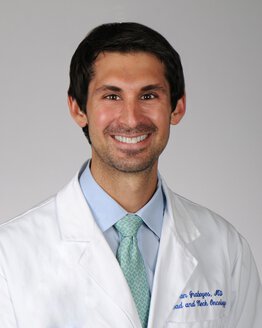
Evan Graboyes, M.D., MPH
Evan M. Graboyes, M.D., MPH, is a Professor in the Departments of Otolaryngology-Head and Neck Surgery and Public Health Sciences at the Medical University of South Carolina, where he serves as the Medical Director of the Survivorship Program and Director of Survivorship and Cancer Outcomes Research (SCOR) at the NCI-designated Hollings Cancer Center. As a fellowship-trained head and neck surgical oncologist and microvascular reconstructive surgeon, Dr. Graboyes focuses on the removal and reconstruction of benign and malignant head and neck tumors. Dr. Graboyes is certified by the American Board of Otolaryngology-Head and Neck Surgery.
Dr. Graboyes' clinical practice as a head and neck surgical oncologist informs and grounds his research program, which leverages his scientific training in supportive oncology, health behavior, and health services research to understand and address issues in cancer survivorship. Supported by more than $15 million in NCI funding, he has been the Principal Investigator on six NCI-funded trials evaluating cancer care delivery and supportive care interventions among cancer survivors. He has published more than 160 articles related to head and neck cancer, cancer survivorship, and cancer care delivery in leading clinical oncology journals.
At a national level, he is at the forefront of conversations shaping cancer care delivery and cancer survivorship through his work at NRG Oncology/NCORP (Vice Chair, Healthcare Access Research Committee), the American Society of Clinical Oncology (Chair-Elect, Health Policy Committee), the National Cancer Institute (Member, Social Determinants of Health Working Group), and the American Head and Neck Society (Chair, Value & Quality of Care Committee; Liaison, Commission on Cancer). He also serves as the Deputy Editor of JAMA-Otolaryngology Head and Neck Surgery.
Dr. Graboyes was born in St. Louis, Missouri, and raised in Wisconsin. He graduated summa cum laude from Princeton University with degrees in philosophy and public policy. He received his medical degree and completed his otolaryngology residency at Washington University School of Medicine in St. Louis. He completed his head and neck oncologic and reconstructive surgery fellowship at the Medical University of South Carolina, where he also received his Master of Public Health in Health Behavior and Health Promotion. He enjoys being outdoors in the Charleston area with his wife and three children.

Hayley Kamin
Communications Manager
Hayley Kamin is the communications manager for the Hollings Cancer Center Communications and Marketing team, having joined the team in 2025 after three years as a communications specialist at the National Institutes of Health (NIH). As a science communicator with a Ph.D. from the University of Florida, she has extensive experience translating complex research into clear, engaging content. Her career has included roles at the NIH’s National Institute of Mental Health and the American Psychological Association, where she led content development and editorial strategy, developed science and health communications and worked with researchers and clinicians to strengthen public understanding of research.
Contact Hayley at kamin@musc.edu.
Recent Cancer Research stories