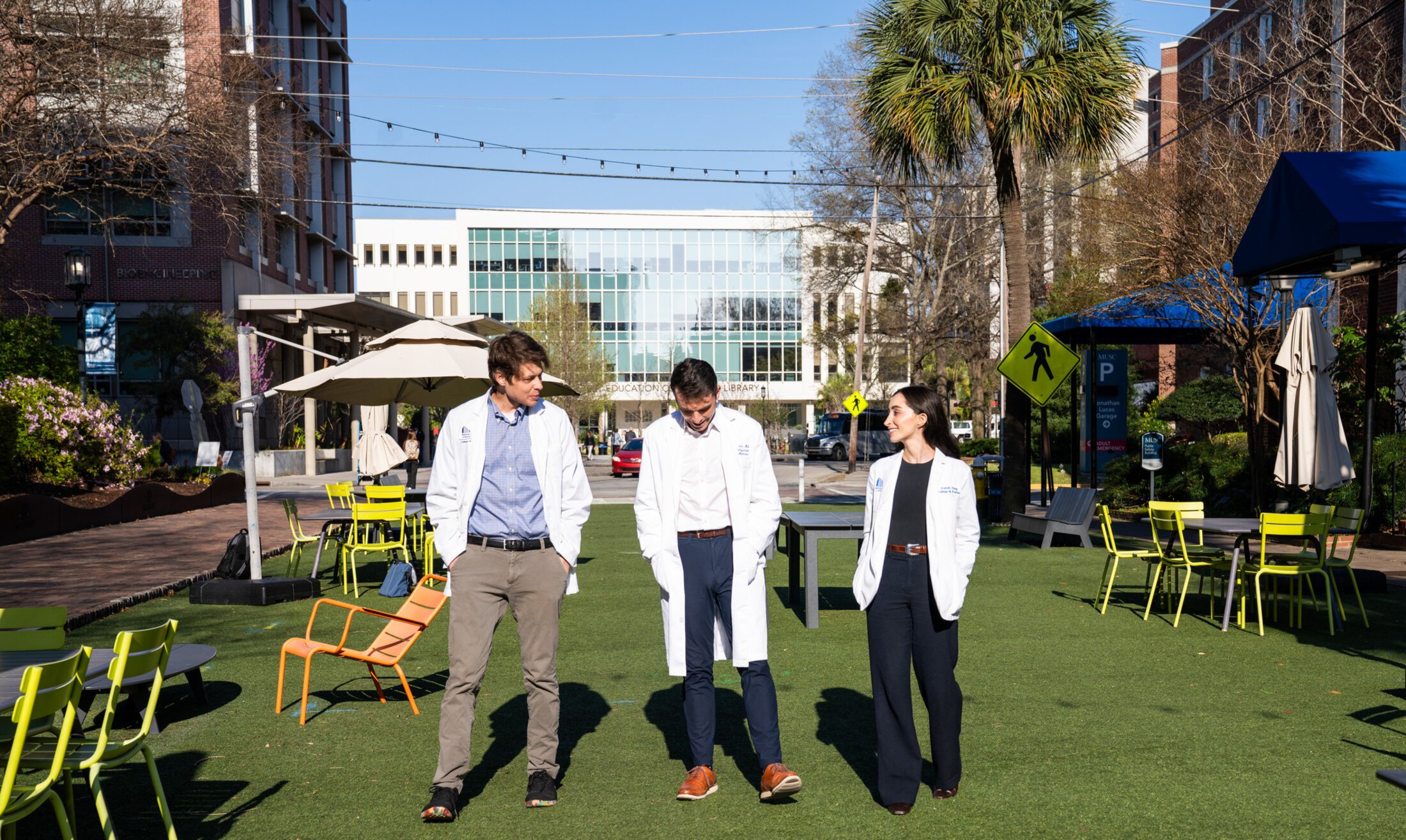
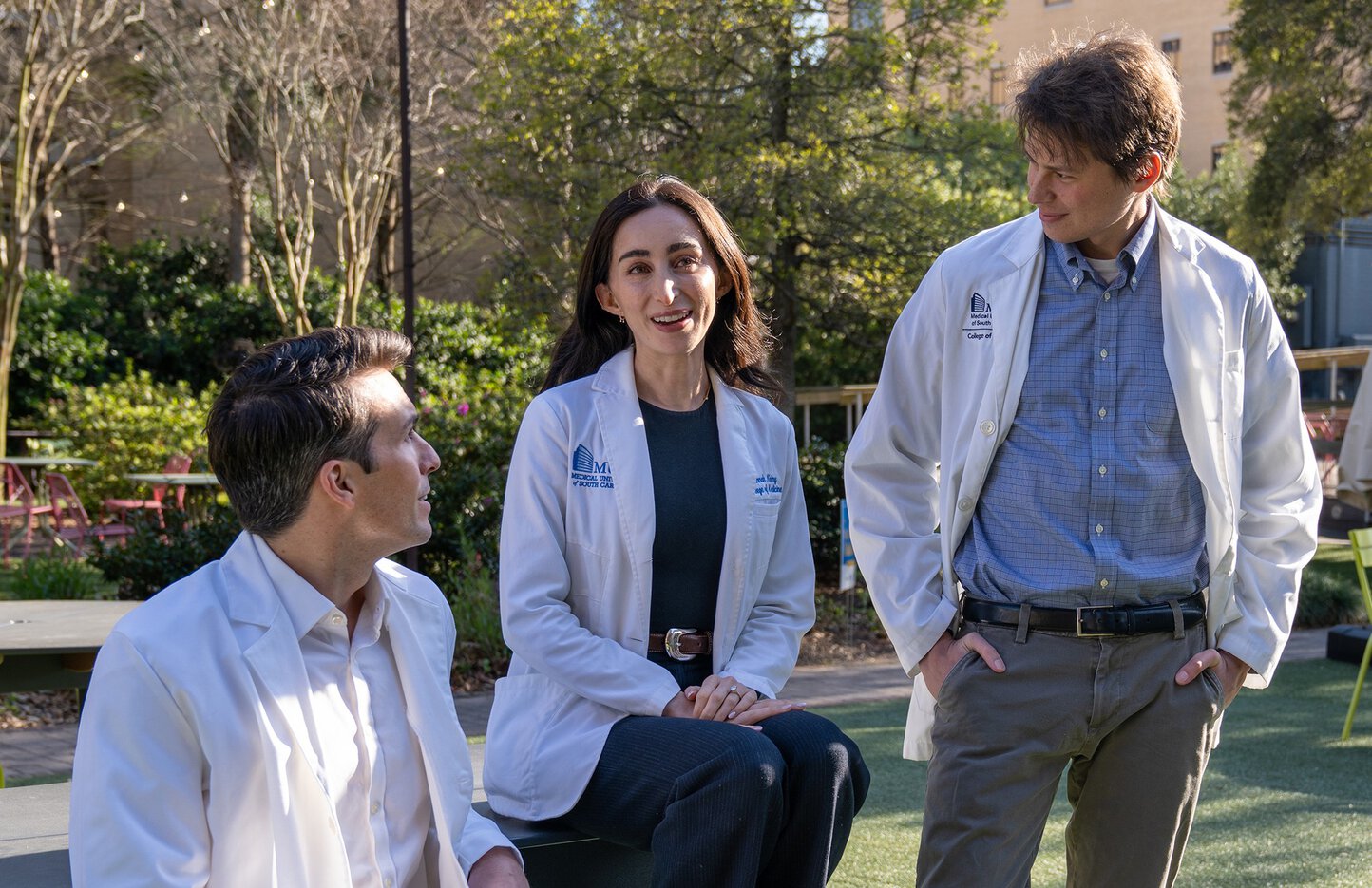
This June, three young doctors at MUSC are preparing to step into the next phase of their careers.
That’s not so unusual – MUSC graduates more than 400 students and residents every year.
But these three share a distinction that is particularly meaningful this National Cancer Survivors Month – they all lived through cancer.
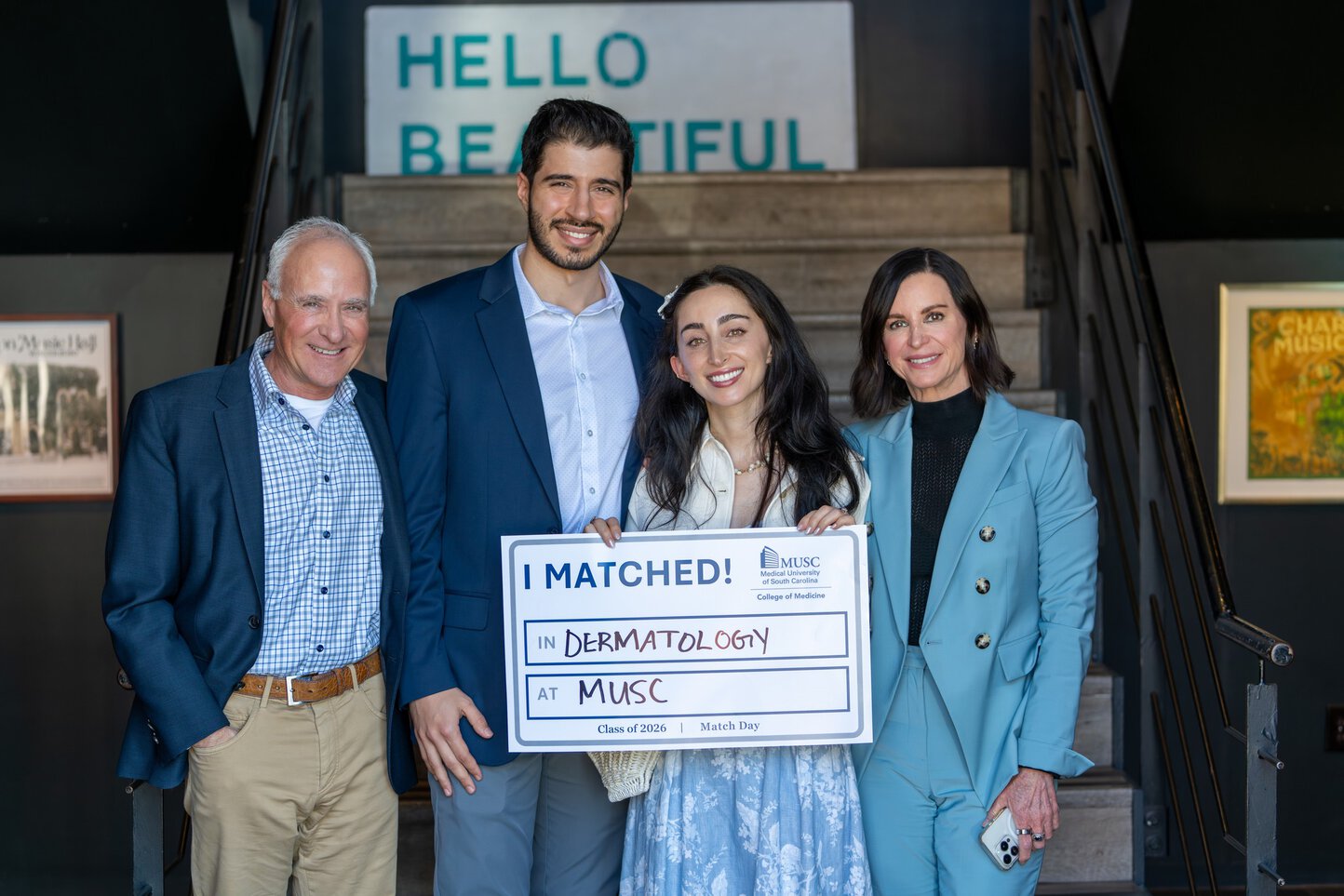
Hannah Neimy, M.D., and Hayden Braun, M.D., have graduated from medical school and are beginning their residencies – Neimy in dermatology at MUSC and Braun in emergency medicine in Austin, Texas.
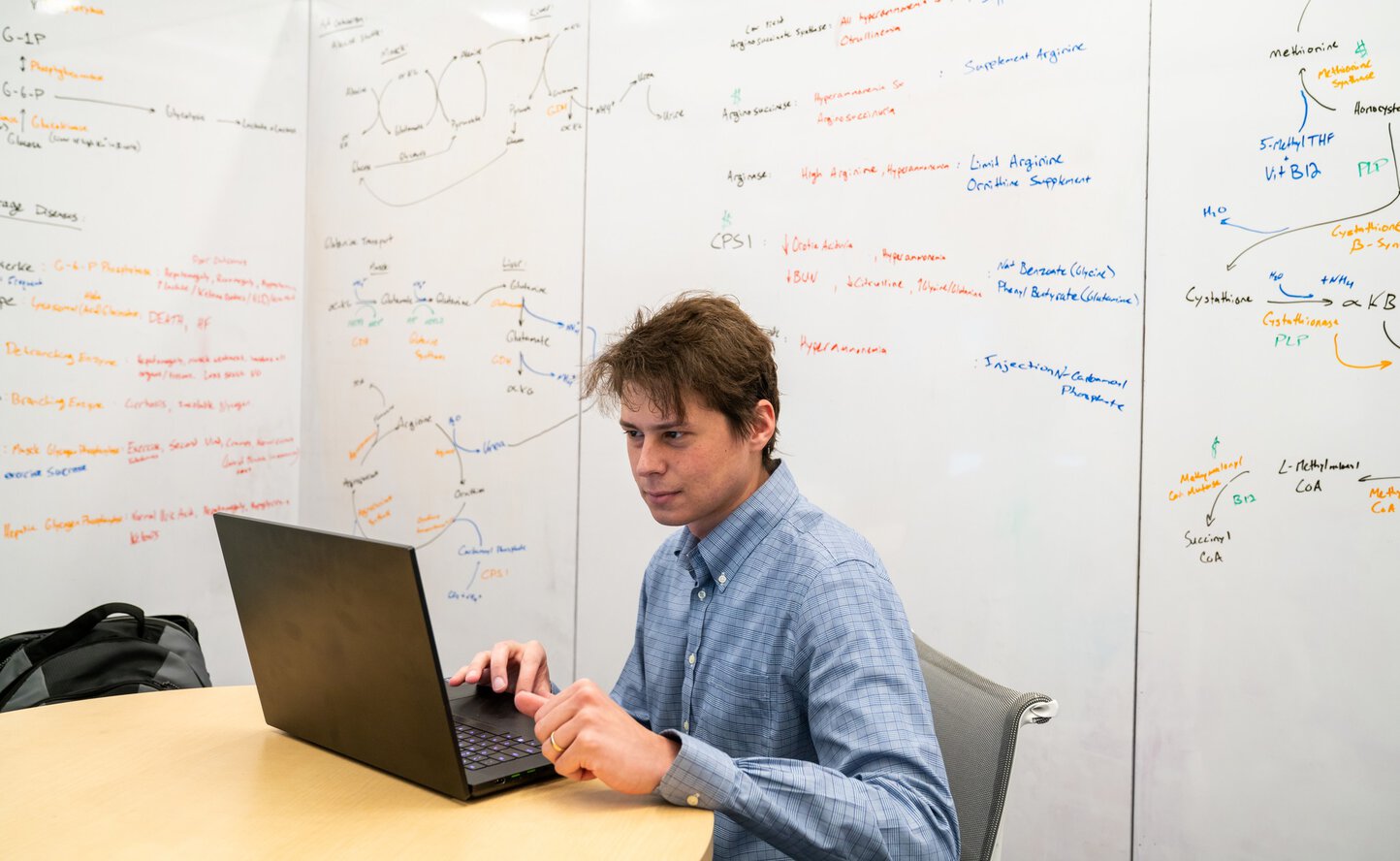
Jordan Ritchie, M.D., meanwhile, is finishing his internal medicine residency and beginning a hematology/oncology fellowship at MUSC Hollings Cancer Center so that he can specialize in caring for cancer patients.
For each, cancer is a part of their story but far from their whole story. They have families, hobbies, passions and career aspirations.
“The most important thing I did this past year wasn’t graduating from medical school,” Braun said. “It was marrying Catherine.”
His cancer is the most recent – he underwent a living donor liver transplant earlier this year because of colon cancer that had metastasized to his liver.
The experience has given him a heightened sense of responsibility as he prepares to discuss difficult topics in a compassionate and clear manner with patients in the emergency room.
Neimy and Ritchie, on the other hand, are a few years out from cancer treatment. They were each diagnosed with Hodgkin lymphoma – Neimy as a college sophomore in Charleston and Ritchie as a high schooler in Tennessee and again during medical school there.
A medical error leading to complications gave Ritchie’s first course of treatment an extra dramatic twist, as did struggling through his medical school rotations while undergoing chemotherapy.
Now, he’s pleased to describe his life as “simple.” He goes to work, goes home and spends time with his toddler, wife and – soon – a new baby.
“I'm just trying to keep my head down, get through training and also be a good dad and as good a husband as I can be,” he said.
Practicing medicine with a patient's perspective
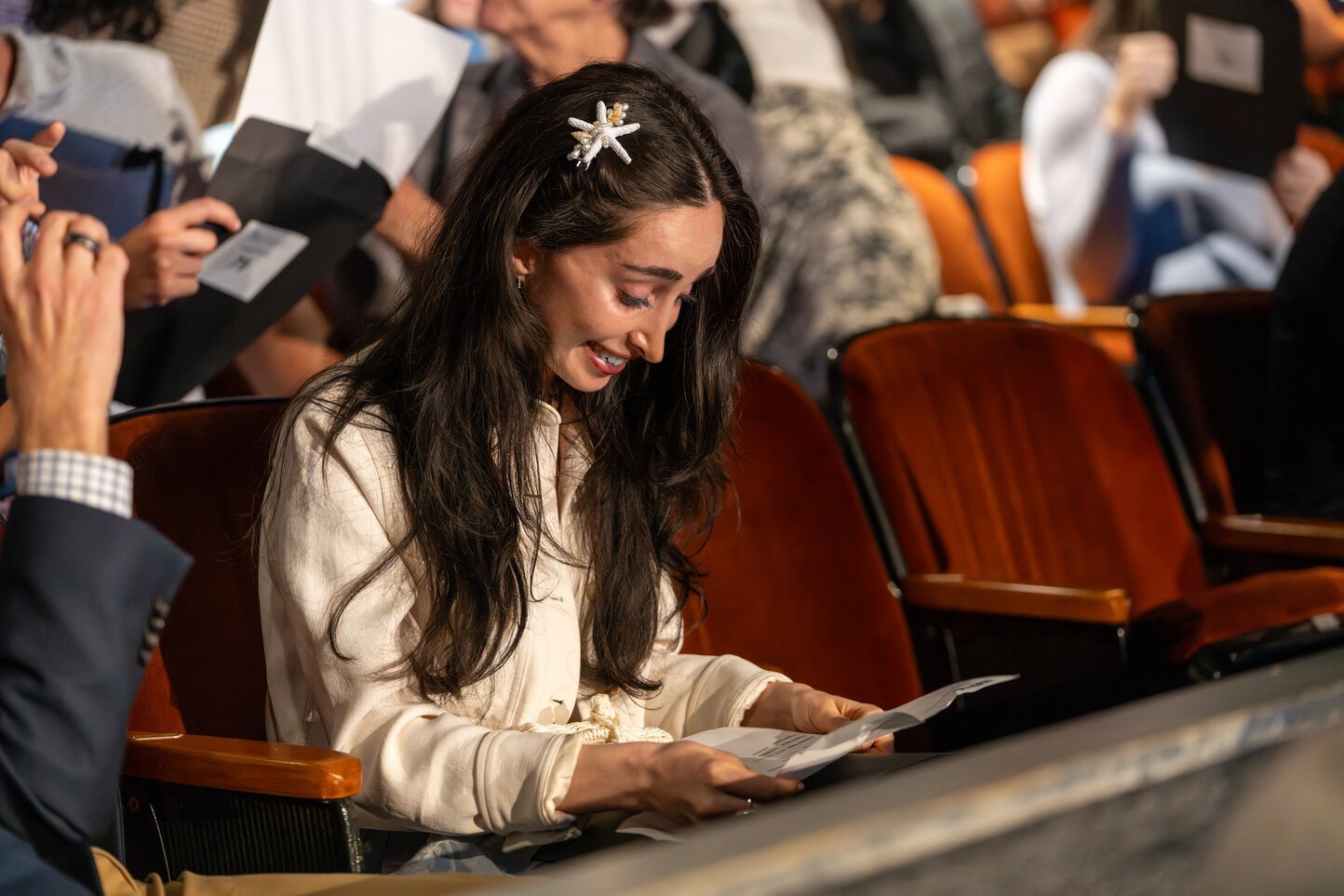
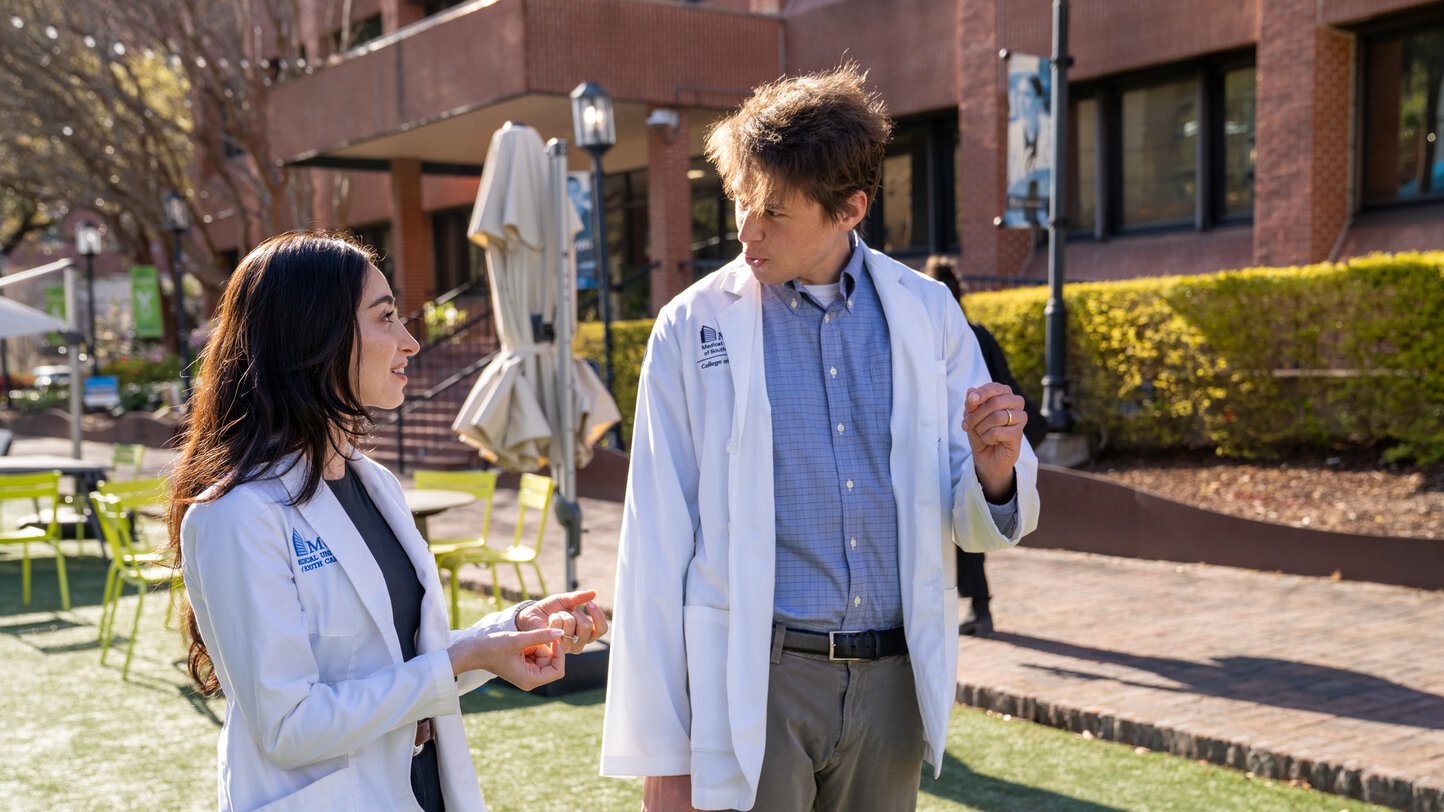
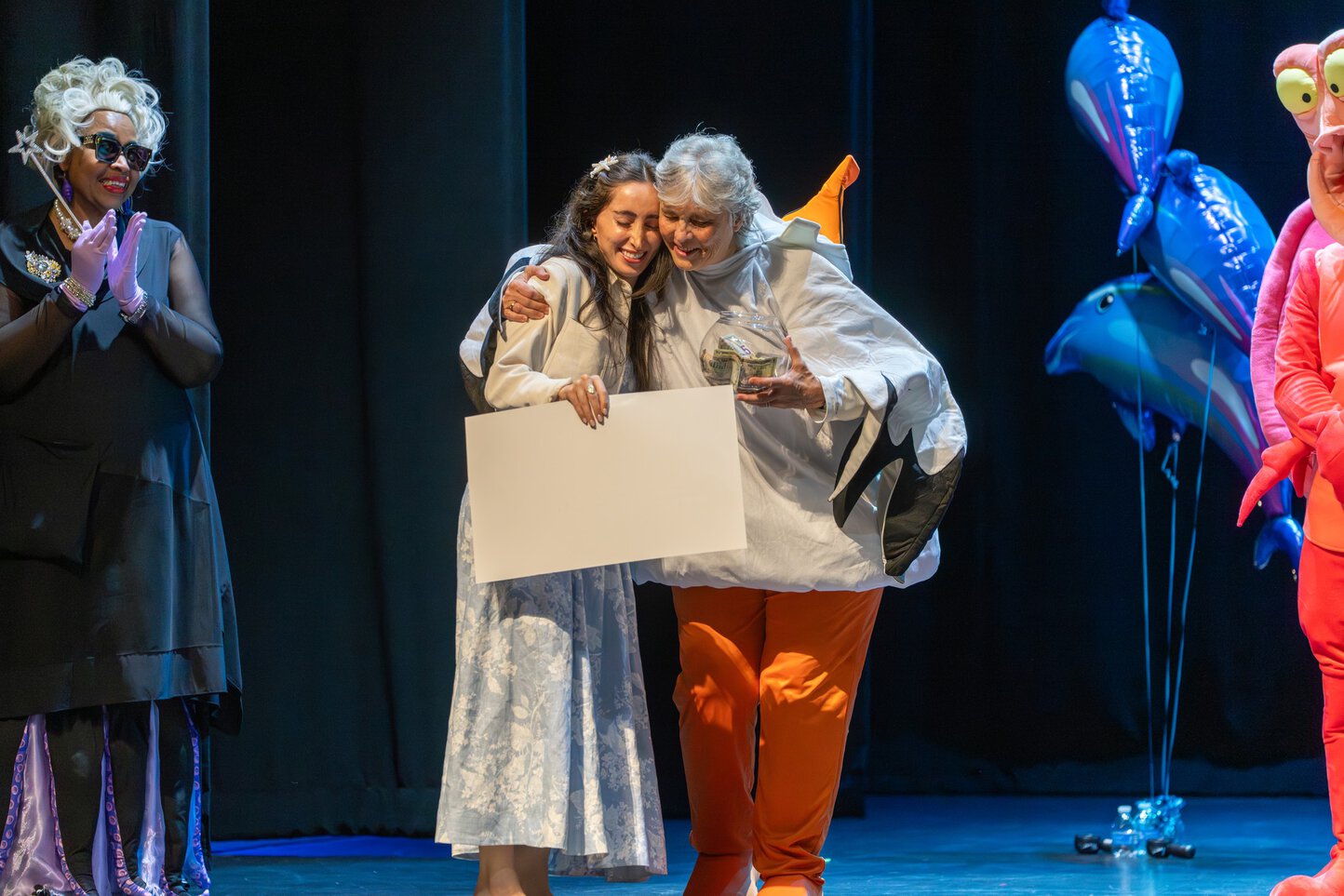
Neimy, too, is preparing for a personal milestone. She’ll get married in December.
Neimy was diagnosed when she was attending the College of Charleston, and she was eager to attend medical school at the place where she was treated. Now, she’s happy to continue her training here.
“My whole family lives here. My fiance has a job here. I want to stay. It's beautiful. I couldn't imagine myself anywhere else,” she said. “My oncologist is here. He's just great. He's done so much for me, and I think it's a gift to be able to continue learning and working here.”
Her oncologist, Brian Hess, M.D., is one of the mentors who guided Ritchie on the path to choosing a hematology/oncology fellowship. Leukemia specialist Alexander Coltoff, M.D., too, provided guidance and options to participate in research.
Ritchie had been attracted to both cardiology and hematology/oncology when he began his residency, but over time, he was undeniably drawn to hematology/oncology.
“I kind of dove in over the past year and a half and did a lot of research and made some relationships in the field, and I decided I truly wanted to do it,” he said. “I had some really good mentors here who are attendings on staff, and they helped guide me. I found that I really wanted to be here, too, not just because I like Charleston, but also, I really like the group here. I think there's a lot of momentum in the hem/onc world at MUSC.”
“I do think the culture in our academic program is pretty strong right now, and we have a lot of attendings who are really pouring into residents,” he said. “We have five MUSC residents this year applying for hem/onc fellowships, and I think all of us really enjoyed our relationships and mentorship here, and a lot of us really wanted to stick around.”
Whether staying at MUSC or venturing to other health systems, the three doctors have a lot to look forward to. Their personal histories with cancer and as patients have given them insight into what their future patients might be feeling – and they also know that illness does not define someone.
Braun said it best as he explained his own experience as a patient: “They didn’t just treat the cancer. They wanted to know my story. They treated me like a person.”
Leslie Cantu
Senior Communications Manager
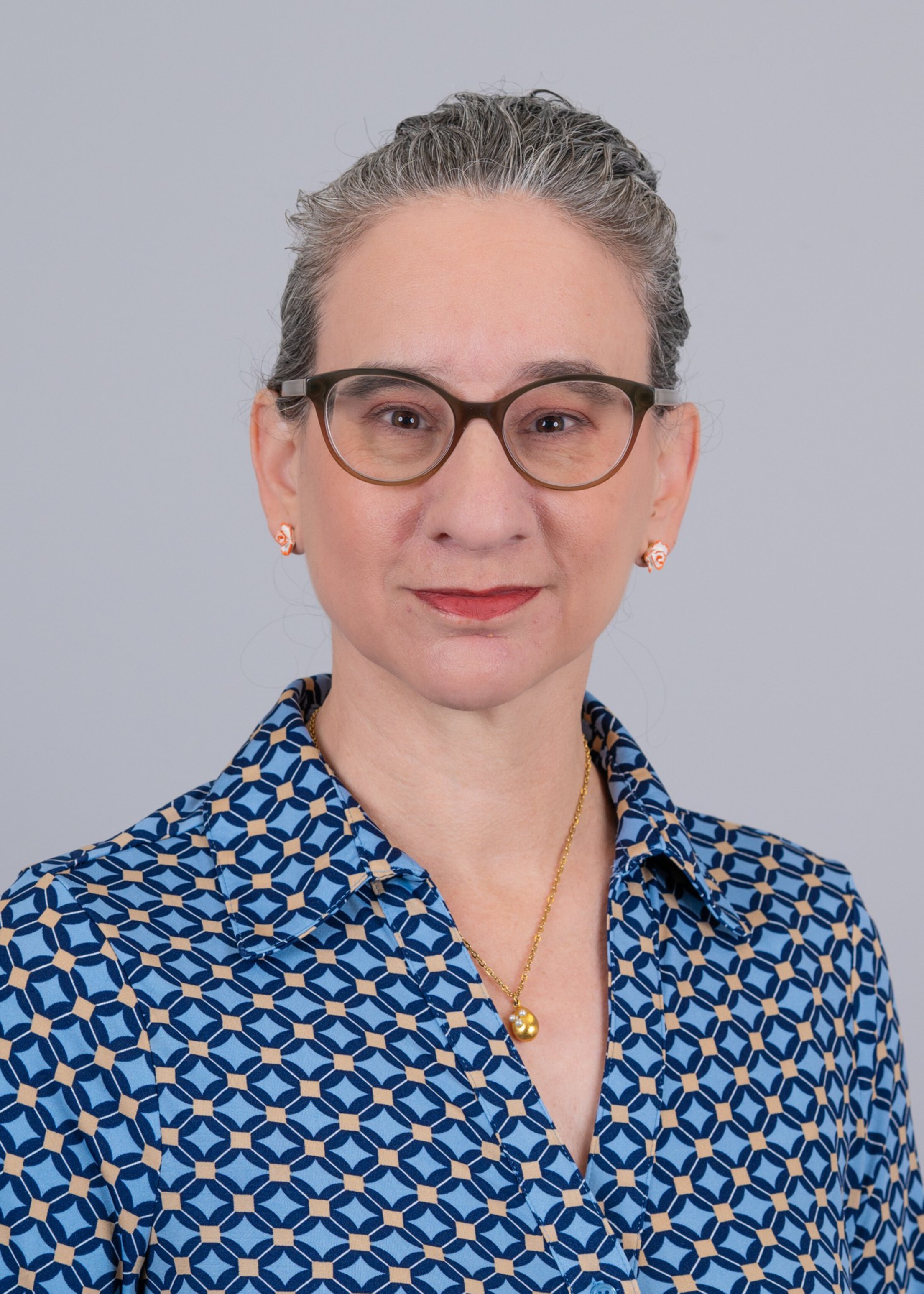
Leslie Cantu is the senior communications manager at MUSC Hollings Cancer Center, where she works with researchers, clinicians and patients to tell the people of South Carolina about the innovative work being done to improve cancer care for everyone in the state. She joined the MUSC Office of Communications and Marketing in 2018 after a career as an award-winning writer, editor and producer at community newspapers and local TV news. She transferred to the communications office at Hollings in 2022, where she happily finds something new and interesting to write about every day. Her favorite stories to cover at MUSC have included Match Day, the Angel Tree Parade, a clinical trial of CAR-T cell therapy and the many patients who have agreed to share their very personal struggles and triumphs.
Contact Leslie at cantul@musc.edu.
Recent Cancer Survivorship stories