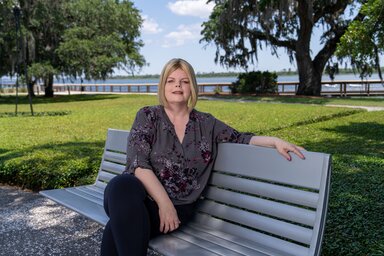
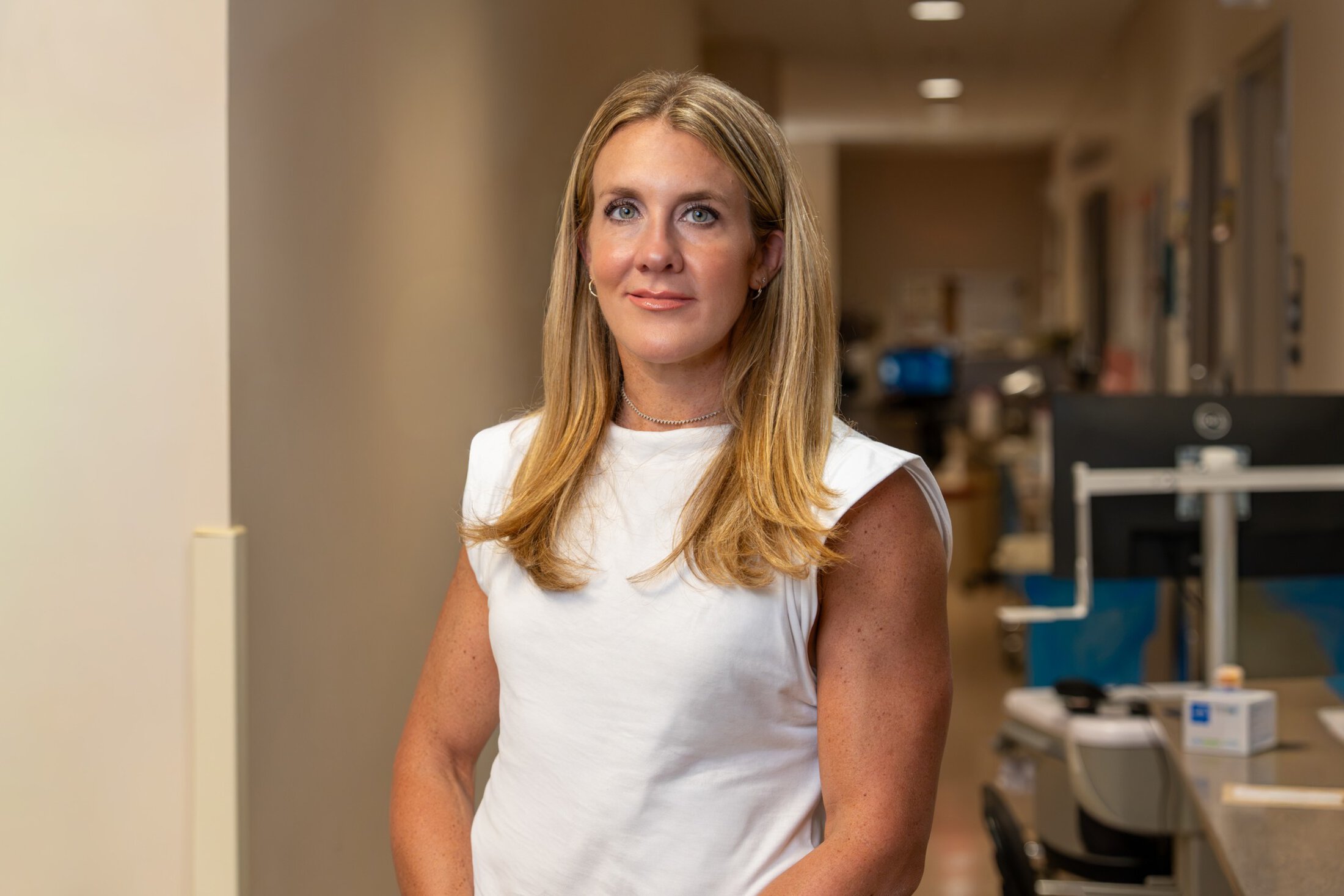
When Kate Wilczek moved to the Lowcountry last fall, one of her biggest concerns was finding a care team she could trust. Hollings’ reputation for cancer care gave her confidence that she would be in good hands, but after more than two decades living with cancer, she also knew that changing care teams was no small decision and that treating the disease is only part of the challenge. Managing pain, mobility issues and other complications that can arise when cancer spreads is often just as important.
At MUSC Hollings Cancer Center, Wilczek found a team built to address those challenges.
Led by Barrett Willis, PA-C, Hollings’ Metastatic Disease to Bone Clinic – one of only a handful of programs of its kind in the country – brings together specialists to proactively manage cancer that has spread to the bones and prevent complications that can follow.
“We’ve always known that treating metastatic disease to bone can improve pain, function and quality of life,” Willis said. “But we’re also learning that when patients are treated in a targeted multidisciplinary setting, we can improve cancer outcomes by preventing complications and helping patients stay on the therapies they need.”
A growing need
Advances in cancer treatment are allowing patients to live longer than ever. But with that gain comes a challenge: More patients are experiencing cancer that has spread to their bones.
About 8% of cancer patients will develop bone metastases. The condition is especially common among patients with metastatic breast and prostate cancers, with almost 70% developing bone disease.
Bone metastases are the leading cause of cancer-related pain. They can also cause new medical problems, like fractures and spinal cord and nerve root compression, and affect quality of life by limiting how much people can move.
However, options for treating bone metastases are improving. Advances in genetic sequencing, targeted therapies and immunotherapy have extended survival for many patients, while surgical and minimally invasive procedures have expanded treatment options beyond symptom management.
A team approach to expanding care
For Wilczek, the benefits of a multidisciplinary approach became clear soon after she established care at Hollings.
A survivor of multiple cancers, including thyroid cancer, melanoma and basal cell carcinoma, she was diagnosed in 2004 with ductal breast cancer with lobular features and underwent a bilateral mastectomy. Over the years, she has undergone hundreds of radiation treatments, infusions and oral and intravenous chemotherapy sessions.
In 2019, imaging revealed that breast cancer had metastasized to her bones, adding a new set of challenges to her cancer journey. After moving to Summerville this past year, Wilczek sought treatment at Hollings for pain in multiple areas affected by metastatic disease. Those evaluations connected her with the Metastatic Disease to Bone Clinic, where her care is now coordinated across multiple specialties.
The goal is to make sure multiple experts are thinking about every patient and talking with one another. Bringing those perspectives together helps us create an individualized plan so patients receive the most thoughtful care possible.
Wilczek said this coordinated approach has been one of the biggest benefits of coming to Hollings. Her medical oncologist, Abi Siva, M.D., Willis and the rest of the team work together closely, regularly communicating about her care. She credits Siva and her team with consistently going above and beyond, even checking on her after hours, giving her confidence that every aspect of her care is being considered.
“I have to say the care I received since moving here is phenomenal,” Wilczek said. “To have somebody like Barrett coordinating everything, and then my physicians and oncologist all working together, it’s really incredible.”
Rather than requiring patients to navigate multiple specialties on their own, Willis serves as a central point of contact, evaluating patients and coordinating care among experts throughout the MUSC Health system. Treatment decisions are highly personalized and depend on factors such as the type of cancer, lesion location, extent of bone damage, previous treatments and a patient’s overall health and treatment goals.
“We call Barrett ‘the quarterback,’” Wilczek said, referring to herself and her husband, Gerry. “She’s calling the plays and putting everything into action.”
The clinic’s coordinated model also gives patients access to a broad range of treatments.
Willis said one of the biggest advances has been the development of minimally invasive orthopedic oncology techniques. For example, percutaneous stabilization uses small incisions and image guidance to reinforce bones weakened by cancer. This allows patients to recover more quickly – and resume cancer treatment sooner.
“In the past, some patients needed major surgeries that could require weeks of recovery. Now, in select patients, we’re able to use much less invasive approaches that provide durable pain relief to help people get back on their feet faster.”
The team includes:
- Orthopedic oncologists Nicholas Arpey, M.D., and Lee Leddy, M.D., who focus on preventing fractures, preserving mobility and stabilizing bones weakened by cancer.
- Pain management specialist Andrew Mendelson, D.O., who uses treatments such as nerve blocks that can reduce the need for opioid medications.
- Interventional radiologists Antony Gayed, M.D., Cain Green, M.D., Carl Forsberg, M.D., and Stephen Stringfellow, M.D., who perform minimally invasive procedures that can destroy tumors, strengthen bones and relieve pain.
- Athletic trainer Kailyn Baker, who supports the orthopedic care team in helping patients to maintain or regain safe movement and function.
The clinic works closely with Hollings’ radiation and medical oncology teams to arrange visits and simplify care for patients with complex treatment schedules. Because the spine is the most common site of metastatic disease, Willis also regularly partners with spine surgeons and neurosurgeons. Behind the scenes, nurse navigator Melinda Walto, R.N., keeps all these pieces running smoothly by coordinating appointments, expediting imaging and facilitating communication so patients can focus on their care rather than logistics.
“The goal is to make sure multiple experts are thinking about every patient and talking with one another,” Willis said. “Bringing those perspectives together helps us create an individualized plan so patients receive the most thoughtful care possible.”
Rapid access when time matters
For patients with metastatic disease, time matters. One of the clinic’s priorities is providing rapid access to care. In many cases, patients can be evaluated within 24 hours, including through virtual visits when appropriate.
The clinic also serves patients whose diagnosis is not yet clear. Patients might arrive with a suspicious bone lesion, unexplained pain or an imaging finding needing further evaluation. The team determines whether the disease is metastatic and coordinates with the appropriate specialists. In addition, the clinic manages musculoskeletal problems that may not be directly caused by cancer but can still affect quality of life and treatment, such as arthritis, joint pain and mobility issues.
There’s a whole group watching over me, and I just feel like I’m getting care that I couldn’t even imagine. I’m not alone in this. There are so many people looking out for me.
Together, this approach has made a tangible difference for Wilczek. When she developed pain in her shoulder and hip, the team recognized her symptoms as metastatic disease rather than routine orthopedic problems. They coordinated radiation therapy for her shoulder with oncologist Jennifer Harper, M.D., along with hip surgery that significantly reduced her pain, allowing her to move more comfortably.
“It wasn’t just, ‘You have pain there, and it’ll go away,’” Wilczek said. “Because of the intervention of everybody involved, we were able to get it taken care of. There’s a whole group watching over me, and I just feel like I’m getting care that I couldn’t even imagine. I’m not alone in this. There are so many people looking out for me.”
Willis said that is exactly what the clinic is designed to do.
“We want patients to have the best quality of life possible,” she said. “If we can keep them active, comfortable and able to continue the treatments they need, we’re giving them something more than cancer care. We’re helping them spend quality time doing what matters most – being with the people they love.”
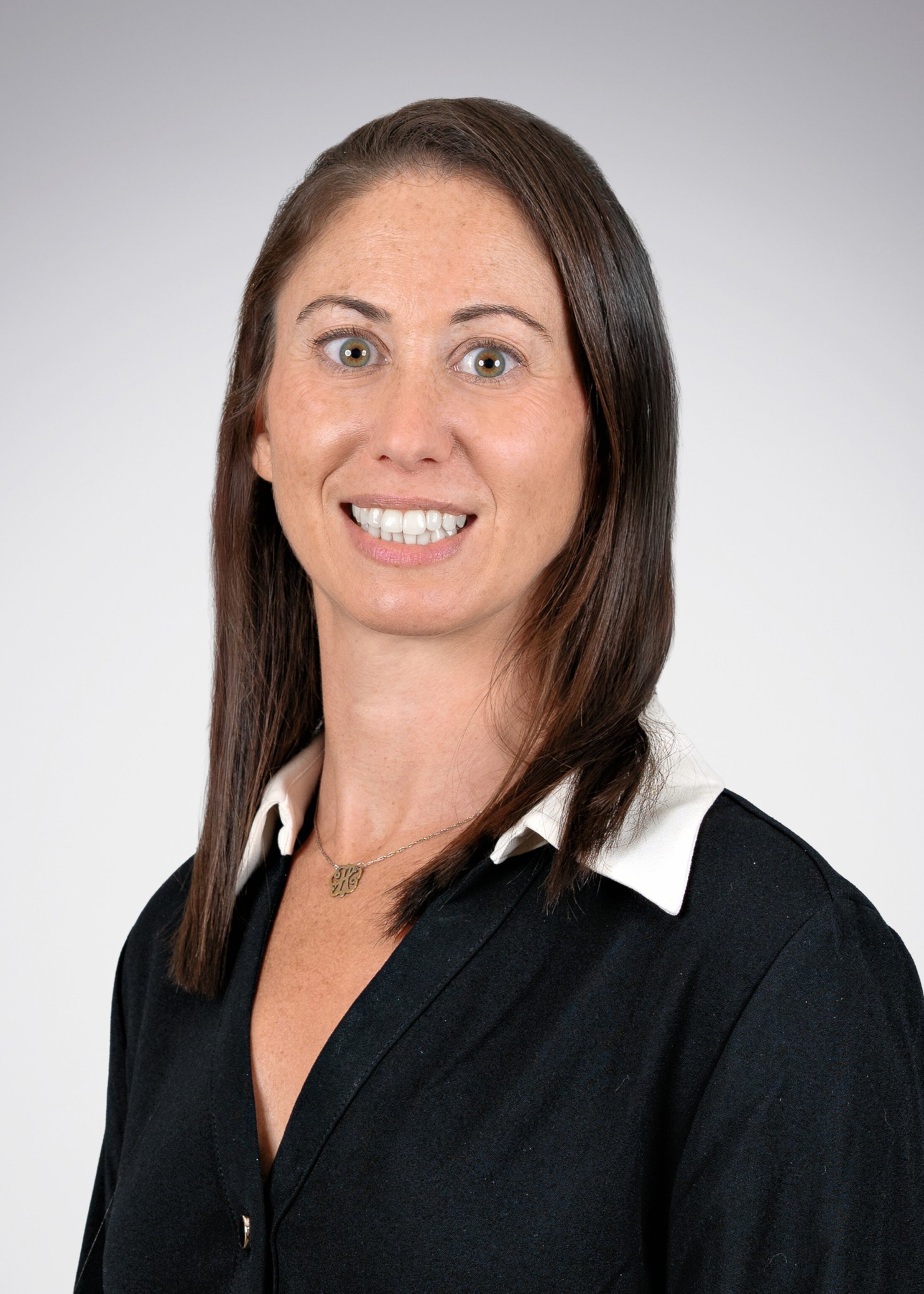
Hayley Kamin
Communications Manager
Hayley Kamin is the communications manager for the Hollings Cancer Center Communications and Marketing team, having joined the team in 2025 after three years as a communications specialist at the National Institutes of Health (NIH). As a science communicator with a Ph.D. from the University of Florida, she has extensive experience translating complex research into clear, engaging content. Her career has included roles at the NIH’s National Institute of Mental Health and the American Psychological Association, where she led content development and editorial strategy, developed science and health communications and worked with researchers and clinicians to strengthen public understanding of research.
Contact Hayley at kamin@musc.edu.
Recent Cancer Patient Journeys stories