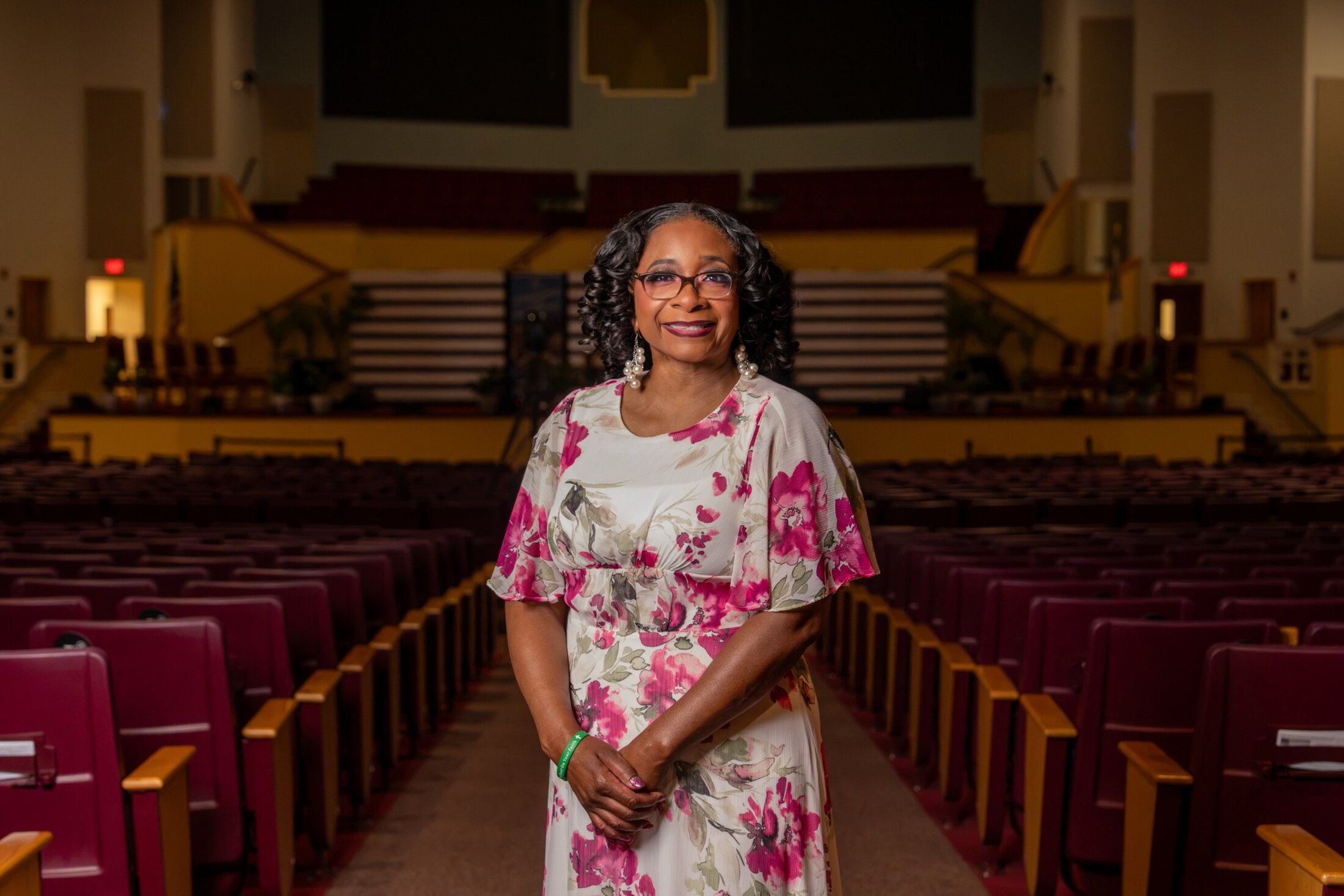
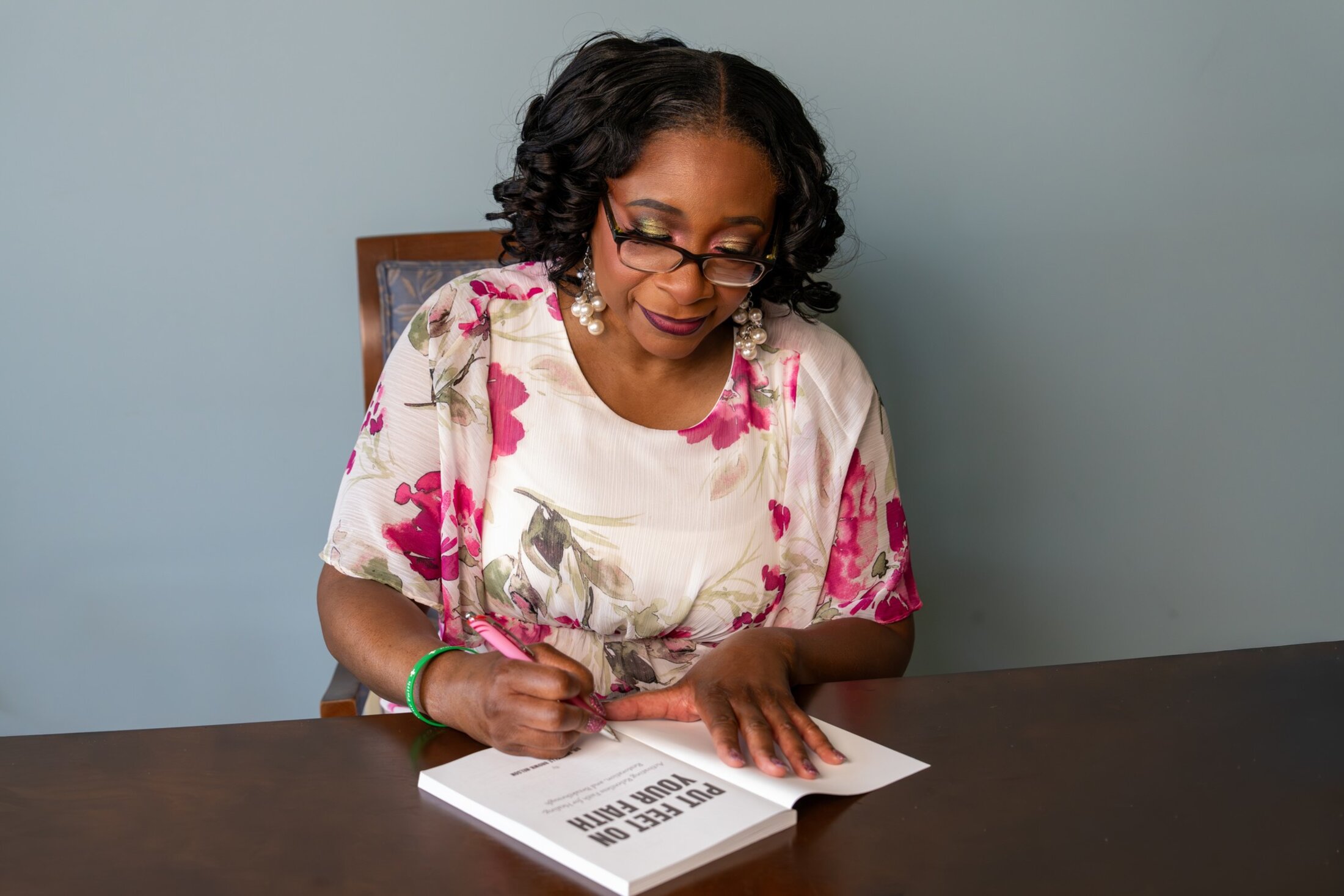
Michelle Brown-Nelson, DHA, believes there is a reason she is still here – and part of that reason is to talk about what she has been through.
Since being diagnosed with salivary gland cancer in 2023, Brown-Nelson has endured surgery, radiation and lingering side effects that continue to shape her daily life.
But as she moved from treatment into survivorship, she began thinking about how her experience could help others.
She wrote a book. She began sharing her story through a podcast and speaking engagements. And she started talking openly about the parts of cancer that can be hard to see: the fear that comes with a diagnosis, changes in appearance and identity, learning to accept help and the reality that survivorship does not mean every challenge disappears.
For Brown-Nelson, sharing those experiences is another form of service.
“When you have come through a difficult challenge, your testimony creates a bridge for someone who is still walking through,” she said.
It is a role that feels especially fitting for Brown-Nelson, a nurse of nearly 30 years who has spent much of her life caring for and encouraging others. Cancer unexpectedly placed her on the other side of that dynamic, forcing her to learn how to receive care herself. Now, Brown-Nelson is once again focused on what she can give to others.
A diagnosis she never expected
Brown-Nelson’s cancer journey began in 2023, when she felt a hard knot near her neck and jaw.
She knew something was not right. But finding an answer took persistence.
Brown-Nelson sought care from several providers before a needle biopsy produced an alarming result – one she unexpectedly received through her patient portal on a Sunday. One word in the report immediately consumed her attention.
“Metastatic, metastatic, metastatic,” she recalled. “It just kept reverberating in my mind.”
An initial biopsy suggested that the mass was cancer that had spread from somewhere else in her body. With no doctor immediately available to put the report into context, Brown-Nelson’s thoughts raced ahead.
“How far has it spread? Where has it spread? I don’t want to die. I want to live,” she recalled. “Hundreds and hundreds of thoughts ran through my mind at once.”
When Brown-Nelson saw an ear, nose and throat doctor, he recommended that she seek care at MUSC Hollings Cancer Center because of the difficult nature of her cancer. Brown-Nelson had already reached the same conclusion.
“There was no question about where I was going to go to seek treatment,” she said.
Brown-Nelson’s ties to MUSC were already deep. She earned three degrees from the MUSC College of Health Professions, where she now serves as an adjunct professor, and she had watched several family members receive care within the health system.
“I have been able to personally witness the healthcare system in action,” she said. “I have seen positive results time after time.”
At Hollings, further evaluation ultimately revealed that the initial picture was not quite right.
Alexandra Kejner, M.D., a head and neck surgical oncologist at Hollings, initially approached Brown-Nelson’s case as cancer that had spread to her neck from somewhere else. But after surgery and additional biopsies, the final pathology showed that the tumor had originated in her submandibular gland, one of the salivary glands beneath the jaw.
The diagnosis was epithelial-myoepithelial carcinoma, an uncommon type of salivary gland cancer. The other lymph nodes removed during surgery were negative for cancer.
Unlike some head and neck cancers, salivary gland cancers like Brown-Nelson’s do not have a known cause.
“Salivary gland cancers are somewhat unusual – and there is not a clear reason why they develop, like genetics, smoking, drinking, etc.,” Kejner said. “Many of these cancers arise de novo – meaning a unique mutation that occurs at the cellular level.”
That uncertainty was difficult for Brown-Nelson, who struggled to understand how she could have developed cancer in this part of the body despite never smoking, drinking alcohol or using drugs. Sometimes, Kejner said, there simply is not a clear explanation. “It is an area of continuing research, but we yet don’t have a definitive cause.”
Becoming the patient
Brown-Nelson’s first surgery took place in August 2023.
Because the tumor had features that raised concern about recurrence, she also underwent radiation. Kejner said the pathology showed cancer cells involving focal areas of nerves and small blood or lymph vessels, one reason Brown-Nelson’s doctors recommended additional treatment after surgery.
Brown-Nelson ultimately completed 33 radiation sessions. But finishing radiation did not mean the end of her medical care.
A lump later appeared near her surgical incision, raising concern that the cancer might have returned. Fortunately, testing showed that it was not cancer but a cyst that had developed after radiation, and it had to be surgically removed.
Just because cancer happened to you, it doesn’t mean that it has to define you. Whoever you were before you received that diagnosis, you’re still that person. You don’t have to lose your identity.
Radiation also left Brown-Nelson with severe dry mouth. Without enough saliva to protect the delicate tissue inside the mouth, patients can be more vulnerable to irritation and abnormal white patches known as leukoplakia, Kejner explained. Brown-Nelson developed areas of abnormal cells on her tongue, including high-grade dysplasia, which required additional procedures to remove.
Altogether, Brown-Nelson underwent five surgeries. She also received speech and physical therapy and other procedures through Hollings’ Wendy and Keith Wellin Head and Neck Clinic.
“There’s nothing casual about that kind of treatment,” Brown-Nelson said. “It affects your whole life. It affects your body, your energy, your relationships. And I can’t say it enough – your emotions.”
Before cancer, Brown-Nelson enjoyed taking photos. But radiation burns – similar to extreme sunburns – on her face made her uncomfortable with her appearance. She found herself avoiding photos and sometimes avoiding going out in public altogether.
“I didn’t want people to see me with my face and neck burnt,” she said. “It was frustrating a lot of times. It was difficult. It was painful. I just didn’t want people to see me like that.”
Learning to receive
For someone who had spent decades taking care of other people, cancer required an uncomfortable role reversal. Brown-Nelson was used to being the nurse, teacher, mother and person others could rely on. Now, she was the patient.
Her family became an important source of support. When Brown-Nelson struggled with changes in her appearance, they reminded her that they still saw the same person.
But cancer also required her to accept practical help.
“Cancer taught me something important about receiving,” Brown-Nelson said. “We get accustomed to caring for others. Becoming the person who needed care was humbling.”
That experience is now one of the lessons Brown-Nelson wants to pass on to others: Accepting help does not mean losing your independence or identity. Neither does having cancer.
“Just because cancer happened to you, it doesn’t mean that it has to define you,” she said. “Whoever you were before you received that diagnosis, you’re still that person. You don’t have to lose your identity.”
Today, Brown-Nelson has no evidence of active cancer. Kejner said she continues to be monitored closely, but her original salivary gland cancer has been gone since her major surgery in 2023.
Still, Brown-Nelson’s experience illustrates an important reality of survivorship: The end of cancer treatment is not always the end of its effects.
She continues to deal with dry mouth and other changes from surgery and radiation. Kejner explained that surgery can affect muscles and sensory nerves while radiation can leave tissue tighter and less flexible over time.
Survivorship does not require pretending.
Brown-Nelson has learned to make room for those challenges without allowing them to overshadow how far she has come or minimizing the difficulties they can present.
“Survivorship does not require pretending,” she emphasized.
For Brown-Nelson, that meant recognizing that the life she returned to after cancer would not look exactly like the life she had before it. Instead, she began asking what she could do with it.
Putting purpose into survivorship
Brown-Nelson found one answer in something she had already spent much of her life doing: encouraging others.
Her faith had sustained her throughout treatment, and she wanted to share what the experience taught her. She wrote “Put Feet on Your Faith,” a book released in June, and began speaking publicly and sharing her experiences through a podcast.
Her message combines faith with something extremely important to her as a longtime healthcare professional: taking an active role in your medical care. She said that faith and medicine can work alongside each other.
“You don’t have to choose between your faith and your health,” she said. “You take your medications. You go to your appointments. You get your treatments and surgeries done. Yes, I listened to my physician. But I also used my faith along with my treatment plan.”
She also encourages people to listen to their bodies and advocate for themselves – a lesson that stretches back to the hard knot she first noticed near her jaw. Ask questions, she said. Seek answers. And if something does not seem right, keep pushing until you know why.
“It might not be the answer you want, but it is the answer you need,” she said.
Kejner has watched Brown-Nelson turn that persistence toward life beyond cancer.
“She is a really strong individual and has faced all of her experiences with such grace and grit,” Kejner said, noting that Brown-Nelson continued pursuing projects throughout treatment. “She’s an incredible person. Really, really has been through it and come out the other side stronger.”
Brown-Nelson does not minimize what it took to get there. She hopes that telling her whole story – not only that she survived cancer but what surviving looks like – can make someone else’s path a little easier.
“I survived something that reminded me that life is a gift. And I didn’t go through everything just to say, ‘Oh well, I survived cancer.’ I believe that there is a purpose attached to my survival, and it’s my goal to share that.”
Featured in this story
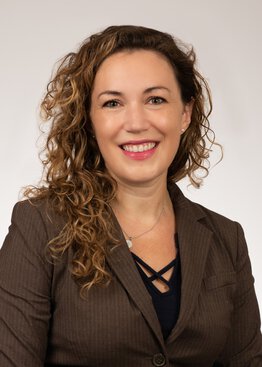
Alexandra Kejner, M.D., FACS
Dr. Kejner is an otorhinolaryngologist/head and neck surgeon dedicated to the treatment of head and neck patients, including those with malignant and benign tumors of the head and neck, including skin, sinus, oral cavity, oropharynx, voice box, neck, and salivary glands as well as the reconstruction of those areas after surgery using local tissue, skin grafts, and free tissue transfer. She also is specialty trained in advanced transoral robotic surgery of the upper aerodigestive tract.
She is certified by the American Board of Otolaryngology. She has published several articles in peer-reviewed journals and several book chapters. She is active in the American Head and Neck Society. She is on the board of the American Head and Neck Microvascular Section. She has been an invited panelist and organizer for multiple national and international meetings. She has acted as a preceptor at the annual Microvascular Bootcamp. She is a member of the Society of Integrative Oncology.
She speaks fluent Spanish. She is interested in medical technology, outcomes research, surgical margins, microvascular reconstruction techniques, head and neck cancer, and improving the quality of life of head and neck cancer survivors.
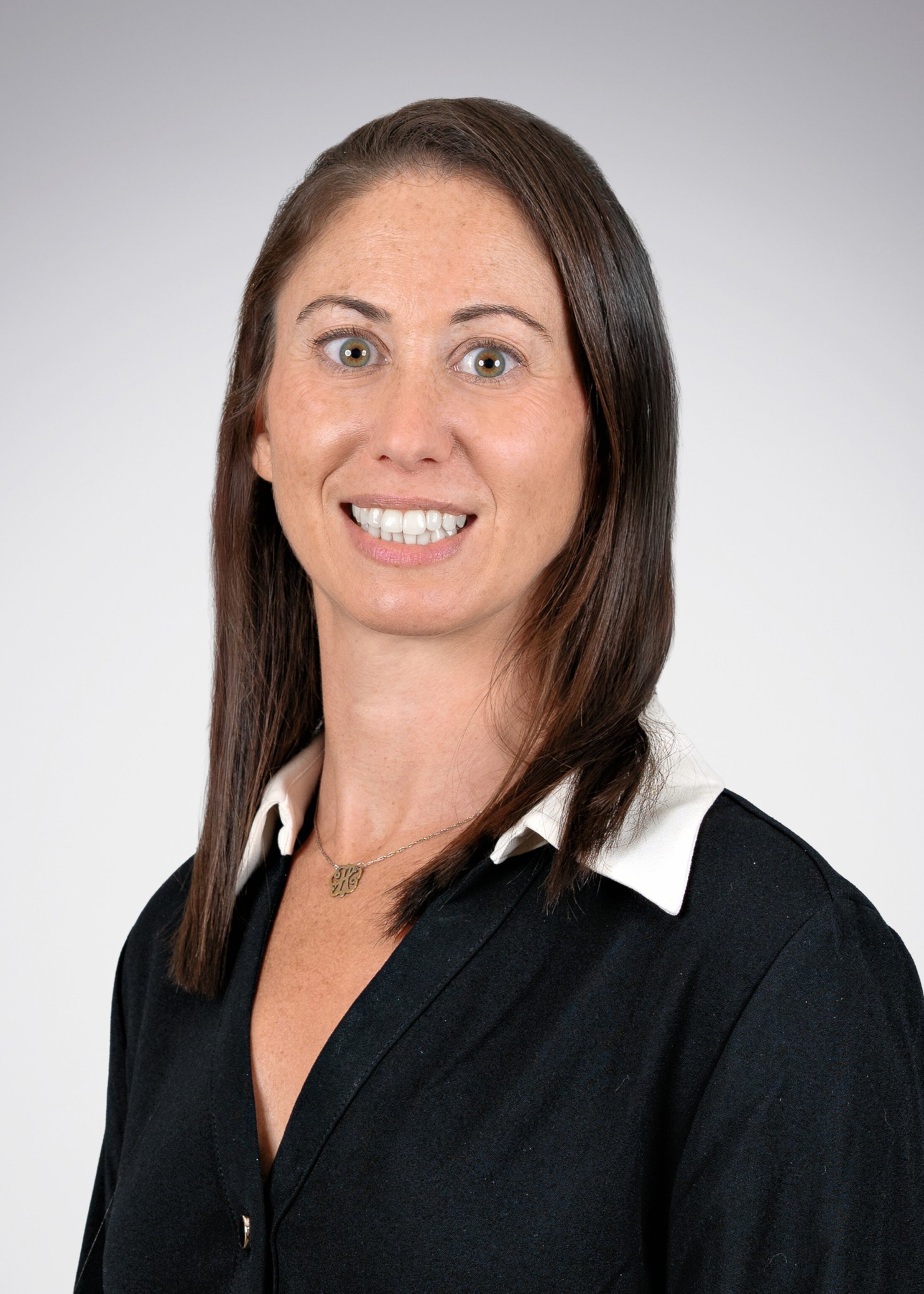
Hayley Kamin
Communications Manager
Hayley Kamin is the communications manager for the Hollings Cancer Center Communications and Marketing team, having joined the team in 2025 after three years as a communications specialist at the National Institutes of Health (NIH). As a science communicator with a Ph.D. from the University of Florida, she has extensive experience translating complex research into clear, engaging content. Her career has included roles at the NIH’s National Institute of Mental Health and the American Psychological Association, where she led content development and editorial strategy, developed science and health communications and worked with researchers and clinicians to strengthen public understanding of research.
Contact Hayley at kamin@musc.edu.
Recent Cancer Patient Journeys stories