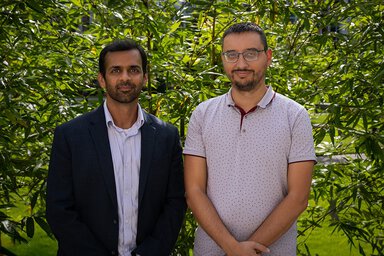
Virgilio George, M.D.
Specialties
- Colorectal Surgery
- Colon Cancer
- Gastrointestinal Cancer
- Rectal Cancer
- Surgical Oncology
Locations (1)
- Charleston, SC


Anal cancer is a relatively rare cancer, but rates are rising in the U.S., especially among people with certain risk factors. Catching it early is important: When diagnosed at an early stage, anal cancer is often highly treatable. If left undetected, however, the cancer can spread and become more difficult to manage.
At MUSC Hollings Cancer Center, you’ll be cared for by a multidisciplinary team of medical, surgical and radiation oncologists; psychologists and psychiatrists; genetic counselors; and nurse navigators. This team works together to support you through diagnosis, treatment and recovery.
MUSC Hollings Cancer Center has been nationally recognized by U.S. News & World Report as High Performing for Cancer Care as well as ranked as the No. 1 hospital in South Carolina for Cancer Care 2026–2027, affirming our excellence in preventing, diagnosing, treating, and supporting patients with cancer. As the only National Cancer Institute (NCI)-designated cancer center in South Carolina, Hollings blends cutting-edge research, multidisciplinary clinical expertise and advanced treatments to deliver outcomes that stand out on a national scale.
Anal cancer develops when abnormal cells in the tissues of the anus – the short canal at the end of the digestive tract – grow uncontrollably. The most common type is squamous cell carcinoma, found in the flat, skin-like cells lining the anal canal.
Anal cancer is distinct from rectal or colon cancer because it arises from different cell types. Although anal cancer is less common than these other cancers, early detection is critical because treatment is most effective at the earliest stages.
Most cases of anal cancer can be traced back to the human papillomavirus, or HPV, a common virus spread through sexual contact. While many HPV infections clear on their own, some persist and can cause cellular changes that may lead to cancer over time.
Some people with anal cancer may not notice symptoms right away. Others may experience symptoms that resemble more common, but less serious, conditions, like hemorrhoids or anal fissures. If symptoms persist for more than a few weeks, it is important to see a health care provider.
Possible symptoms include:
If you experience any of these symptoms, it is important to talk with a healthcare provider. It is especially important to seek care if you are over age 50, as the risk for anal cancer increases with age.
The HPV vaccine can prevent six types of cancer in both men and women, including anal cancer. The HPV vaccine is typically given to children, but people up to the age of 45 may be eligible. Talk with your doctor for more information.
Anal cancer is highly treatable, and many non-surgical options are available. Our specialists work together to develop a treatment plan tailored to your needs.
At Hollings, we provide personalized treatment plans that may include one or more of the following.
Diagnosis usually involves several steps to determine the cause of symptoms and, if cancer is present, how far it has spread.
These tests show whether cancer has spread to nearby lymph nodes or other organs.
Anal cancer is most often treated first with a combination of chemotherapy and radiation.
Surgery may be recommended if the cancer does not respond to initial treatment or if it returns. Whenever possible, our surgeons use minimally invasive approaches, such as robotic or laparoscopic techniques.
At Hollings, surgeons can perform a procedure called an abdominoperineal resection (APR), which involves removing the last part of the intestine – the rectum and the anus. This involves the creation of a permanent opening in the abdomen, called a stoma or ostomy, through which stool is collected in a bag.
Other treatment options for anal cancer include:
Clinical trials are how we know which treatments work; results from clinical trials determine what becomes the standard of care across cancer centers. As a National Cancer Institute-designated cancer center, Hollings actively participates in clinical trials to advance knowledge of cancer care.
There are different types of clinical trials. Some test a new medication. Some look at whether the order of treatments (surgery, chemotherapy, radiation) matters. Others look at ways to improve quality of life. Your doctor may suggest a clinical trial that you could benefit from.
Because therapies in clinical trials have the potential to become the standard of care in the future, you could have earlier access to a new treatment. You will also be helping future cancer patients, who will benefit from the information learned during the trial. In some clinical trials, you will receive at least the standard of care, and possibly something extra, while in others, you will receive a new drug that is being tested in your type of cancer. Your doctor and the research team will help to guide you.
Our clinical trials page includes more information and some questions to ask if you are considering a trial. You can also review our current anal cancer clinical trials.
Call 843-792-9300 to make an appointment with one of our anal cancer specialists.


MUSC Hollings Cancer Center offers anal cancer consults and follow‑ups by telehealth when appropriate, plus in‑person visits in the Lowcountry and Midlands.
The risk for anal cancer is higher among certain groups, including people who:
Even with one or more of these risk factors, most people will not develop anal cancer. Still, knowing your risk and recognizing possible symptoms can help with earlier diagnosis.
Have more questions about anal cancer? Check out our answers to common questions.
There is no sure way to prevent anal cancer. But there are ways you can lower your risk:
Common signs include anal bleeding, persistent itching or discharge, a lump or growth that does not go away and changes in bowel habits. You should also take note of anal pain or discomfort, such as sharp pain during bowel movements, a frequent sense of pressure or fullness or a constant dull ache.
Only a biopsy can confirm anal cancer.
Anal cancer is rare, but its rates have increased slightly in recent years.
Lumps often feel hard, firm and fixed in place. They may also grow over time.
But not all lumps are cancer. Conditions like hemorrhoids, warts and skin tags are much more common. Still, any new lump should be checked by a healthcare provider.
Yes. Most people can still go to the bathroom normally after anal cancer treatment. However, the treatment can sometimes change how the bowel works, especially in the months after therapy.
Anal cancer is often treated with chemotherapy and radiation, which aim to destroy the cancer while preserving the anus and avoiding surgery. Because the anus and nearby tissues are involved in bowel control, treatment can temporarily affect how bowel movements feel or function.
Some people notice temporary bowel changes during or after treatment, such as:
These effects are common during treatment and usually improve over time as the body heals. Many people are able to return to normal daily activities, including regular bowel movements, after treatment.
If you have concerns about bowel function, talk with your care team. They can help you understand what to expect and how to manage any symptoms during recovery.
In most cases, no. One major goal of modern anal cancer treatment is to preserve normal bowel function. The majority of patients do not need a permanent colostomy (a bag that collects stool through an opening in the abdomen).
A colostomy is typically only needed if: