[A man in a button-down shirt and blazer addresses the camera]
My name’s Evan Graboyes. I'm one of the head and neck surgical oncologists and a member of the Cancer Prevention and Control program here at Hollings. And the very proud director of the Survivorship and Cancer Outcomes Research program or SCOR.
[Music plays as the MUSC Hollings Cancer Center LOWVELO logo appears with the words “Where the money goes”]
So three years ago we went to Hollings Cancer Center leadership and pitched them the idea. As a clinician here, it was something that in my lived experience was something we needed.
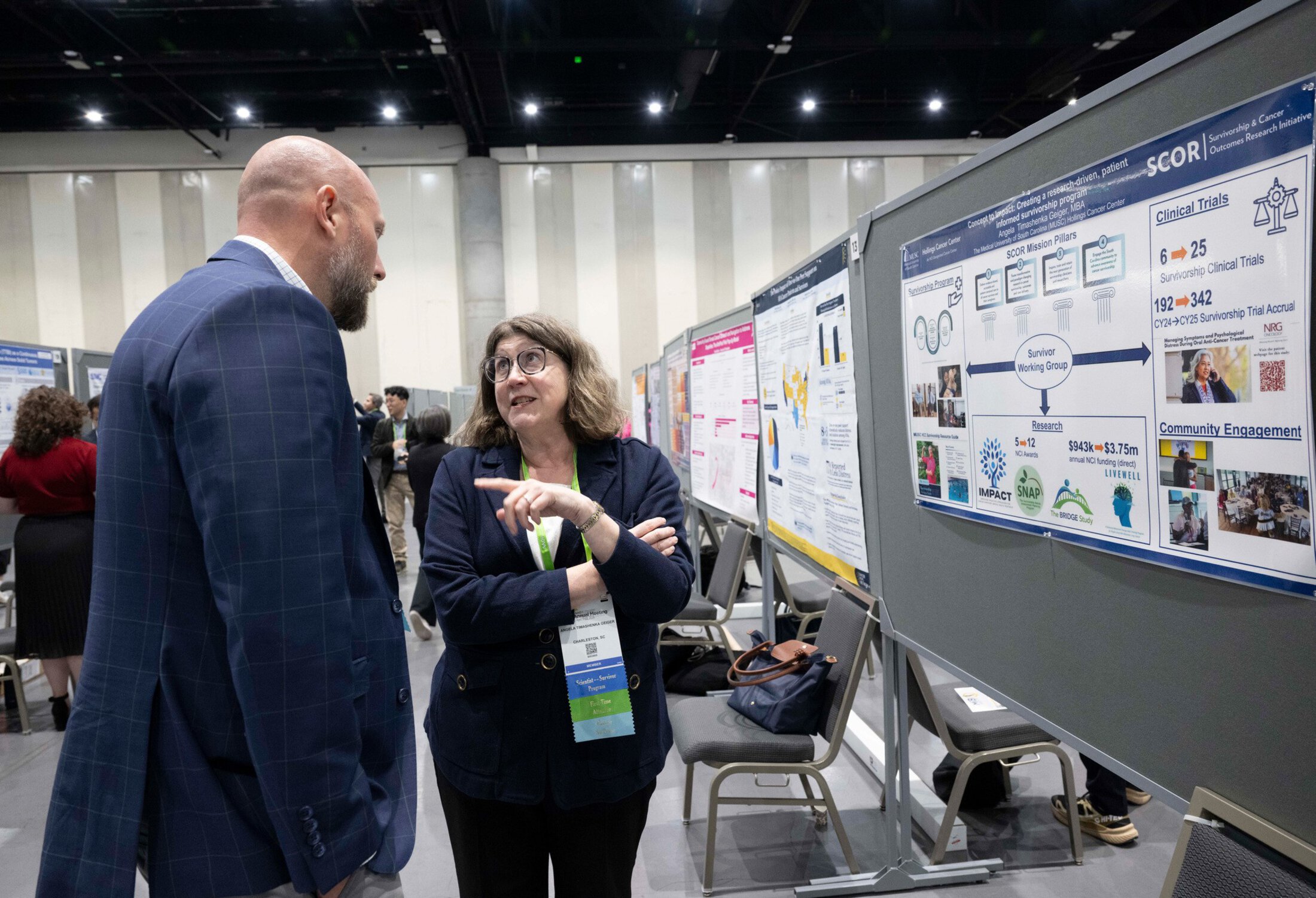
[Words on screen: SCOR. Survivorship and Cancer Outcomes Research Program. A way for clinicians and researchers working in survivorship, cancer care and cancer outcomes to collaborate.]
Caring for patients within our system, I think we did a lot that was really good on the clinical side. But recognized it could be better. And then on the research space within our cancer prevention and control program, there was a lot of expertise on how to help prevent cancers through maybe tobacco cessation, or vaccination and a lot of effort on screening.
[Images of a man blowing into a carbon monoxide detector as part of a smoking cessation program and of a woman receiving a mammogram.]
And then and then, but not as much on the sort of like what happens after you get cancer space.
And so there was a couple of researchers in that area doing really great work, and the SCOR program helped build infrastructure around the research side and the clinical side to bring sort of everyone in that same tent.
That was, I think, the premise of SCOR. And we really could take what we have on campus and make it so much better for patients and caregivers and research.
[A woman in physical therapy; researchers meeting in a conference room]
And so it has really three important, mission pillars.
First and foremost is to transform and really optimize the way we deliver care to cancer survivors and their caregivers.
Second, and almost equally important is to foster really innovative research into cancer survivorship care and that sort of like how we help manage side effects of cancer treatment or how we help improve the way in which care is delivered or think about, managing the financial implications of cancer treatment.
So a lot of new research in this space led by Hollings researchers.
[Young people working in labs]
And then finally to help inspire and train the next generations of clinicians and researchers. And importantly, it brings survivors and caregivers together. So we have survivors represented in many of the things that we do. There's a Hollings cancer survivorship working group. They're part of our advisory structure.
[Women in a water aerobics class for breast cancer survivors; a woman instructs a boxing class.]
We work very closely with the Fit Club and Cindi, who's phenomenal. And we are working, I think, to expand those types of services and make them accessible to a broad array of cancer survivors.
You know, we had our first SCOR Cancer Survivorship Symposium this past June during National Cancer Survivor Month.
[People in a large meeting space listen to a speaker at a podium; a group of women sit at a table facing the room for a panel discussion; a group photo of all the attendees.]
We had over 75 attendees at that symposium, an array of speakers from across the stage. I think those sorts of educational events that bring clinicians, researchers, patients, caregivers. We had, I think, about an equal mix between clinicians, researchers and patients and caregivers at that event made possible through things like LOWVELO support.
I mean, LOWVELO’s been really fundamental to making SCOR possible. So I think from the initial sort of idea that we had that we could build this program, SCOR on the clinical side and the research side and the training and education side, philanthropic support that came for LOWVEO was the key to making that possible. So whether that's helping recruit amazing researchers or clinicians to come to Hollings to do this kind of work for people who aren't here already, or potentially when clinicians or researchers have ideas, and now we need to like, test it and see if it's something we could, that could be a bigger idea – that that sort of pilot funding from LOWVELO makes it all possible.
[An American flag waves over the finish line under the early morning sunrise; dozens of bicyclists pass by on the road under the sunrise; people pedal on stationary bikes under a tent; people on the side of the road hold up encouraging signs and wave long-handled pom poms to cheer bicyclists passing by on the streets of Charleston.]
The growth it's seen as a as a bike ride over the past few years has just been amazing. And the dollars that come in through LOWVELO are a huge part of what makes Hollings amazing and how we eventually figure out step by step, project by project, how to take steps towards curing cancer, preventing cancer, treating cancer, improving quality of life and quantity of life for people affected by cancer.
I ride and contribute for all those reasons.
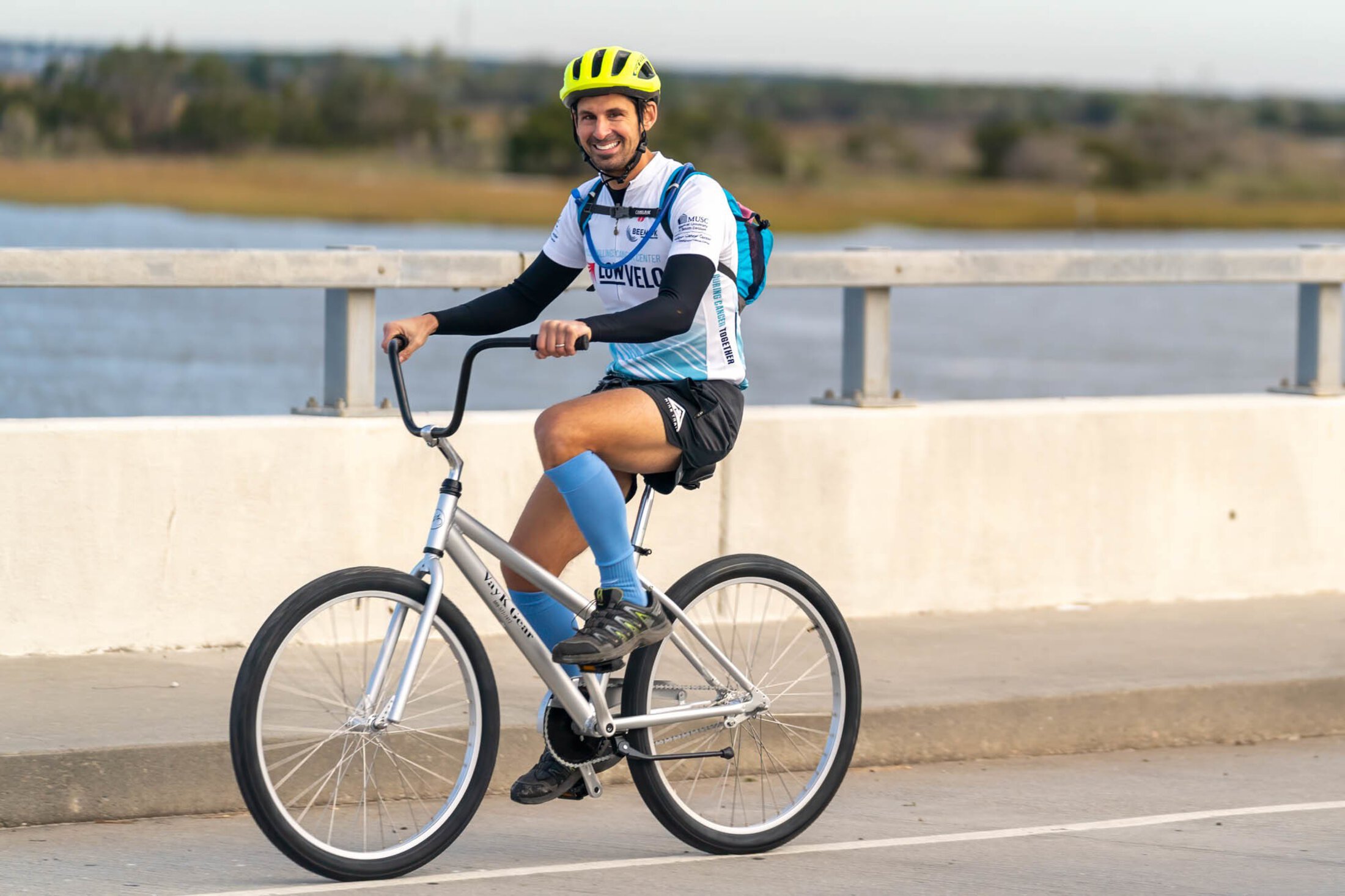
[Dr. Graboyes with his wife and three little children wearing silly outfits and making goofy faces at the LOWVELO festival; Dr. Graboyes on his bike on a bridge; bicyclists crossing a bridge to get to Sullivan’s Island; people on beach bikes wave as they pass the camera on island roads]
But every time I ride, I'm struck not by that, but really, like, the sense of community, the shared purpose, the shared mission like that, that sense that, like, you're riding for something bigger that isn't measured in dollars.
[People in LOWVELO jerseys at the Finish Line Festival; a band plays on stage; a man uses a marker to write a message of purpose on a temporary wall at the festival; people pose for photos by a LV23 sign; people in Mario Kart costumes ride by]
I think that's the most important thing that comes out of LOWVELO. So like seeing all the people who could be doing something else on a Saturday, like, there because they care, because someone in their life has been affected. Like, being part of that makes you feel like you're not alone. And so, you know, so much of the community that we're with in the Hollings like doing research on a day-to-day basis, like, that's invigorating. It's like why I wake up in the morning and what I think about before I go to bed at night, like seeing everyone together as part of that is like a really special part of the bike ride itself.
[Hollings Cancer Center LOWVELO logo]