Lee Leddy, M.D., MSCR
Specialties
- Orthopaedic Surgery
- Orthopaedic Oncology
- Sarcoma Cancer
Locations (3)
- Bluffton, SC
- West Ashley, SC
- West Columbia, SC


Only about 1% of cancer cases in adults are sarcomas. With such a rare disease, it’s important to seek care from a team that is familiar with this cancer and treats it on a regular basis. MUSC Hollings Cancer Center is one of a small number of health care centers in the U.S. that offers focused sarcoma care.
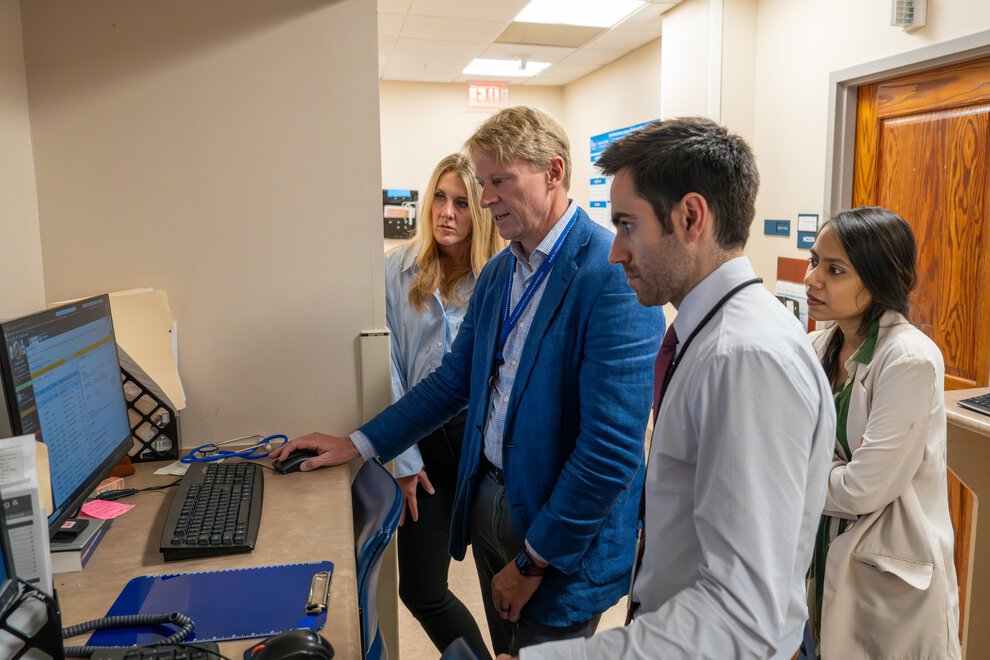
Our sarcoma team includes fellowship-trained clinicians in orthopaedic oncology, surgical oncology, medical oncology, radiation oncology, pathology and musculoskeletal radiology. These specialists work together in a multi-disciplinary fashion. They meet in a regularly scheduled tumor board to discuss cases and develop treatment plans, and continue to consult each other between meetings. The emphasis is on precision medicine, to ensure a precise diagnosis and to form a treatment plan that is individualized for each patient and his or her specific tumor type.
The team treats all forms of sarcoma, including soft tissue sarcoma and bone sarcoma. Depending on the type and location of each patient’s sarcoma, the team collaborates with specialists from across the cancer center, including surgical oncologists as well as thoracic, vascular, and plastic surgeons. The goal is always to get the best outcome for each patient. At Hollings, we believe that means both being cancer-free and preserving limbs, whenever possible.
Our sarcoma specialists also work closely with the pediatric oncologists at MUSC Shawn Jenkins Children’s Hospital. Sarcoma is a more common diagnosis among children and adolescents, accounting for 15% of childhood cancers. The highly ranked children’s hospital is located on the same campus as our adult hospitals, meaning that our surgical oncologists and orthopaedic oncologists can readily collaborate on cases when their expertise is needed.
MUSC Hollings Cancer Center has been nationally recognized by U.S. News & World Report as High Performing for Cancer Care as well as ranked as the No. 1 hospital in South Carolina for Cancer Care 2026–2027, affirming our excellence in preventing, diagnosing, treating, and supporting patients with cancer. As the only National Cancer Institute (NCI)-designated cancer center in South Carolina, Hollings blends cutting-edge research, multidisciplinary clinical expertise and advanced treatments to deliver outcomes that stand out on a national scale.
Sarcoma is one of the main categories of cancer. Cancer is categorized according to the type of cell where it starts. Most cancers are carcinomas. Carcinomas start in the epithelial cells, which line organs and glands inside the body and the skin outside the body.
Sarcoma, however, starts in connective tissue, including bone, cartilage, tendons, ligaments, muscle, fat, and nerve. Because there is supportive and connective tissue throughout the body, sarcoma can develop just about anywhere.
The two main types of sarcoma are bone sarcoma and soft tissue sarcoma.
At Hollings, we treat many different sub-types of sarcoma, including but not limited to:
Symptoms of sarcoma can be different depending on where in the body the cancer originates. One of the most common symptoms is a lump that is growing, frequently on an arm or leg. They are often painless, although not always. A lump that is growing deeper inside the belly might cause symptoms by pressing on nerves or organs. Bone sarcoma can weaken the bone, leading to pain, often at night and with weightbearing. Sarcoma symptoms can include:
Surgery to remove the tumor is the mainstay of treatment for bone and soft tissue sarcoma. At Hollings, we have a special focus on preserving limbs and avoiding amputation.
Treatment options depend on the specific diagnosis, tumor genetics, where the tumor is located, and individual patient factors. Because surgery to remove the tumor might also require removing a section of bone, we have several options for reconstruction. Surgical options or reconstruction include:
Surgery to remove the tumor is also the main treatment for soft tissue sarcomas. Depending on where in the body the sarcoma is, vital nerves and blood vessels could be at risk. The sarcoma team works closely with vascular surgeons and neurosurgeons, depending on the needs of each case, to bring focused surgical expertise into the operating room.
Once a soft tissue sarcoma is removed, our team continues to collaborate with specialists across the cancer center to address the effects of the cancer surgery. By partnering with plastic surgery colleagues, the sarcoma team can reduce risks of infection, lymphedema and repeat operations. We also recognize that cosmetic outcomes and daily function are important to quality of life after cancer, and this collaboration with plastic surgery supports our goal to save limbs, when possible, and optimize outcomes.
Systemic therapies may include, but are not limited to, chemotherapy, immunotherapy, and targeted therapies. Medical oncologists oversee these therapies. Medical oncologists are internal medicine doctors who have completed additional training to treat cancer and sarcoma.
Chemotherapy might be given before surgery, to shrink the tumor, or after surgery, to kill any remaining microscopic cancer cells.
Immunotherapy harnesses the body’s immune system and helps it to home in on cancer cells.
Targeted therapies are more precise than chemotherapy. They’re designed to hit a specific target, like a protein that appears only on the surface of certain cancer cells. Because they’re so focused, though, they don’t work for every type of sarcoma. Researchers are working every day to identify new unique targets and to design targeted therapies for them.
Different chemotherapies, immunotherapies, and targeted therapies are approved for different sarcomas. The medical oncologists on our sarcoma team have a special focus on sarcoma. This ensures they can stay up to date on advancements in the field, the latest evidence-based treatments, and clinical trial options, both locally and across the country. They are committed to offering new therapies as they become available.
Radiation is a key part of many sarcoma treatment plans. It can be used to kill cancer cells and shrink tumors before surgery. This improves the chances of a successful surgery and reduces the risk that the sarcoma might return. At Hollings, our experienced teams consist of specialists who map out the treatment area with the latest precision tools so that radiation can be delivered to the cancer cells while avoiding healthy tissue.
Radiation therapy can also be used for symptom relief when the cancer has weakened the bone or spread to soft tissues and is causing pain.
Clinical trials help us identify better treatments. A clinical trial might test whether a treatment is more effective or has fewer side effects than existing treatments. It might test whether there are biomarkers that could help doctors to better match treatments to specific patients. It could test whether a different dosage or a different treatment schedule could be just as effective while requiring fewer visits to the doctor.
Clinical trials are especially important for people with rare cancers like sarcoma. Sometimes, they can offer a chance for a promising treatment option before it’s widely available.
Talk to your doctor about whether a clinical trial might be right for you. Learn more about clinical trials at Hollings and view our current sarcoma trials.
Call 843-792-9300 to make an appointment with one of our sarcoma specialists. Most new patients can be seen within one week.
Because sarcomas are rare, health professionals specializing in sarcoma treatment are always seeking to better understand sarcoma behavior and to discover new treatments. At Hollings, we know how important research is in understanding sarcoma and developing effective treatments.
Some recent projects include:
Most cancers are not caused by inherited genetic conditions. But there are a number of genetic conditions that can increase the risk for either soft tissue sarcoma or bone sarcoma. Some of these include Li-Fraumeni syndrome, Werner syndrome, Diamond-Blackfan anemia and Rothmund-Thomson syndrome.
Both the Hollings Hereditary Cancer Clinic and the Division of Medical Genetics and Genomics at MUSC Children’s Health offer evaluation, support and care for people with genetic conditions.
Our sarcoma specialists work closely with the pediatric oncologists at MUSC Children’s Health. The cancer program at MUSC Children's Health is ranked No. 9 nationally for clinical outcomes and No. 32 overall by U.S. News and World Report, and MUSC Shawn Jenkins Children’s Hospital features a floor that is entirely dedicated to cancer care. Children go to this floor for both inpatient and outpatient care, creating continuity during a stressful time. Child life specialists, a clinical psychologist who focuses on children with cancer, and a dedicated therapy dog are also part of the team.

MUSC Hollings Cancer Center is committed to making specialty care available to people throughout South Carolina. To ease travel burdens, we offer sarcoma consultations and follow-up appointments via telehealth when possible. We also have office locations throughout the Lowcountry and in the Midlands.
Sarcoma is very treatable, especially when it’s diagnosed before it spreads. Most patients are diagnosed when the cancer is still localized – before it spreads – and are expected to do well.
Soft tissue sarcomas often show up as a painless growing mass on an arm or leg. Sometimes they can be painful, particularly if the tumor is pressing on a nerve or is growing quickly. When the sarcoma is in the abdomen, patients often experience belly pain. Patients with primary bone sarcoma typically develop progressive pain in an arm or leg – in other words, the pain gets worse over time. Rest and over-the-counter medications no longer help and the arm or leg is painful at night. If it’s a leg, it hurts when weight is put on it, and the patient might begin limping.
Sarcoma and carcinoma are two of the main categories of cancer. Sarcomas start in supportive or connective tissue, like bone, fat or muscle. Carcinomas start in the epithelial cells. Most cancers that you hear about are carcinomas. For example, invasive ductal carcinoma is the most common type of breast cancer.